


















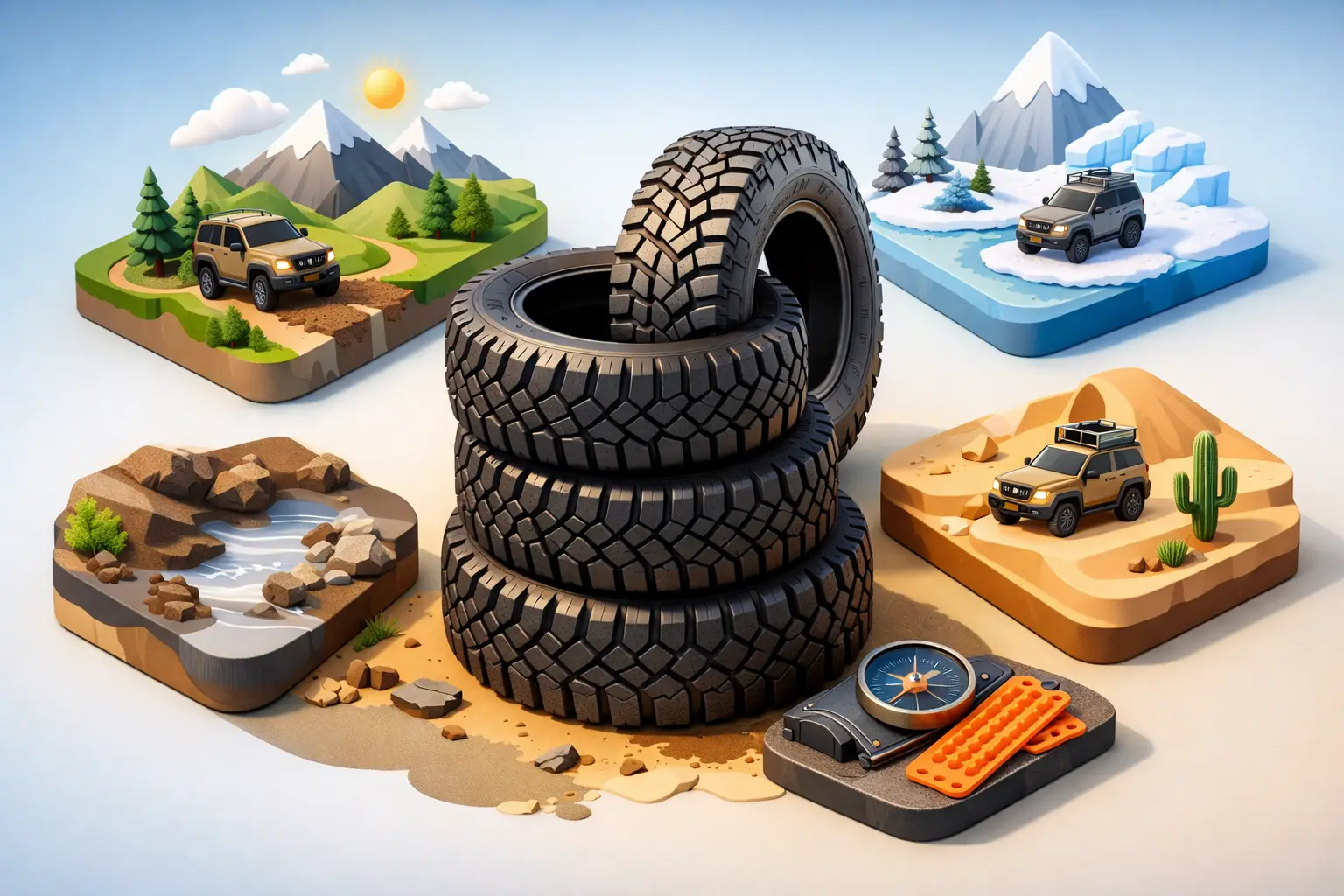
A 4×4 that spends 90% of its life on pavement needs a very different tire than one that sees dunes on the weekend and rocky tracks after work. That is why how to choose 4×4 tyres is not really about picking the most aggressive tread you can find. It is about matching the tire to the way you actually drive, the weight you carry, and the conditions you face most often.
Get that match right, and you gain grip, stability, braking confidence, and better value over time. Get it wrong, and you can end up with more road noise, faster wear, poorer fuel economy, or less traction where you need it most. For most drivers, the best choice sits somewhere between extremes.
How to choose 4×4 tyres starts with your driving
Before you compare brands or prices, be honest about where your vehicle goes in a typical month. Some owners want a true off-road setup, but many use their SUV or pickup for commuting, school runs, highway travel, and only occasional off-road trips. In that case, an aggressive mud-terrain tire may look the part, but it can be the wrong fit for daily comfort and braking.
If your driving is mostly paved roads with light off-road use, a highway-terrain or all-terrain tire usually makes more sense. Highway-terrain tires are quieter, smoother, and often more efficient on fuel. All-terrain tires give you a stronger balance – better durability and more off-road grip without becoming too harsh for everyday use.
If your 4×4 regularly sees loose sand, gravel, rocky tracks, or muddy work sites, then the balance shifts. You may need a tougher sidewall, a more open tread pattern, and stronger load capability. The key is to buy for your most common conditions, not the once-a-year trip that tempts you into over-specifying.
Understand the main 4×4 tire types
The easiest way to narrow your options is to separate them by use.
Highway-terrain tires
These are built for on-road comfort, predictable handling, and lower noise. They suit drivers who want confident everyday performance and only light off-road ability. If your 4×4 is mainly a family vehicle or business vehicle, this category often delivers the best value.
All-terrain tires
This is the middle ground, and for many Gulf-region drivers, it is the sweet spot. All-terrain tires are designed to handle mixed use. They offer stronger grip on loose surfaces than highway tires, but they still behave well on pavement. You give up some quietness and fuel efficiency, but you gain versatility.
Mud-terrain tires
Mud-terrain tires use larger tread blocks and wider voids to clear mud and bite into soft ground. They are ideal for serious off-road use, but there is a trade-off. On-road, they are usually louder, firmer, and less refined. They can also wear faster if most of your driving is on asphalt and in high temperatures.
Size matters more than many buyers realize
One of the fastest ways to make a bad tire choice is to focus only on tread style and ignore fitment. Your vehicle needs the correct tire size, and that means more than just the width.
A tire size like 265/65R17 tells you the width, sidewall profile, construction type, and wheel diameter. That size is chosen to work with your vehicle’s suspension, gearing, clearance, and load requirements. Moving too far from the original size can affect ride height, speedometer accuracy, braking, steering feel, and even rubbing inside the wheel arch.
Some 4×4 owners do size up for appearance or ground clearance, and sometimes that works well. But it should be done with care. A wider tire can improve contact patch in some conditions, while a taller tire can help with obstacle clearance. At the same time, bigger and heavier tires may reduce acceleration, increase fuel use, and place more stress on steering and suspension components.
If you are not sure, stay close to the manufacturer-recommended size or choose an approved alternative that suits your vehicle and usage.
Load index and speed rating are not just sidewall numbers
A 4×4 often carries more weight than a standard passenger car. Add passengers, luggage, tools, recovery gear, or towing, and the tire’s load capacity becomes critical. The load index tells you how much weight each tire can safely support. If the rating is too low for the way you use the vehicle, you are compromising safety and durability.
The speed rating also matters, though it is often misunderstood. It indicates the maximum speed the tire is designed to handle under proper conditions. Even if you are not driving near those limits, the rating is still part of the tire’s overall performance design. For a daily-driven SUV, both load and speed ratings should meet or exceed the vehicle requirement.
This is especially important for drivers who switch from standard road tires to more aggressive all-terrain or mud-terrain options. Not every tire in the right size carries the same load and speed capability.
Consider your climate and terrain
In hot climates, tire compound and construction make a real difference. High road temperatures, long highway runs, and heavy vehicles can accelerate wear if the tire is not designed for that kind of stress. A cheaper tire may look like a saving at checkout, but if it wears quickly or struggles under heat, it can cost more over its life.
For drivers dealing with sand, flotation and pressure management become part of the conversation. An all-terrain tire with the right profile can perform very well in sand when aired down correctly. An overly aggressive mud tire is not always better there. In fact, for dune driving, tread pattern matters less than many people assume compared with pressure, driver technique, and suitable sizing.
If your off-road use includes rocks or rough tracks, sidewall strength moves higher on the list. Puncture resistance and carcass durability can be worth paying for, especially if your vehicle is regularly loaded or driven far from support.
How to balance comfort, noise, and off-road grip
Every 4×4 tire involves compromise. The more off-road focused the tread, the more you usually give up in noise and on-road refinement. The more road-focused the design, the less capability you have when the surface gets loose, wet, or uneven.
That does not mean you should chase the middle option by default. It means you should decide what matters most. If your vehicle is your everyday transport, road comfort and braking should carry serious weight. If your weekends are built around off-road driving, durability and traction may matter more than quiet cruising.
A good tire choice feels right every day, not just in photos or in rare conditions.
Brand, budget, and long-term value
Price matters, but the cheapest option is not always the best value, and the most expensive tire is not automatically the right one. Premium brands often bring stronger consistency in wet grip, tread life, heat resistance, and ride quality. Mid-range options can offer excellent value for drivers who want dependable performance without paying top-tier prices. Budget tires can work for lighter use, but quality varies more widely.
This is where a broad product range helps. A retailer like GCC Tires can make the buying process easier because you can compare recognized brands across premium, mid-range, and value categories while keeping size, application, and budget in view. That makes it easier to buy what fits your vehicle and your driving, not just what appears first.
When replacement should happen as a full set
Some drivers ask whether they can replace just one or two tires. Sometimes that is possible, but on many 4×4 vehicles, especially those with full-time four-wheel-drive systems, uneven tread depth can affect handling and drivetrain strain. Replacing all four is often the safer and smarter move if the existing set is already worn.
Even when replacing two, the new pair should match closely in size, pattern, and performance category. Mixing highway and all-terrain tires, or different tread depths front to rear, can create behavior that feels unsettled on the road and less predictable off it.
A smarter way to choose 4×4 tyres
The best way to choose is to think in layers. Start with the correct size. Then match the tire category to your real driving split between road and off-road use. After that, check load index, speed rating, climate suitability, and expected comfort level. Only then should you compare brands and pricing.
That order matters because it keeps you focused on fit, safety, and performance before appearance or marketing claims. A tire that suits your vehicle, your routes, and your budget will always outperform the wrong tire with a more aggressive look.
If you are stuck between two options, choose the one you will appreciate on your most common drive. That is where the value lives, and that is what keeps your 4×4 feeling planted, capable, and ready when the road turns rough.



 Get This Deal