




















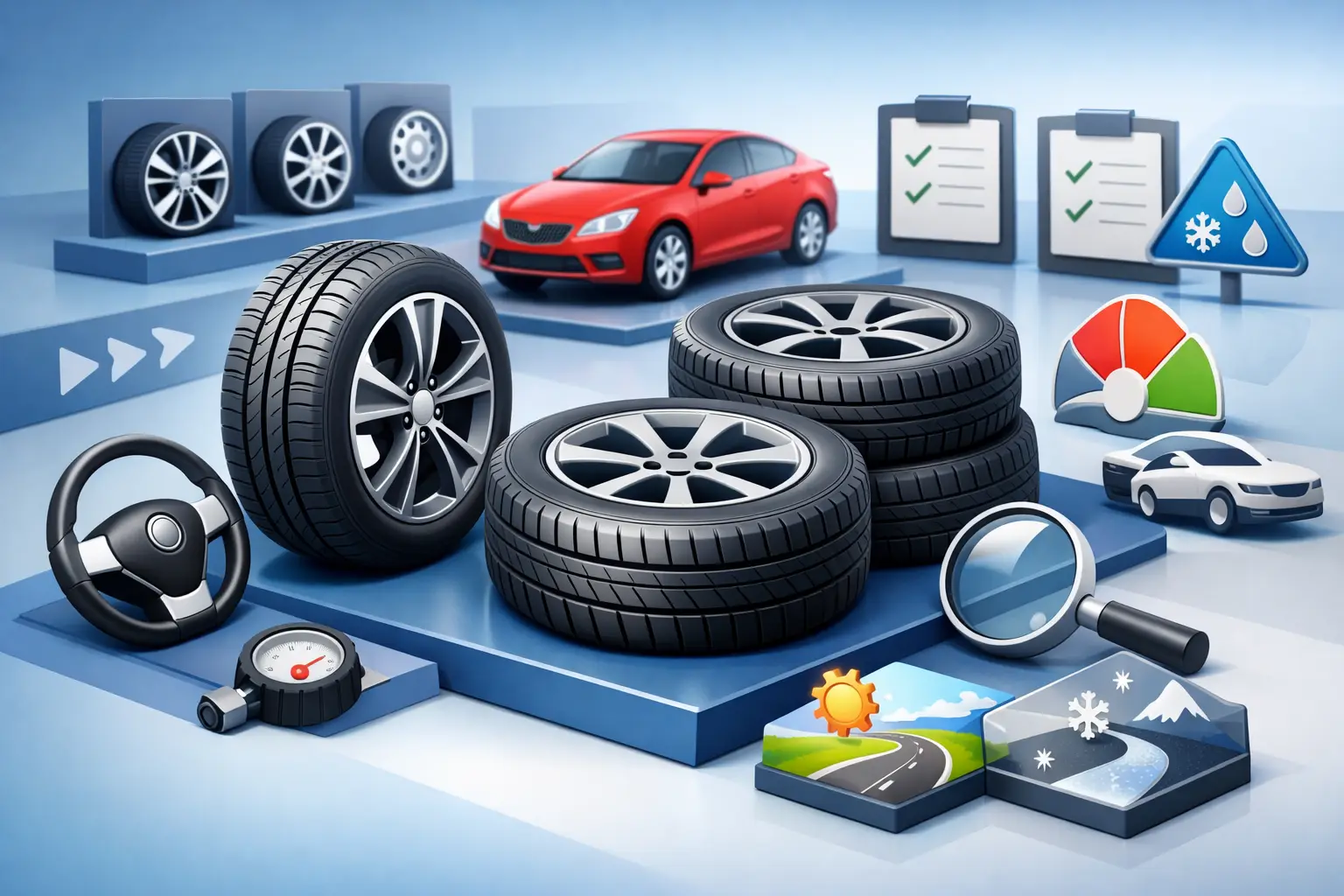
One worn shoulder, a little extra road noise, and a steering feel that is not quite right – that is usually how car tyres start asking for attention. Most drivers do not think about tyres until something feels off, but waiting too long can cost you in braking distance, fuel use, ride comfort, and safety. The right set should match your vehicle, your driving habits, and the roads you actually use, not just the lowest price on the screen.
Why car tyres matter more than most drivers think
Tyres are the only part of your vehicle that stays in contact with the road. That sounds obvious, but it changes everything. Your braking, cornering, acceleration, comfort, and even how stable your SUV feels on a hot highway all depend on the grip and condition of four contact patches that are each smaller than many drivers expect.
That is why choosing tyres is not just about replacing what is worn out. It is about keeping the vehicle predictable. A family sedan used for daily commuting needs a different balance of comfort, tread life, and wet grip than a 4×4 that sees rough terrain or a performance car that needs sharper handling at speed.
Price matters, of course. But the cheapest option is not always the best value. A tyre that wears too quickly, gets noisy early, or performs poorly in heat can cost more over time than a better-matched mid-range or premium option.
How to choose car tyres without guesswork
The fastest way to narrow your options is to start with fitment. Every vehicle is designed to work with specific tyre sizes, load ratings, and speed ratings. If those numbers do not match what your vehicle requires, the tyre may affect handling, safety systems, ride quality, or wear.
Look at the sidewall of your current tyre and you will see a size like 225/45R17. That tells you the width, sidewall profile, and wheel diameter. You will also see a load index and speed rating. These are not minor details. A tyre may look right at a glance and still be the wrong specification for your vehicle.
If you want the simplest route, shop by vehicle, tyre size, or brand depending on what you know. Some buyers want the exact original size. Others already have a preferred manufacturer. Experienced drivers may shop by category, such as touring, all-terrain, ultra-high performance, or commercial use. The best buying experience supports all of those paths because not every customer starts from the same point.
Understanding the main types of car tyres
Not all tyres are built for the same job. Touring tyres are often the right fit for everyday drivers who want a quieter ride, stable handling, and good tread life. They are a strong option for sedans, family vehicles, and drivers who spend most of their time on paved roads.
Performance tyres put more emphasis on grip, steering response, and high-speed control. They suit sports sedans, coupes, and drivers who care about sharper handling. The trade-off is usually shorter tread life and, in some cases, a firmer ride.
SUV and 4×4 tyres cover a wider range. Some are designed mainly for on-road comfort and highway stability. Others are built for mixed use, giving you stronger sidewalls and more traction on loose surfaces. If your SUV rarely leaves the pavement, a road-focused tyre may be the smarter buy. If you regularly deal with gravel, construction zones, or off-road trails, an all-terrain pattern makes more sense.
Commercial-use tyres are built around load carrying, durability, and consistent performance under heavier demands. For vans and work vehicles, choosing the right load rating is essential. It is not the place to cut corners.
What matters most when comparing tyres
A lot of buyers focus on brand first, and brand does matter. Trusted manufacturers usually invest more in compound design, testing, and consistency. Still, brand alone should not decide the purchase. Two tyres from the same maker can be aimed at very different needs.
A better way to compare is to look at the balance of grip, comfort, durability, and price. If you drive long highway miles every week, low noise and even wear may matter more than sporty response. If you drive a performance car, predictable cornering and braking feel may matter more than maximum mileage.
Climate and road conditions should shape the choice too. In hotter regions, heat resistance and compound stability matter. Poor roads, potholes, and rough surfaces can also make sidewall strength and construction quality more important than buyers expect.
This is where a wide product range helps. Some drivers need premium performance. Others need dependable value from a mid-range brand. Both can be the right choice if the tyre fits the vehicle and the use case.
Signs your car tyres need replacement
Tread depth is the obvious one, but it is not the only sign. Uneven wear often tells a bigger story. If one side wears faster than the other, alignment may be off. If the center wears too quickly, overinflation could be the cause. If both edges wear down first, underinflation is often part of the problem.
Cracks in the sidewall, bulges, repeated pressure loss, vibration at speed, and a noticeable drop in wet-road grip all deserve attention. Tyres also age even when tread looks acceptable. Rubber hardens over time, and older tyres may not perform the way they should, especially under braking or in emergency maneuvers.
Replacing only when the tyre is completely finished is risky. It also narrows your options. If you wait until failure is close, you are usually buying in a hurry rather than choosing carefully.
Why fitment and alignment are part of the value
A good tyre can deliver poor results if the fitment is wrong or the alignment is neglected. That is one of the biggest mistakes buyers make when comparing prices. They look only at the tyre cost and ignore the service around it.
Professional installation matters because tyres need to be mounted correctly, balanced properly, and checked against the vehicle’s requirements. Alignment matters because even a quality tyre can wear out early if the wheels are not set correctly. What looks like a bargain can turn expensive if the set wears unevenly after a short period.
That is why service-backed tyre buying makes practical sense. Getting the tyres, fitment, balancing, and alignment support through one process saves time and reduces risk. For busy drivers, that convenience is not a luxury. It is part of the product.
Buying for budget, buying for performance
There is no single best answer for every buyer. If your priority is cost control, a value or mid-range tyre from a recognized manufacturer may be the smart move. You still want reliable grip, stable wear, and proper fitment, but you may not need the extra edge of a premium touring or performance model.
If you drive harder, carry family regularly, or spend a lot of time at highway speeds, it can be worth stepping up. Better wet braking, stronger stability, and lower noise are benefits you feel every day, not just on paper. For enthusiasts and track-focused drivers, the right tyre transforms the car. But those tyres often wear faster and may be less comfortable in daily use. It depends on what you want the vehicle to do most of the time.
That trade-off is where honest guidance matters. The right recommendation is not always the highest-priced one. It is the one that gives you the best match of safety, performance, durability, and value.
A simpler way to shop for car tyres
Tyre buying gets easier when the path is clear. Search by size if you know your numbers. Search by vehicle if you want compatibility narrowed down fast. Search by brand if you already trust a manufacturer. Then compare based on how you actually drive, not just on the discount tag.
GCC Tires is built around that kind of practical buying journey – helping drivers move from uncertainty to the right product and professional fitment without wasted time. For everyday commuters, SUV owners, enthusiasts, and commercial users alike, the best tyre purchase is the one that gives you confidence from checkout to the first mile on the road.
When your next set is due, do not just replace what is worn. Choose car tyres that suit your vehicle, your roads, and your standards, so every drive feels controlled, comfortable, and ready for what comes next.
 Get This Deal