


















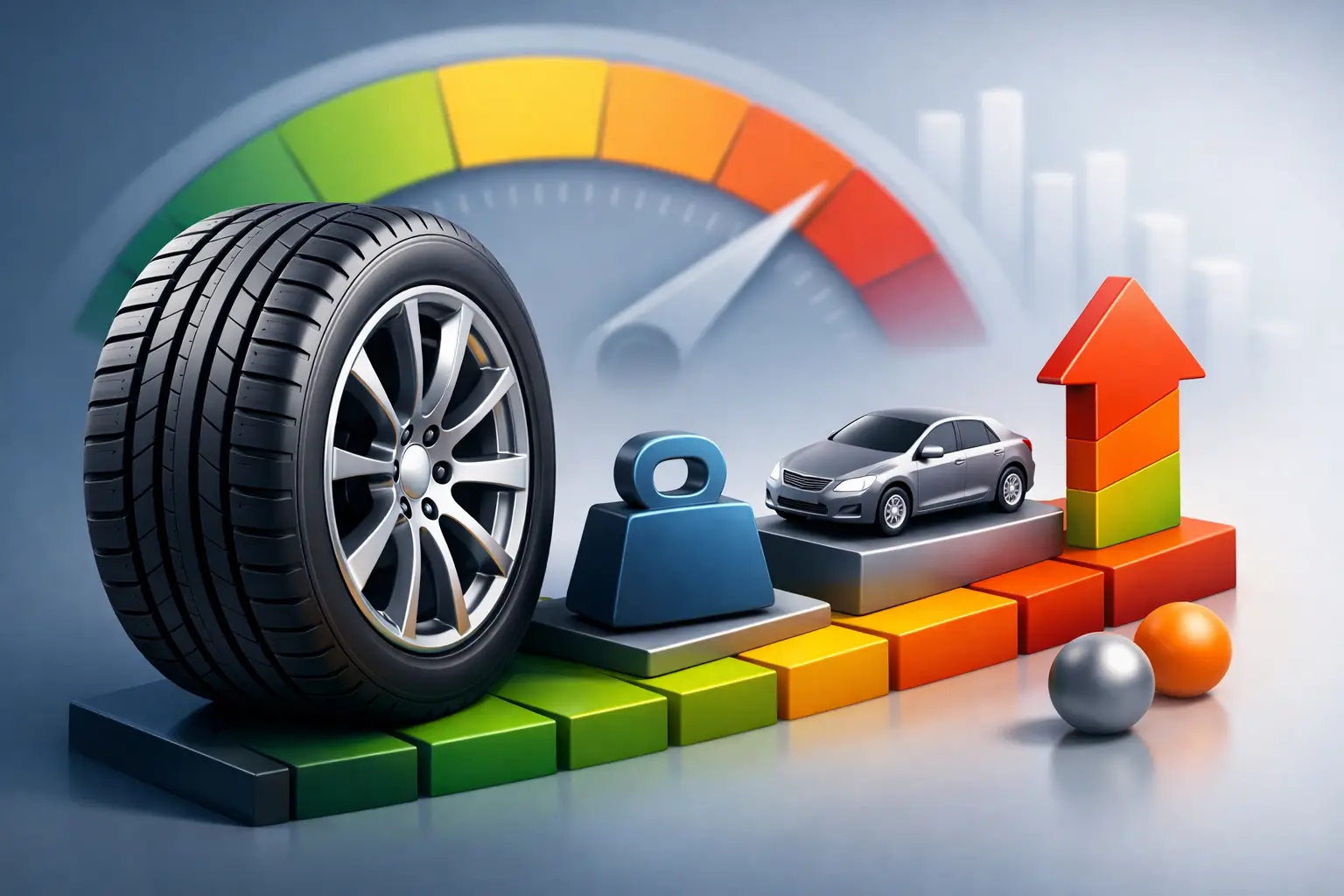
Two tires can share the same size and still be wrong for the same vehicle. The missing detail is often the load rating. This load index tyre guide helps you read that number correctly, choose a safe replacement, and avoid fitting a tire that cannot support your vehicle as intended.
For daily sedans, family SUVs, loaded 4x4s, and commercial-use vehicles alike, the right load index protects handling, braking stability, tire life, and peace of mind. It is not a number to guess at when a deal looks good.
What Is a Tire Load Index?
The load index is the numerical code printed on a tire sidewall that shows the maximum weight that one tire can carry at its specified maximum inflation pressure. It normally appears immediately after the tire size and before the speed rating.
For example, a sidewall marked 225/55R17 97W tells you several things. The 225/55R17 describes the tire’s dimensions, 97 is the load index, and W is the speed rating. In this case, a load index of 97 equals a maximum capacity of 1,609 pounds per tire.
That capacity is not a recommendation for how much weight to put in the vehicle. It is a tested limit under defined conditions. Your vehicle’s manufacturer has already selected the load index needed for the vehicle’s weight, passengers, cargo, and intended performance. Your job when replacing tires is to match that requirement or exceed it where appropriate.
Load Index Tire Guide: Common Ratings Explained
Load index numbers are not direct weight figures. A 100 rating does not mean 100 pounds or 100 kilograms. Each number corresponds to a set load capacity on an industry chart.
| Load Index | Maximum Load per Tire | |—|—:| | 91 | 1,356 lb | | 94 | 1,477 lb | | 95 | 1,521 lb | | 97 | 1,609 lb | | 98 | 1,653 lb | | 100 | 1,764 lb | | 104 | 1,984 lb | | 109 | 2,271 lb | | 112 | 2,469 lb | | 115 | 2,679 lb |
A small increase in the index can represent a meaningful jump in carrying capacity. That matters when you drive a large SUV, tow a trailer, carry work equipment, travel with a full family, or regularly take a 4×4 off-road with recovery gear and extra supplies.
Do not calculate your vehicle’s required rating simply by dividing its gross vehicle weight by four. Vehicle weight is not evenly distributed across all four tires, and braking, cornering, cargo placement, and towing all shift the load. The tire placard and owner’s manual are the correct starting point.
Where to Find the Correct Load Index
Check the tire information placard, usually found on the driver’s door jamb. It lists the original tire size and the recommended cold inflation pressure. Many placards also show the required load range or load index. Your owner’s manual provides the same information and may include different specifications for alternate wheel sizes.
The existing tire sidewall can be helpful, but do not assume it is correct just because it is already fitted. A previous owner or workshop may have selected a lower-rated tire, changed wheel sizes, or fitted tires for appearance rather than capability.
If you are shopping by size, compare the complete specification, not only the width, profile, and rim diameter. A 265/65R17 tire may be available in several load indexes depending on its construction and intended use. That difference can be critical for a heavy SUV or pickup.
Can You Fit a Higher Load Index?
In most cases, fitting a tire with a higher load index than the original specification is acceptable, provided the tire size, speed rating, wheel compatibility, and vehicle requirements are also correct. A higher index can be a smart choice for drivers who carry heavier loads, tow regularly, or want added durability for demanding use.
There can be trade-offs. Higher-load tires may use stronger internal construction, which can make them heavier or firmer riding. They may also cost more. For a commuter sedan that rarely carries passengers or cargo, paying for a much higher rating may not deliver a noticeable benefit.
For SUVs, 4x4s, commercial applications, and vehicles that face rough roads or frequent loading, the extra capacity can be worthwhile. The right choice depends on how the vehicle is actually used, not only how it looks parked in the driveway.
Never Choose a Lower Load Index
A replacement tire should never have a lower load index than the vehicle manufacturer specifies. A lower-rated tire can overheat under load, wear prematurely, lose stability, or fail when the vehicle is fully occupied or carrying cargo.
This risk is easy to overlook because a lower-rated tire may fit the wheel and appear identical at a glance. It may even feel fine on short trips with an empty vehicle. The problem appears when the tire is asked to do more: highway driving in high heat, a fully loaded family trip, emergency braking, towing, or sustained speeds with luggage on board.
Savings on the purchase price are not savings if the tire compromises safety or needs replacing early. Match the original load requirement first, then compare brands, tread designs, warranty coverage, and current offers.
Load Index, Speed Rating, and XL Tires
Load index and speed rating are printed together, but they answer different questions. The load index tells you how much weight a tire can support. The speed rating indicates the maximum speed capability under controlled conditions. Both must meet your vehicle’s specification.
You may also see XL, meaning Extra Load, on the sidewall. XL tires are built to carry more weight at higher inflation pressures than standard-load tires of the same size. They are common on heavier crossovers, performance sedans, SUVs, and electric vehicles.
An XL marking alone does not replace checking the actual load index. Two tires can both be labeled XL while carrying different ratings. Always read the full sidewall code and compare it with the vehicle placard.
For trucks and serious off-road vehicles, you may encounter LT, or Light Truck, tires. These use a different load-range system, such as Load Range C, D, or E. They are designed for demanding carrying, towing, and off-road conditions, but they can ride more firmly than passenger tires. Fit them because your vehicle and use case call for them, not simply because they look tougher.
How Driving Conditions Affect Your Choice
Heat, long highway miles, cargo, and tire pressure all put extra demand on a tire. Underinflation is especially harmful because it increases flexing and heat buildup inside the tire. Even a correctly rated tire can be overloaded in practice if it is not inflated to the pressure specified for the vehicle and load.
Check pressures when tires are cold, ideally before driving or after the vehicle has been parked for several hours. Do not inflate to the maximum pressure printed on the tire sidewall unless your vehicle manufacturer specifically calls for it. That number is the tire’s maximum pressure limit, not the everyday target for every vehicle.
If you tow, carry tools, use a roof box, or travel with heavy cargo, review your owner’s manual for loaded-pressure guidance. You may need to adjust pressure within the manufacturer’s approved range. A higher load index adds capability, but it does not override the vehicle’s payload limits or towing limits.
Buying the Right Tire With Confidence
Start with your vehicle placard, then confirm the full tire size, load index, and speed rating. If you are changing from standard tires to XL tires, moving to a different wheel size, or choosing all-terrain tires for a 4×4, verify that the new setup meets or exceeds the original load requirement.
When comparing options, look beyond the headline price. Consider whether you need quiet daily-road comfort, longer tread life, stronger load capacity, off-road traction, or performance handling. The best tire is the one that fits your vehicle, your driving, and your budget without cutting corners on safety.
GCC Tires makes it easier to compare trusted options by vehicle, size, and driving category, with professional fitment support to help ensure the specification is right before the tires go on your car.
The number on the sidewall may be small, but it carries the weight of every trip. Check it before you buy, keep your tires properly inflated, and give your vehicle the support it was designed to have.



 Get This Deal