











A low tyre price can feel like a win – especially when you need a replacement quickly. But are cheap tyres safe? The honest answer is: some are, and some are a risk not worth taking. Price alone does not determine whether a tyre can brake, grip, carry weight, and handle heat safely. Its design, condition, correct size, age, and professional installation matter just as much.
For everyday drivers, the goal is not simply to buy the least expensive tyre. It is to buy the right tyre at a price that protects your budget without compromising control. That means knowing where a value tyre can make sense and where cutting costs can create problems on the road.
Are Cheap Tyres Safe for Everyday Driving?
Cheap tyres can be safe when they are new, genuine, correctly rated for your vehicle, and made by a reputable manufacturer. Many value and mid-range brands produce dependable tyres for city commuting, school runs, and regular highway driving. They may not offer the same refinement, wet-road grip, tread life, or high-speed stability as a premium model, but that does not automatically make them unsafe.
The concern begins when “cheap” means unknown origin, unclear specifications, old stock, poor-quality construction, or a tyre that does not match your vehicle’s load and speed requirements. A bargain disappears quickly if the tyre wears out early, creates vibration, struggles in rain, or fails under the heat and weight it was never designed to handle.
In Bahrain and across the Gulf, the stakes are higher. Road surfaces get hot, highway speeds are often sustained, and SUVs may carry families, cargo, or tackle rougher terrain. A tyre needs to do more than fit the wheel. It needs to perform reliably in the conditions you actually drive in.
What You May Give Up With a Lower-Priced Tyre
Premium tyres cost more partly because manufacturers invest heavily in rubber compounds, tread development, testing, noise reduction, and consistency. That investment can show up in shorter stopping distances on wet roads, more predictable cornering, quieter driving, better fuel efficiency, and longer tread life.
A budget tyre can still deliver solid everyday performance, but the trade-off may be more noticeable in demanding situations. For example, a driver who mostly travels short urban routes may be perfectly happy with a quality value tyre. A driver who covers long highway distances every week, carries heavy loads, drives a powerful sedan, or takes a 4×4 into sand and gravel may benefit from stepping up to a stronger, more specialized option.
The cheapest option is not always the best value. If a higher-quality tyre lasts significantly longer or gives better grip during an emergency stop, its cost over time can be easier to justify.
Grip is not a feature to guess at
Tread pattern and rubber compound directly affect how a tyre clears water, resists heat, and grips the road. Deep grooves alone do not guarantee safety. The tread must be designed and manufactured to work consistently, including as it wears.
Be cautious of tyres with vague branding, missing performance information, or claims that sound too good for the price. A trusted brand should provide clear sizing, load index, speed rating, and manufacturing details. You should know exactly what is being fitted to your vehicle.
Heat, speed, and weight change the decision
Every tyre has limits. The load index tells you how much weight it can safely support, while the speed rating indicates the maximum speed it is designed to handle under specified conditions. Choosing a lower rating than your vehicle requires is not a smart way to save money.
This is especially relevant for SUVs, 4x4s, commercial vehicles, and performance cars. A low-cost passenger-car tyre may fit physically but be completely wrong for a heavier vehicle or more demanding use. Match the tyre to the manufacturer’s recommended specifications, then consider how you drive beyond the minimum requirement.
How to Tell if a Cheap Tyre Is a Safe Buy
Start with the basics: buy new tyres from a retailer that can confirm they are genuine products and match them correctly to your vehicle. Check the sidewall size, such as 225/55R17, against your vehicle placard or owner’s manual. Then confirm the load index and speed rating meet or exceed the vehicle manufacturer’s requirements.
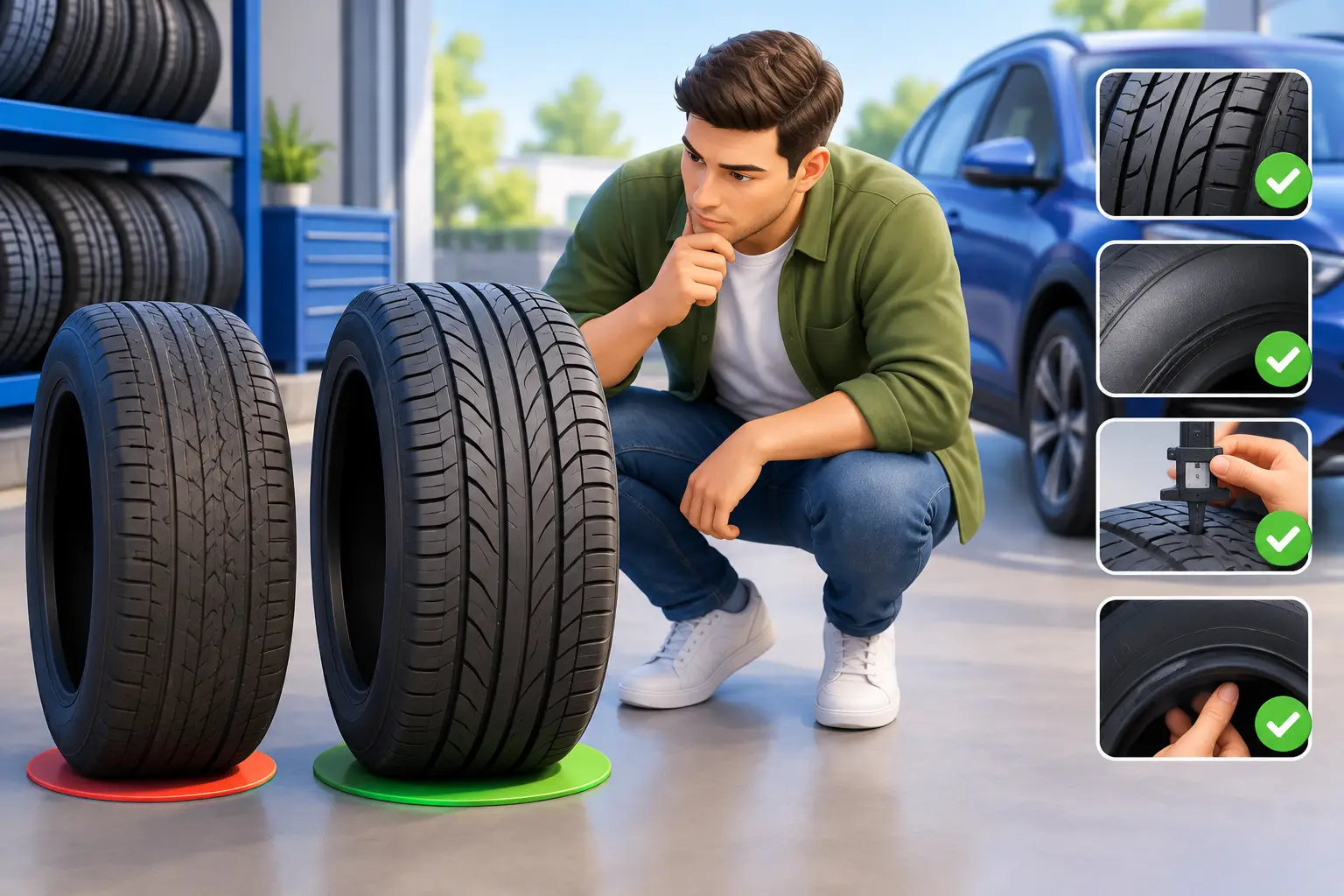
Next, check the production date. Tyres are not like canned goods, but rubber does age. A new tyre that has been stored properly can be suitable, while old stock or a previously used tyre with an unknown history deserves much more caution. Ask for clear information rather than assuming that a tyre is fresh simply because it looks new.
Also consider the warranty and the retailer’s support after purchase. A reliable seller should stand behind the products it offers, explain your choices honestly, and arrange professional fitting. At GCC Tires, the focus is on helping drivers compare genuine options by size, vehicle, brand, and driving need, then completing the job through authorized fitment support.
Installation Is Part of Tyre Safety
Even an excellent tyre can perform poorly if it is fitted incorrectly. The wheel must be inspected, the tyre installed correctly, and the assembly balanced. Alignment should also be checked, particularly if you notice the vehicle pulling to one side, an off-center steering wheel, or uneven wear on the old tyres.
Poor alignment can destroy a new set of tyres long before its expected lifespan. Underinflation creates excess heat and can make handling feel vague, while overinflation can reduce the contact patch and make the ride harsher. Neither problem is solved by spending more on tyres. They are solved by proper setup and regular checks.
Check pressure when tyres are cold and follow the vehicle manufacturer’s recommended pressure, not the maximum number printed on the sidewall. Inspect tread and sidewalls monthly for cuts, bulges, embedded objects, or irregular wear. A bulge, deep sidewall damage, or repeated air loss calls for immediate professional attention.
When It Makes Sense to Spend More
There are times when paying more is a safety decision rather than a luxury choice. Consider a premium or higher-performance tyre if you drive at highway speeds often, encounter frequent rain, own a high-performance vehicle, tow or carry heavy loads, or need off-road capability. These uses place greater demands on braking, stability, heat resistance, and durability.
The same applies if you want maximum mileage and a quieter ride. A premium touring tyre may cost more at purchase but offer longer wear and better comfort over thousands of miles. For fleet operators, consistent performance and reduced downtime can matter more than the lowest upfront price.
That said, not every vehicle needs the most expensive tyre on the shelf. A dependable mid-range tyre with the correct specifications can be a strong choice for a daily commuter or family car. The right answer depends on your car, your routes, your mileage, and the conditions you face.
Avoid These False Savings
Used tyres with unknown history are often the biggest gamble. Internal damage may not be visible, repairs may be poorly done, and remaining tread does not reveal whether the tyre has been overheated, overloaded, or driven flat. A tyre can look acceptable and still be unsafe.
Avoid mixing significantly different tyre types across the same axle, unless your vehicle manufacturer specifically allows it. Different tread patterns and grip levels can affect braking and handling. If replacing only two tyres, fit the new pair according to the vehicle manufacturer’s guidance and have a professional assess the best placement.
Finally, do not delay replacement when tread is worn, cracks are visible, or damage appears on the sidewall. Saving money by stretching a worn tyre beyond its safe life puts every drive at risk.
A smart tyre purchase is not about choosing the highest price or the lowest price. It is about choosing a genuine, correctly rated tyre that suits your vehicle and your driving, then having it fitted and maintained properly. That is how you protect your budget while keeping the grip and confidence your road demands.