




















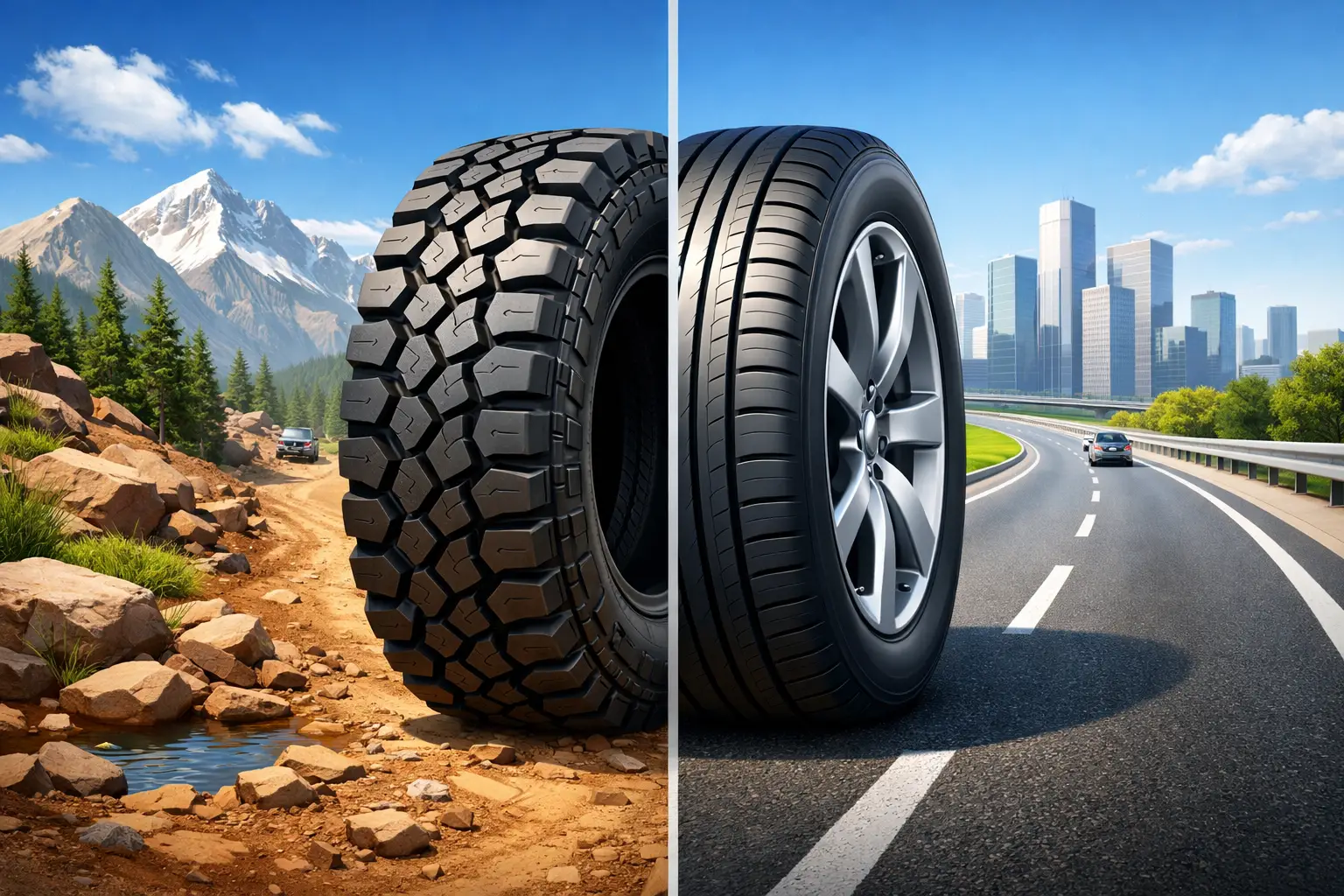
Your SUV looks ready for anything, but your tires decide how it actually drives. When shoppers compare all terrain vs highway tires, they are usually trying to solve a practical problem – getting the right balance of comfort, grip, durability, and value for the roads they use most.
That decision matters more than many drivers expect. The wrong tire can make a daily commute louder, reduce fuel efficiency, or leave you short on traction when the road turns rough. The right one gives you better control, a smoother ride, and a tire that fits the way you really drive, not just how you want your vehicle to look.
All terrain vs highway tires: what changes on the road?
The biggest difference comes down to tread design and intended use. Highway tires are built primarily for paved roads. They focus on a quiet ride, stable handling, predictable braking, and lower rolling resistance. For drivers who spend nearly all their time on city streets, highways, and well-maintained roads, that usually translates into better everyday comfort.
All terrain tires are designed to cover more ground. They use a more aggressive tread pattern, deeper grooves, and stronger shoulder blocks to improve grip on dirt, gravel, sand, and uneven surfaces. They are built for versatility, especially for SUVs and 4x4s that regularly leave pavement or deal with mixed road conditions.
Neither option is automatically better. It depends on where you drive, how often you carry passengers or loads, and what kind of performance matters most to you. A family SUV that rarely sees anything rougher than a parking lot has different needs from a 4×4 that spends weekends on desert tracks.
Highway tires are made for daily driving comfort
If your routine is mostly paved roads, highway tires usually make the most sense. They are engineered to stay quiet at speed, absorb road imperfections more smoothly, and maintain steady contact with the road surface. That gives many drivers a more comfortable and controlled feel during commuting, school runs, and longer highway trips.
They also tend to support better fuel economy than more aggressive tire types. Because highway tires usually have less rolling resistance, the vehicle does not have to work as hard to keep moving. Over time, that can make a meaningful difference, especially for drivers covering high mileage every month.
Tread life can also be a strong advantage. On paved roads, highway tires often wear more evenly and last longer than all terrain options. That does not mean every highway tire outlasts every all terrain tire, but if your driving is mostly smooth pavement, the design is working in your favor rather than against it.
For many crossover and SUV owners, this is the smart value choice. You get the performance you will actually use every day, without paying a comfort penalty for off-road capability you may rarely need.
All terrain tires are built for mixed use
All terrain tires appeal to drivers who need flexibility. If your vehicle moves between asphalt and rougher terrain, this type of tire gives you added confidence where a highway tread may struggle. Loose gravel, rocky access roads, construction zones, desert trails, and uneven surfaces are where the extra bite becomes useful.
The sidewalls and tread blocks on many all terrain tires are also designed to take more abuse. That can be valuable if your driving involves sharp surfaces, light off-road work, or frequent trips through areas where road conditions are less predictable. For some SUV and pickup owners, durability is just as important as traction.
There is a trade-off, though. That tougher, more aggressive tread usually creates more road noise and a firmer ride on pavement. Steering can feel a little less crisp, and fuel use may increase compared with a highway tire. For some drivers, that is a fair exchange for the added capability. For others, it becomes an everyday annoyance.
All terrain vs highway tires for noise, comfort, and handling
This is where many buyers feel the difference immediately. Highway tires usually win on quietness and ride comfort. Their tread patterns are optimized to reduce road noise and keep the vehicle feeling composed on paved surfaces. If you spend hours on the highway each week, that matters.
All terrain tires can still drive well on-road, especially modern premium options, but they are rarely as quiet as a dedicated highway tire. You may hear a hum at speed, and the larger tread voids can make the ride feel more rugged. Some drivers like that planted, tough-road feel. Others want their SUV to drive more like a passenger car.
Handling also follows the same pattern. Highway tires are generally more predictable in everyday cornering and braking on dry pavement. All terrain tires offer broader capability across changing surfaces, but on clean pavement they may not feel as refined.
If your vehicle is mainly used for family transport, business travel, or long-distance commuting, comfort and quietness should carry real weight in your decision.
Wet roads, heat, and regional driving conditions
In hot climates and long stretches of paved driving, tire choice becomes even more practical. Heat, speed, and surface quality all affect wear and performance. Highway tires are often a strong match for drivers who need stable road manners, efficient cruising, and dependable wet-road performance in daily use.
All terrain tires can still perform well in these conditions, but their advantage shows up more clearly when roads deteriorate or routes regularly include sand, gravel, or loose surfaces. If those conditions are occasional rather than routine, a highway tire may still be the better fit.
This is where honest self-assessment helps. Many drivers buy for the rare weekend trip and then live with the compromise every weekday. If 90 percent of your driving is paved, your tire choice should reflect that. If your driving is split more evenly, all terrain starts to make more sense.
Which tire gives better value?
Value is not just the price on the tire. It is the full ownership picture – purchase cost, lifespan, comfort, fuel use, and whether the tire is suited to your actual driving. A cheaper tire that wears quickly or makes every trip less comfortable is not necessarily the better deal.
Highway tires often deliver stronger value for drivers who stay on paved roads because they support lower noise, smoother driving, and potentially better mileage. They are doing exactly the job required, with fewer compromises.
All terrain tires offer value when you genuinely need dual-purpose performance. If they help you handle rough access roads, outdoor travel, work sites, or regular off-pavement use with more confidence, that extra capability can be worth every dollar. The key is matching the product to the use case instead of buying based on appearance alone.
How to choose between all terrain and highway tires
Start with your real driving pattern, not your ideal one. Ask yourself where the vehicle spends most of its time. If the answer is highways, city roads, and daily errands, highway tires are usually the practical choice. They support comfort, efficiency, and stable road behavior where you need it most.
If you regularly drive on gravel, dirt, sand, rocky tracks, or poorly maintained roads, all terrain tires deserve serious consideration. They give you more grip and toughness when surfaces are inconsistent, and that can improve both safety and confidence.
It also helps to think about what matters most to you as a driver. If quietness, smoothness, and lower running costs are top priorities, lean toward highway tires. If versatility, rugged traction, and durability in mixed conditions matter more, all terrain is likely the better fit.
Vehicle type matters too. Some SUVs are used like passenger cars, while others are expected to carry gear, tow, or handle demanding routes. The right tire should support how the vehicle is actually used, not just what it is capable of in theory.
For buyers who want a reliable match without second-guessing fitment, brand, and application, GCC Tires makes the process easier by helping drivers compare options by vehicle, size, and performance needs, then complete fitment through trusted service partners.
The better tire is the one that fits your week
A tire should make your vehicle safer, more comfortable, and more capable in the situations you face most often. If that means smooth highway miles, choose the tire built for paved-road confidence. If it means switching between asphalt and rough terrain, choose the one built to handle both without hesitation.
Buy for the road you drive every week, and you will feel better about the result every time you turn the key.




 Get This Deal