


















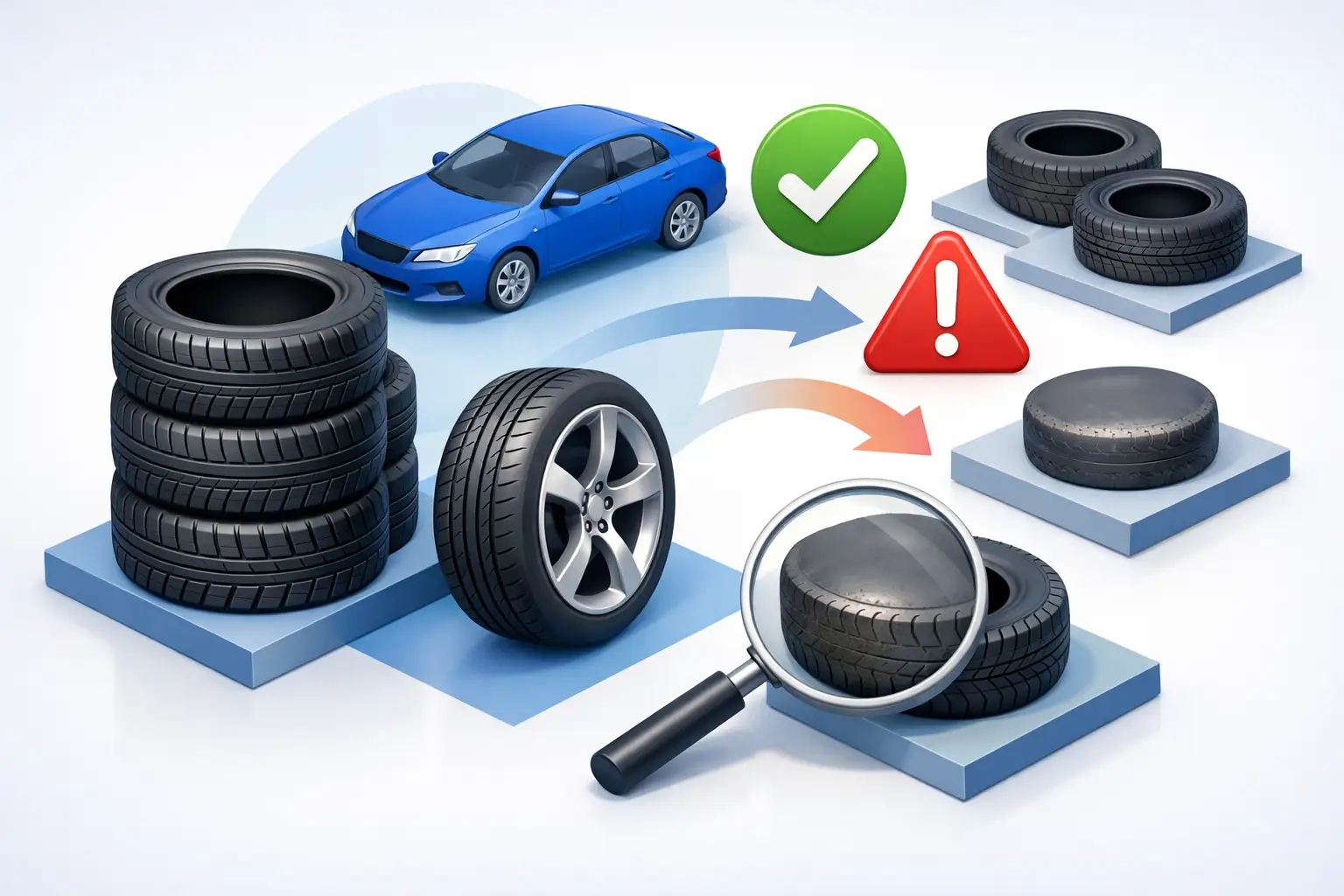
A puncture in one tire can turn a simple replacement into a bigger question: should I replace all tyres, or can I safely change only the damaged one? The right answer depends on your vehicle, the condition of the remaining tires, and where the new tire will sit. Replacing more tires than necessary can feel expensive, but mixing the wrong tread depths or tire types can cost you grip, stability, and confidence when it matters most.
Should I Replace All Tyres at Once?
Not always. For many front-wheel-drive or rear-wheel-drive vehicles, replacing two tires at a time is often the practical and safe choice when the other two still have healthy, even tread. The new matching pair should generally be fitted to the rear axle, even on a front-wheel-drive car. This helps maintain rear-end traction in wet conditions and reduces the risk of oversteer during sudden braking or cornering.
Replacing all four makes the most sense when all tires are similarly worn, when the tread is close to the legal or safe replacement limit, or when you want to restore the vehicle’s original balanced handling. It is also the smarter option if your current tires are old, cracked, mismatched, or wearing unevenly.
The exception that deserves special attention is all-wheel drive. Many AWD and 4WD systems need all four tires to have very similar rolling circumference. A single new tire beside three worn tires can make the drivetrain work harder than intended. Before replacing just one tire on an AWD vehicle, check the vehicle manufacturer’s permitted tread-depth difference. Some systems allow only a very small variation.
When One New Tire Can Be Enough
A single replacement can be reasonable if the damaged tire cannot be repaired and the other three tires are still relatively new. Ideally, the remaining tires should be the same brand, model, size, and speed rating, with only a small difference in tread depth.
For example, if a tire is damaged shortly after you bought a full set, fitting one identical replacement is usually the most cost-effective route. A professional installer can measure the tread depth of every tire and confirm whether the difference is acceptable for your vehicle.
There are limits. Do not assume that a tire with a similar-looking pattern is an acceptable match. Different tire models can have different tread compounds, construction, wet-weather behavior, and rolling resistance. On the same axle especially, matching tires support predictable braking and handling.
When You Should Replace Two Tires
Replacing a pair is usually the right call when one tire on an axle is worn out, damaged beyond repair, or significantly different from its partner. Tires work as a pair across each axle, so replacing only one worn front or rear tire can leave your vehicle pulling, braking unevenly, or responding differently from side to side.
Choose two identical tires in the correct size, load index, and speed rating for your vehicle. If possible, match the other pair as closely as you can. This is particularly valuable for SUVs, performance sedans, and vehicles that regularly carry passengers or heavier loads.
Although many drivers assume new tires always belong on the front axle because that is where steering happens, new tires are typically recommended for the rear axle. Better rear traction helps your vehicle remain stable if you encounter standing water, make an emergency lane change, or brake hard on a slick road.
When Replacing All Four Tires Is the Safer Investment
A full set delivers the most consistent grip, braking, ride quality, and steering response. It is the best choice when your tires show any combination of the following signs:
- Tread is worn close to 2/32 inch, or the wear bars are nearly flush with the tread.
- The tires are different brands, patterns, or ages and no longer perform as a balanced set.
- Cracks, sidewall damage, bulges, or repeated punctures affect more than one tire.
- Irregular wear points to an alignment, suspension, inflation, or rotation issue.
For performance cars, a complete matched set is especially worthwhile. High-grip tires are engineered to work together under braking, acceleration, and cornering loads. Mixing worn and new tires can dull turn-in, upset balance, and reduce the predictable feel enthusiasts expect.
For 4×4 owners, matching all four tires also matters off-road. Uneven tread can affect traction across loose sand, gravel, mud, and uneven terrain. A full set with the right all-terrain or highway-terrain pattern gives your vehicle a more controlled, consistent response.
Tread Depth Is Only Part of the Decision
A tire may have visible tread and still be due for replacement. Rubber ages over time, particularly in hot climates where heat, UV exposure, and long periods of parking can accelerate deterioration. Check for sidewall cracking, hard or dry rubber, vibration, and loss of wet grip.
Tire age can be found through the DOT date code stamped on the sidewall. The final four digits show the week and year it was made. A tire made in the 20th week of 2022, for instance, ends in 2022. Your vehicle manufacturer and tire maker can provide guidance on service life, but any tire with visible aging damage should be inspected promptly.
Also look at how the tread is wearing. Wear concentrated in the center often suggests overinflation. Wear along both shoulders may point to underinflation. Feathering, cupping, or one-sided wear can indicate alignment or suspension concerns. Replacing tires without correcting the cause can wear down your new set far too quickly.
Do Not Ignore the Vehicle’s Requirements
The correct replacement tire is more than a size printed on the sidewall. Load capacity, speed rating, construction, and fitment all affect safety and performance. A family SUV, a work vehicle, a sports coupe, and a track-focused car have very different needs.
Stay with the manufacturer-recommended tire size unless a qualified professional confirms that an alternative fitment is appropriate. Changing width, profile, or diameter without proper guidance can affect speedometer accuracy, clearance, fuel economy, and handling. On staggered performance setups, front and rear tire sizes may intentionally differ, so replacement should follow the vehicle’s original configuration.
If you use seasonal tires, replace them as matched axle pairs at minimum. A winter tire on one corner and a summer tire on the other is not a compromise worth making. Their grip characteristics are too different, particularly in wet or low-temperature conditions.
Get More Life From Your Next Set
A new set should feel like a reset for your vehicle, not the start of another avoidable wear problem. Keep tire pressures at the specification shown on the driver’s door placard, not the maximum pressure molded into the tire sidewall. Check pressures when the tires are cold, including the spare if your vehicle has one.
Rotate tires at the intervals recommended for your vehicle and have alignment checked when you notice a pull, an off-center steering wheel, or uneven wear. Balancing is equally valuable, helping reduce vibration and protecting both tires and suspension components.
Professional fitment gives you a clear picture before you spend. At GCC Tires, trained fitment partners can assess tread depth, tire condition, and compatibility, then install and balance the right tires for your vehicle. That means you can choose based on real need, whether that is one tire, a matched pair, or a complete set.
The best replacement decision is the one that protects your vehicle’s stability without wasting a good tire. Have every tire measured, match what must be matched, and treat unusual wear as a reason to investigate before your next drive.




 Get This Deal