


















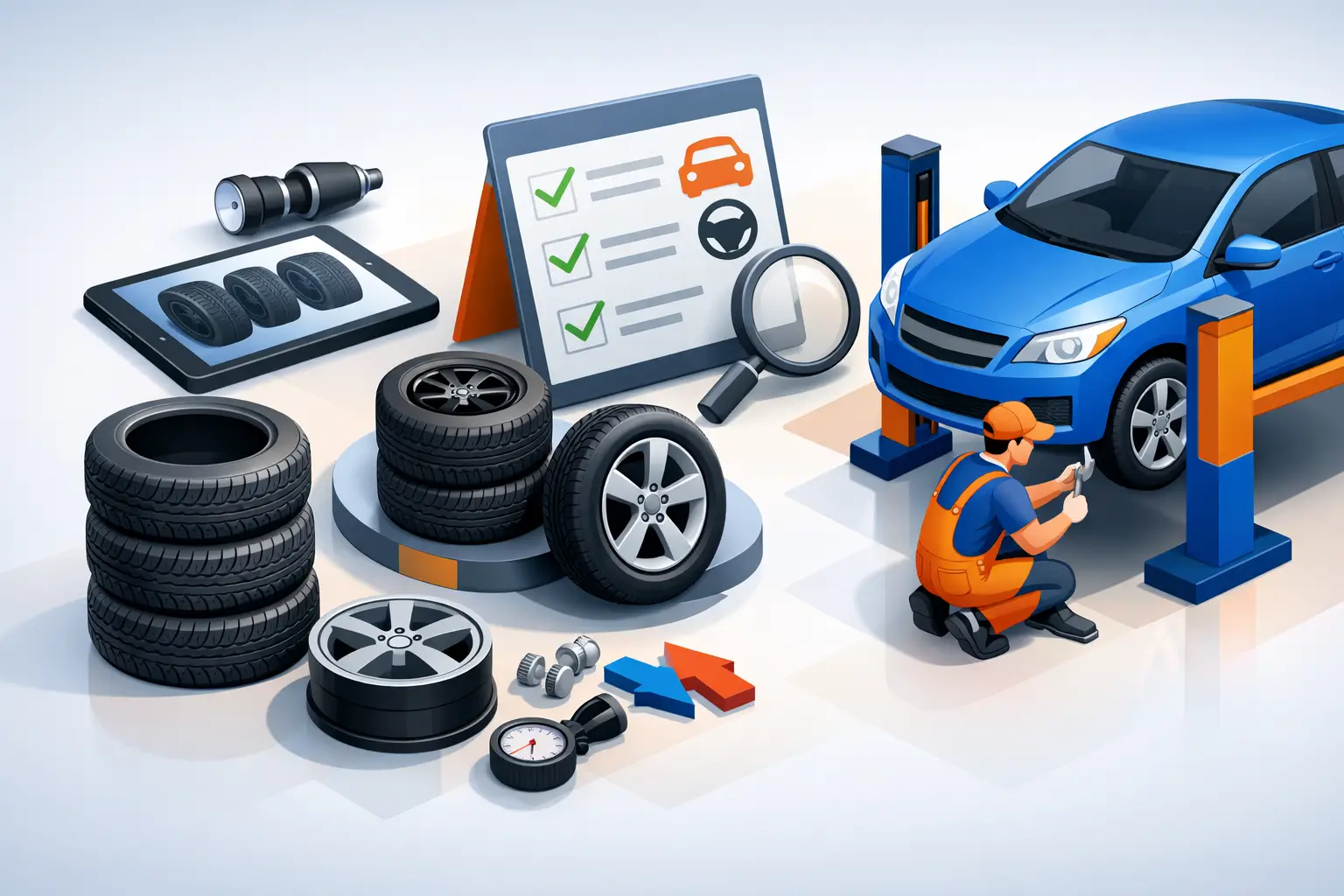
A worn set of tires can change the way your vehicle brakes, corners, and handles heat long before the tread looks completely finished. If you are wondering how to buy replacement tyres without second-guessing every option, the smartest approach is to match your vehicle, your driving habits, and your budget before you ever compare brands.
Buying tires should not feel complicated, but it often does because there are too many choices presented at once. Some drivers shop by price alone and end up with a tire that feels noisy, wears too quickly, or does not suit the roads they actually drive. Others overbuy and pay for performance they will never use. The right purchase sits in the middle – correct fitment, dependable quality, and value that makes sense for your car and your daily use.
How to buy replacement tyres without guesswork
Start with fitment. Before brand, tread pattern, or promotions, you need the correct tire size and load and speed rating for your vehicle. This information is usually printed on the sidewall of your current tire and often listed on the driver-side door placard. A size like 225/45R17 tells you the width, aspect ratio, construction type, and wheel diameter. Those details are not interchangeable just because another size looks close.
This is where many buying mistakes happen. A slightly different size may fit the wheel, but that does not mean it is right for the vehicle. It can affect ride comfort, steering response, speedometer accuracy, fuel economy, and clearance. If you drive an SUV, 4×4, performance sedan, or commercial vehicle, those differences matter even more because the tire plays a bigger role in load handling and stability.
The next check is whether you need a direct replacement or an upgrade within approved specifications. Some drivers want more comfort, quieter road noise, or better wet grip. Others want stronger sidewalls for heavier use or more confidence at highway speeds. Those are valid goals, but they still need to stay within fitment requirements.
Know what kind of driving your tires need to handle
The best tire for one driver can be the wrong tire for another, even when they drive the same vehicle. Think about where and how you use your car most often. City commuting, long highway miles, school runs, frequent cargo loads, weekend desert driving, and spirited performance use all place different demands on the tire.
For everyday passenger cars, most buyers are looking for balanced performance. That usually means predictable braking, low road noise, decent tread life, and strong wet-road control. A family SUV may need similar qualities, but with extra attention to load support and stability. A 4×4 or off-road vehicle may need an all-terrain pattern if it regularly leaves paved roads, although that can bring more road noise and a firmer feel on asphalt.
Performance cars are a different category. If you value sharper cornering, faster steering response, and higher grip levels, a performance tire makes sense. The trade-off is usually shorter tread life and a ride that feels less forgiving. Track-focused tires push that even further. They can offer serious grip, but they are rarely the best everyday answer for drivers who spend most of their time in traffic and heat.
Commercial-use vehicles need another level of practicality. Load rating, durability, and wear consistency usually matter more than sporty feel. Saving money upfront on the wrong tire often costs more later if replacement cycles come sooner or handling becomes less stable under load.
Price matters, but value matters more
If you are comparing options, the cheapest tire is not always the best deal. A lower upfront price can be attractive, especially when replacing all four, but tire value should be judged over the full life of the product. A tire that lasts longer, grips better in the wet, and wears evenly may save more over time than a low-cost option that needs earlier replacement.
That does not mean every driver should buy premium. There are strong mid-range and value brands that perform well for daily use and offer very good reliability. The key is to be honest about your priorities. If your vehicle is used mainly for routine commuting and local trips, a quality mid-range option may be the smartest buy. If you drive a luxury SUV, a high-powered sedan, or spend a lot of time at highway speeds, premium options often justify the extra spend through comfort, control, and durability.
A broad range helps here because it gives you room to compare by need instead of being forced into one price tier. That is one reason many buyers prefer a retailer that offers premium, mid-range, and budget-friendly products side by side. It makes the decision clearer and more practical.
Check the brand, but do not shop by logo alone
Brand reputation matters because tires are a safety product, not just another car accessory. Well-known manufacturers usually invest more in testing, compound development, wet braking performance, and consistency across production. That gives buyers more confidence.
Still, brand alone should not decide the purchase. Every major manufacturer has different tire lines made for different uses. One model may focus on quiet comfort, while another from the same brand is built for performance handling or SUV mileage. Looking only at the logo can cause you to miss the product that actually suits your driving better.
A smarter approach is to compare within your correct size, then narrow the options by use case. Daily commute, long-distance travel, off-road capability, performance handling, or commercial durability should lead the decision. After that, price and brand preference become much easier to weigh.
Replace two tires or four?
This depends on tread depth, drivetrain, and overall condition. If one pair is still relatively fresh and wearing evenly, replacing two may be acceptable. In that case, the new tires are often installed on the rear to help maintain stability, especially in wet conditions. But if the existing tires are aging, unevenly worn, or significantly lower in tread, replacing all four is usually the better move.
For all-wheel-drive vehicles, matching tread depth can be more important. A large difference between old and new tires can place extra strain on the drivetrain. If you drive an AWD SUV or crossover, check the manufacturer guidance before mixing tread wear levels.
The same logic applies to mixing tire types. Even if sizes match, combining different patterns or performance categories can create uneven handling. The car may still drive, but it may not drive predictably when you need maximum control.
Fitment and service are part of the purchase
A tire is only as good as the way it is installed. Proper mounting, balancing, inflation, and alignment all affect how the tire performs and how long it lasts. A strong buying experience should not end at checkout. It should include a clear path to professional fitment so the tire works as intended from day one.
This is especially important if you have noticed uneven wear on your current set. Buying new tires without addressing poor alignment can shorten their life quickly. The same goes for balancing issues that cause vibration or pressure settings that are too high or too low for the vehicle load.
That is why convenience matters. When you can buy the right tire, book authorized installation, and handle alignment and balancing in one process, you remove a lot of the risk and friction from the decision. GCC Tires is built around exactly that kind of practical buying journey – helping drivers move from search to fitment with confidence, real brand choice, and service support that protects the purchase.
How to avoid common buying mistakes
The biggest mistake is guessing the size instead of verifying it. The second is choosing a tire based only on price. After that, the most common issues are ignoring load and speed ratings, buying a performance tire for comfort-focused driving, and replacing tires without checking alignment.
Another mistake is waiting too long. Tires do not need to be completely bald to become unsafe. Reduced wet grip, longer braking distances, visible cracking, sidewall damage, vibration, or uneven wear are all signs that replacement should move up the list. In hot climates and demanding road conditions, delaying the decision can cost more than acting early.
If you are not sure what to choose, use the information you already have – tire size, vehicle type, and driving style. That narrows the field quickly. From there, compare trusted options across budget levels and choose the tire that fits your real use, not an imagined one.
Buying replacement tires gets easier when you stop treating it like a technical puzzle and start treating it like a fit-for-purpose decision. The right set should match your vehicle, suit your roads, support your driving style, and leave you feeling more secure every time you pull away.



 Get This Deal