




















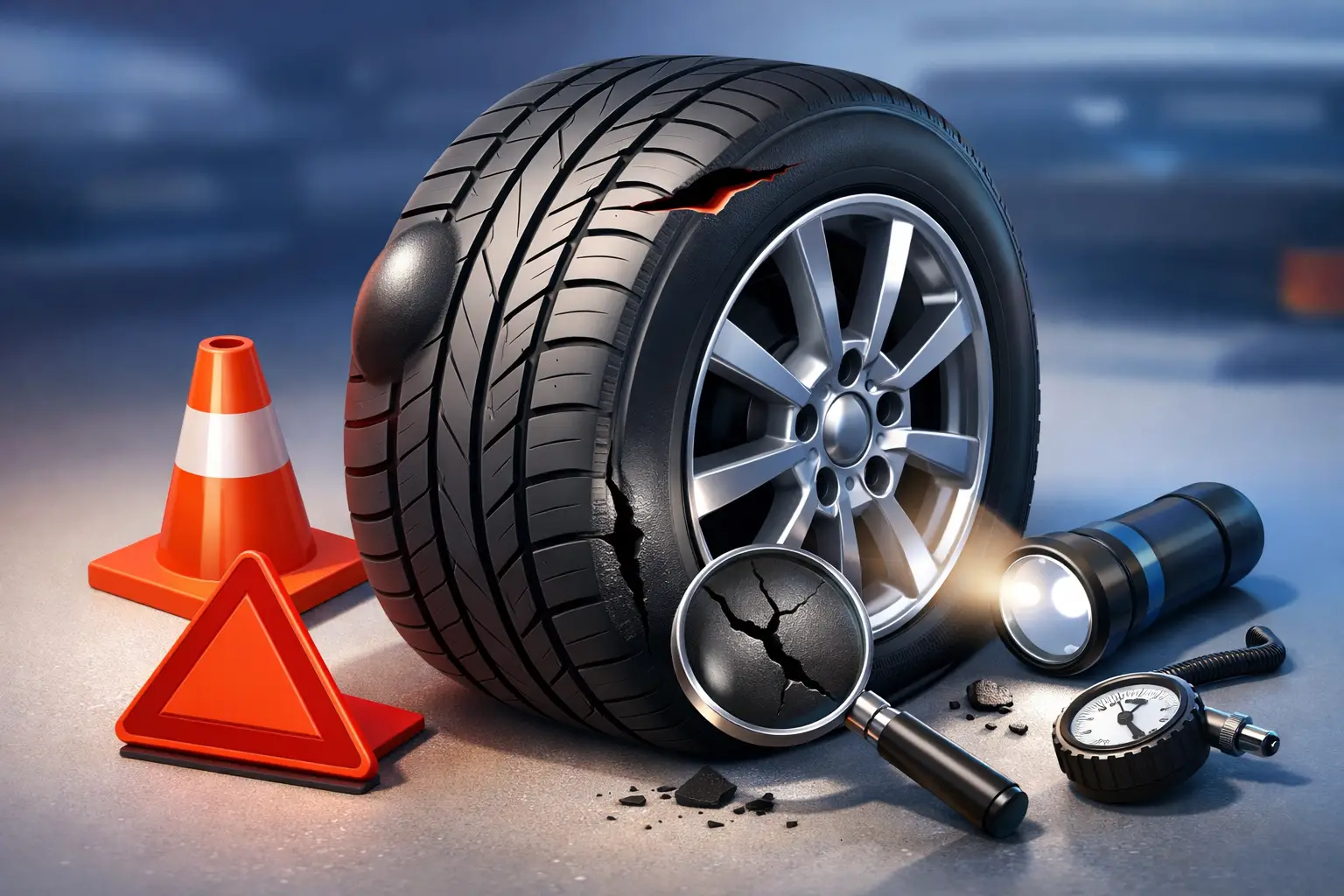
A tire can have deep tread and still be unsafe to drive. The tyre sidewall damage signs many drivers miss often appear near the curb-facing edge, where a quick walk-around is easy to skip. A bulge, deep cut, exposed cord, or sudden loss of pressure is not a cosmetic issue. It can mean the tire’s internal structure has been compromised.
For daily commuting, family trips, highway driving, and 4×4 use, the sidewall deserves the same attention as the tread. It is the part of the tire that flexes constantly, carries vehicle load, and helps absorb impacts. When it is damaged, replacement is usually the safest and most cost-effective decision.
Why tire sidewall condition matters
Unlike the tread area, a tire sidewall is not built to withstand puncture repairs. The rubber is thinner and more flexible because it must bend thousands of times every journey. Under that rubber are reinforcing cords that maintain the tire’s shape and strength.
An impact with a pothole, curb, sharp rock, or road debris can break those cords without leaving an obvious hole. Heat, low inflation pressure, overloading, and age can add stress over time. In Bahrain and across the Gulf, high road temperatures can make an already weakened sidewall deteriorate faster.
That is why a sidewall problem can escalate quickly. At highway speed, a weakened tire may lose pressure suddenly or suffer a blowout. The risk is greater when the vehicle is fully loaded, towing, or driven hard.
Tyre sidewall damage signs to check now
A short inspection before a long drive, after a hard pothole strike, or when washing the vehicle can reveal problems early. Look at both the outer and inner sidewalls where possible, and turn the steering wheel to see the front tires more clearly.
A bulge, bubble, or raised section
A bubble in the sidewall is one of the clearest replacement signals. It usually means the internal cords have snapped or separated after an impact, allowing the rubber to balloon outward. The tire may still hold air, but it no longer has its designed structural strength.
Do not try to deflate, patch, or continue using a tire with a sidewall bulge. Fit the spare if it is safe to do so, or arrange professional assistance. This is not a situation to postpone until the next service.
Cuts, splits, and deep cracks
A light surface mark from brushing a curb may be harmless. A cut that is deep, wide, growing, or long enough to expose fabric or steel cords is not. If you can see white, gray, or metallic material beneath the rubber, the tire needs immediate replacement.
Cracking also needs context. Fine, shallow lines on an older tire can point to aging and heat exposure. Larger cracks, cracks around the rim area, or cracking combined with pressure loss require prompt inspection. Tires on vehicles parked outside for long periods can age before their tread is worn out.
Exposed cords or separated rubber
Any visible cord is a stop-driving sign. Tire cords are part of the load-bearing structure, not a layer that can be covered with a repair. Likewise, loose rubber, a flap on the sidewall, or an area that looks like it is peeling away may indicate separation below the surface.
Do not judge this by how smoothly the vehicle drives. A damaged sidewall can feel normal until it fails.
Repeated low pressure or a slow leak
A slow leak does not always come from a nail in the tread. It can come from a sidewall cut, a damaged valve, or poor sealing at the wheel rim. If one tire repeatedly loses pressure, check it rather than adding air every few days.
Driving underinflated creates more sidewall flex and heat. That heat can damage the tire internally, even when the original cause was minor. If a tire has been driven very low or flat, a professional inspection is the right next step because internal damage is not always visible from the outside.
Vibration, pulling, or a change in handling
Vibration can have several causes, including wheel balance, bent wheels, suspension wear, or uneven tread wear. But after a curb or pothole impact, it may also accompany sidewall or internal tire damage. A vehicle that pulls, feels unstable, or develops a new thumping sensation should be checked before regular highway use.
These symptoms do not automatically mean the sidewall is damaged. They do mean guessing is not good enough. A qualified technician can inspect the tire, wheel, and fitment condition together.
What looks like damage but may be cosmetic?
Not every mark means a tire is finished. Small curb scuffs that remove only a thin layer of rubber are common, especially on low-profile performance tires. If there is no cut, bulge, crack, exposed cord, or pressure loss, the tire may remain serviceable.
The trade-off is visibility. It can be difficult to tell whether a mark is surface-only, particularly on dark rubber or after an impact. If you are unsure, have it inspected. Replacing a sound tire unnecessarily is wasteful, but driving on structurally damaged rubber is a far bigger risk.
Also check the rim. A hard impact can bend or crack a wheel, which can lead to air leaks and vibration even if the tire appears intact.
Common causes of sidewall damage
Curb strikes are a frequent cause, especially during tight parking or when avoiding traffic. Potholes can be even more severe because the tire is compressed between the road edge and the wheel. The lower the tire profile, the less rubber cushion there is between the wheel and the impact.
Off-road driving brings different risks. Sharp stones, rock edges, ruts, and low-pressure driving can cut or pinch a sidewall. A 4×4 tire designed with stronger sidewall protection can offer more confidence on rough terrain, but no tire is immune to a serious impact or slash.
Heat and pressure management matter too. Underinflation, overloaded vehicles, and long high-speed drives raise sidewall temperatures. Check pressure when the tires are cold, use the vehicle manufacturer’s recommended pressure, and account for added load when your owner’s manual specifies an adjustment.
Can sidewall damage be repaired?
In most cases, no. Standard tire repairs are limited to specific punctures in the repairable tread area. A plug or patch does not restore the strength of damaged sidewall cords, and temporary sealant is not a solution for a sidewall cut or bulge.
This is one area where saving money in the short term can create a costly safety problem later. If a sidewall is structurally damaged, replacement is the correct fix. Depending on the vehicle, tread depth, drivetrain, and remaining tire condition, you may need one tire, a matched pair on the same axle, or a complete set. All-wheel-drive vehicles can be particularly sensitive to differences in tire diameter, so follow the vehicle manufacturer’s guidance.
What to do when you find damage
If you see a bulge, exposed cords, a deep split, or fast pressure loss, avoid driving on the tire. Park safely, use a roadworthy spare if available, and arrange inspection or replacement. Do not rely on a tire inflator to make a compromised tire safe.
For a questionable scuff, minor crack, or slow leak, reduce unnecessary driving until a technician has examined it. Bring details about what happened, such as a recent pothole strike or curb impact. That helps the fitment team check the wheel and suspension as well as the tire.
When replacement is needed, match the correct size, load index, speed rating, and intended use. An everyday sedan, loaded family SUV, performance car, and working commercial vehicle demand different tire priorities. GCC Tires makes it easier to compare genuine options by vehicle, size, and driving need, then complete installation with professional fitment, balancing, and alignment support.
A tire sidewall rarely gives repeated warnings before it fails. Treat a bulge, exposed cord, deep cut, or unexplained pressure loss as your cue to stop, get it checked, and return to the road with tires you can trust.



 Get This Deal