




















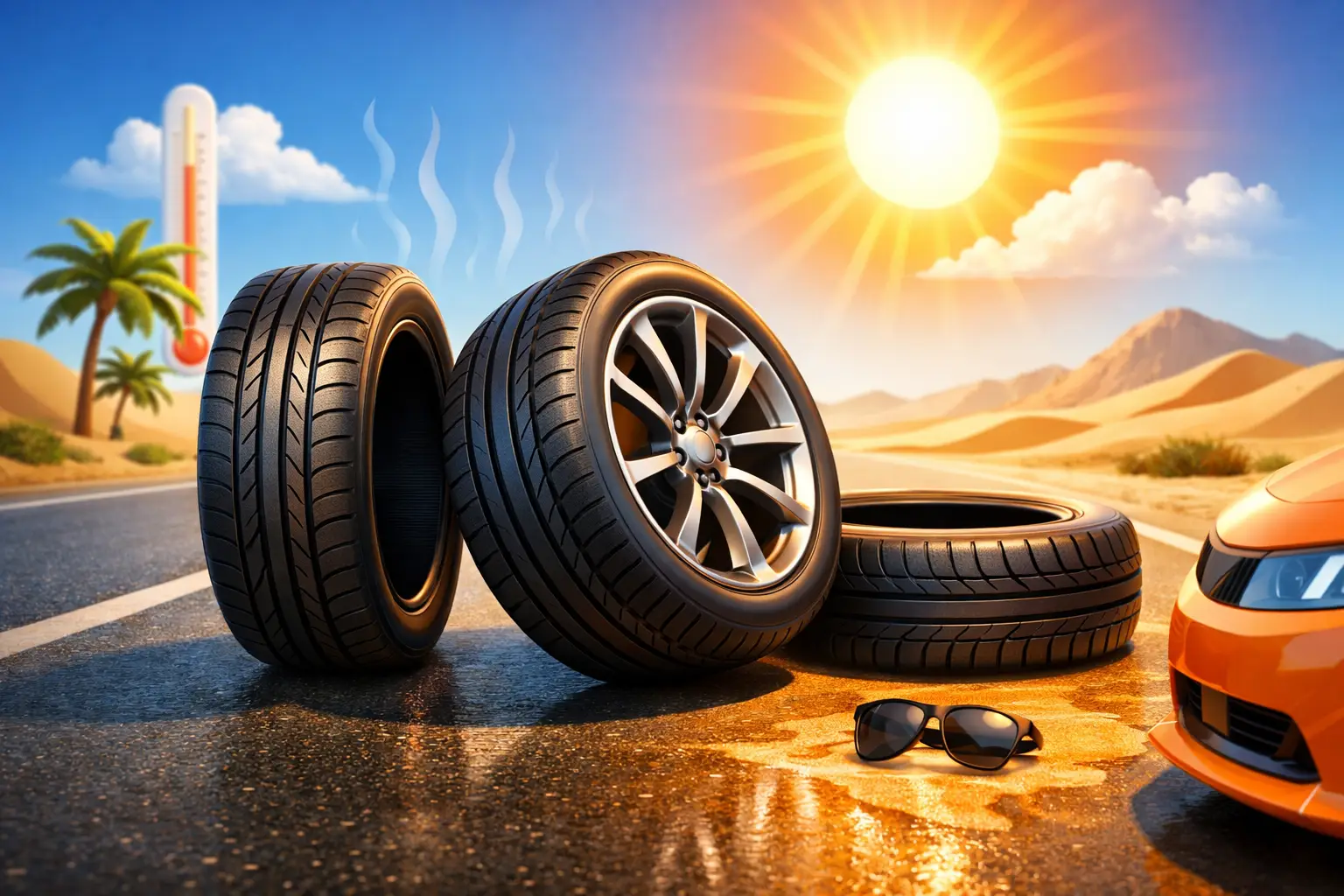
When the road surface feels hotter than the air and long highway runs are part of everyday driving, choosing the right tyres for hot weather stops being a minor detail. It affects braking, stability, tread life, fuel use, and how confident your vehicle feels in fast lane changes, heavy traffic, and high-speed cruising.
In hot climates, tires work harder. Heat builds up inside the casing, road surfaces become more abrasive, and incorrect tire choices wear out faster or lose performance when you need grip most. That matters whether you drive a family sedan, a large SUV, a 4×4, or a performance car that sees regular highway use.
What makes tyres for hot weather different?
The main difference is how the tire handles heat. In high temperatures, the rubber compound softens more quickly, and that changes the way the tread contacts the road. A quality hot-weather tire is designed to manage this heat without becoming too soft, unstable, or prone to rapid wear.
That does not mean every summer-style tire is automatically the best option for every driver. It depends on your vehicle, your usual speed, your load, and the condition of the roads you drive most often. A commuter car used for city errands needs something different from a performance coupe or a loaded SUV used for family travel.
Good tyres for hot weather usually focus on three things at once: stable grip in high temperatures, resistance to heat-related wear, and predictable handling under braking and cornering. The best options balance these traits without making the ride harsh or the tread life disappointingly short.
Why heat is so hard on tires
Hot weather creates stress from both outside and inside the tire. The outside heat comes from the road itself. Asphalt can get significantly hotter than the surrounding air, especially during midday driving. The inside heat comes from repeated flexing as the tire rolls, accelerates, brakes, and carries weight.
When those two sources of heat combine, a low-quality or poorly matched tire can start to show problems sooner. You may notice faster shoulder wear, less precise steering, longer stopping distances, or a general feeling that the vehicle is not as planted as it should be.
Air pressure also changes more quickly in high temperatures. A tire that was already slightly overinflated or underinflated can move further out of its ideal range once the heat rises. That affects wear and handling, and it can reduce the contact patch that gives you grip.
The trade-off between grip and tread life
Drivers often want one tire that does everything: excellent grip, long life, quiet comfort, and low price. In reality, there is always some trade-off. Softer compounds usually offer stronger dry grip, but they may wear faster. Harder compounds may last longer, but they can feel less responsive.
For hot-weather driving, the goal is not simply the softest tire. It is a tire built to stay consistent in high temperatures. That consistency is what gives you confidence during hard braking, fast turns, and long-distance driving.
How to choose the best tyres for hot weather
Start with your driving style, not just your tire size. Size and fitment must be correct, of course, but the better question is how your vehicle is actually used. A driver who spends most of the week in stop-and-go city traffic has different priorities from someone covering long highway distances at higher speeds.
If comfort, value, and daily reliability matter most, look for touring or premium comfort tires from trusted brands with strong heat resistance and even tread wear. These are often a smart fit for sedans, crossovers, and family SUVs. They are designed to deliver stable handling without unnecessary road noise or excessive wear.
If you drive a performance sedan, coupe, or sports SUV, you may need a tire with a more aggressive compound and stronger sidewall support. These tires usually improve steering response and dry-road grip, but they can wear faster and cost more. That is often a worthwhile trade if control is your top priority.
For larger SUVs and 4×4 vehicles, load capacity matters just as much as tread design. A tire that performs well in heat but is not suited to the weight and balance of your vehicle will never deliver its best. The right option should support the vehicle properly while maintaining grip and tread stability in demanding temperatures.
Check the sidewall details carefully
Many buyers focus only on width and rim size, but the sidewall carries more important information. Load index and speed rating matter, especially in hot regions where highway driving is common. Choosing a tire with the correct rating helps ensure it can handle the vehicle’s demands safely.
This is also where expert fitment support becomes valuable. Two tires may appear similar, but the wrong load or speed specification can affect safety, wear, and ride quality. A proper match saves money over time because it reduces the risk of uneven wear and premature replacement.
Features worth looking for in hot-weather tires
A strong heat-resistant compound is the first priority, but it should not be the only one. Tread design still matters because hot-weather roads are not always perfectly dry or clean. Dust, polished pavement, and occasional wet patches can all reduce grip.
Look for a tire with solid dry handling, stable center ribs for straight-line control, and grooves that help maintain traction if road conditions change. If you regularly drive at highway speeds, a design that reduces heat buildup and improves straight-line stability can make a noticeable difference.
Noise and comfort matter too. Some high-grip tires perform well in heat but create more cabin noise or a firmer ride. That may be acceptable in a sporty vehicle, but less appealing in a family car used every day. The right choice is the one that fits how you actually drive, not just what sounds impressive on paper.
Common mistakes when buying tyres for hot weather
One of the biggest mistakes is buying on price alone. Budget matters, and value matters, but the cheapest option is not always the lowest-cost option over time. If a tire wears out quickly, struggles with heat, or delivers poor braking performance, any upfront savings disappear fast.
Another common mistake is ignoring vehicle type. A tire that works well on a compact sedan may not be suitable for a heavy SUV. The opposite is also true. Overbuilt tires on a lighter vehicle can sometimes compromise comfort or efficiency without adding meaningful benefit.
Some drivers also delay replacement too long. In hot conditions, worn tread becomes even more of a liability because the tire has less material left to manage heat and maintain grip. If the tread is low, the wear is uneven, or the tire is aging out, replacement should not wait.
Fitment, alignment, and pressure matter more than most drivers think
Even the best tire will underperform if it is fitted incorrectly or run at the wrong pressure. Hot weather magnifies small setup problems. Poor alignment can quickly wear the inside or outside edges of the tread. Incorrect balancing can make the vehicle feel unsettled at speed. Wrong air pressure can reduce grip, comfort, and tire life.
That is why buying the right tire is only part of the job. Professional installation, balancing, and alignment support help protect your investment and make sure the tire performs the way it was designed to. For drivers who want a straightforward replacement process, that convenience matters as much as brand choice.
Premium, mid-range, or value – what makes sense?
There is no single correct answer. Premium tires typically offer the best balance of heat resistance, braking, comfort, and long-term consistency. Mid-range options can be excellent for drivers who want dependable everyday performance without paying top-tier pricing. Value-focused tires may suit lower-mileage drivers or older vehicles, but quality varies more, so careful selection matters.
A smart purchase is not always the most expensive one. It is the tire that matches your vehicle, your driving habits, and your expectations for safety, comfort, and lifespan. That is where a wide brand range becomes useful because it gives you room to compare real fitment options instead of forcing one price point or one brand.
For drivers who want a faster, more practical buying experience, GCC Tires makes that process easier by helping you shop by size, vehicle, brand, and performance need while keeping fitment convenience in view.
When it is time to replace
If your tires feel less stable in the heat, show visible cracking, have uneven wear, or no longer inspire confidence during braking, do not wait for a bigger problem. Hot-weather driving exposes weak tires quickly, and replacement is far less costly than dealing with a breakdown, damaged handling, or compromised safety.
The right tire gives you more than movement from one place to another. It gives you control when the road is hot, the traffic is heavy, and the miles keep adding up. Choose for the way you drive now, and your vehicle will feel safer, sharper, and more dependable every time you head out.



 Get This Deal