


















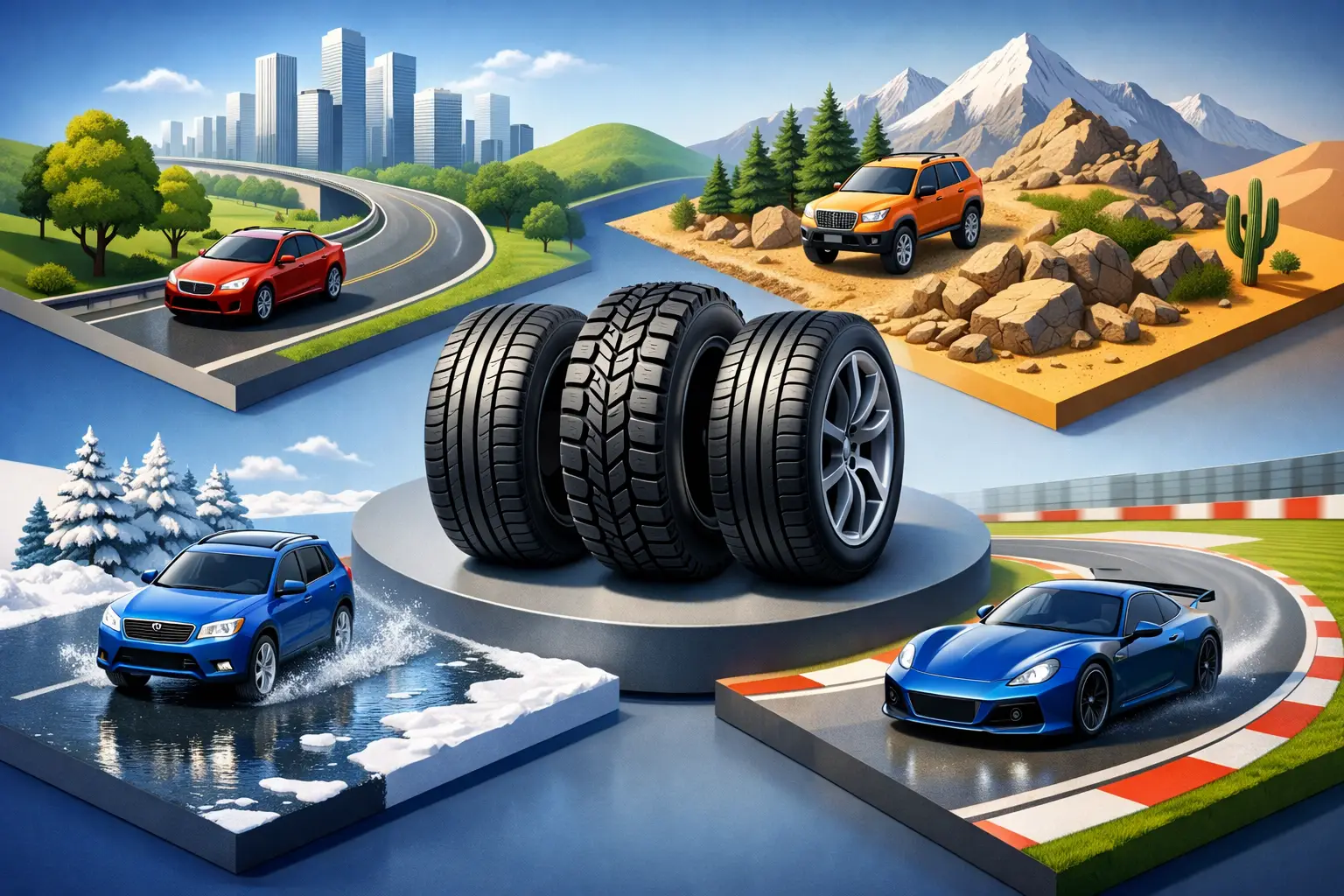
The wrong tires usually do not announce themselves right away. They show up as longer stopping distances, extra road noise, uneven wear, or that vague feeling when the steering should be sharper than it is. If you are replacing tires, the goal is not just to buy what fits. It is to choose what actually works for your vehicle, your roads, and the way you drive.
That matters even more when the options are wide. A daily commuter sedan, a family SUV, a 4×4 that sees weekend desert use, and a performance car built for grip all need something different. Price matters, of course, but so do safety, durability, ride comfort, and fitment support. The best buying decision usually comes from balancing all of them, not chasing one feature in isolation.
What tires actually change on the road
A tire is your vehicle’s only contact with the road surface. That makes it a safety product first, even before it becomes a comfort or performance choice. Tread design affects how water is dispersed, how stable the vehicle feels in corners, and how much traction you get under braking. Sidewall construction influences ride quality and steering response. Compound choice changes how quickly a tire warms up, how much grip it delivers, and how fast it wears.
This is why two tires in the same size can feel completely different. One may be quieter and last longer, while another may offer stronger grip but wear faster. Neither is automatically better. It depends on what your vehicle needs and what you expect from it every day.
How to choose tires without guessing
The fastest way to narrow the search is to begin with fitment, then move to usage. Start with the size recommended for your vehicle. You will usually find it on the driver-side door placard or in the owner’s manual. Once the size is confirmed, the next step is deciding what kind of driving the tire needs to handle most often.
If your driving is mostly city commuting and highway travel, comfort, low noise, predictable wet grip, and long tread life should be high on the list. For family SUVs, load handling and stability matter more, especially if the vehicle regularly carries passengers and cargo. For 4×4 owners, the question becomes whether the vehicle spends more time on pavement, rough tracks, or sand. For performance drivers, dry grip, braking response, and heat management become much more important than maximum mileage.
Budget matters too, but it should be treated realistically. A lower upfront price can make sense if the tire still delivers dependable traction and even wear. At the same time, the cheapest option is not always the best value if it wears quickly or compromises ride quality. Premium, mid-range, and value brands all have a place. The right choice is the one that matches your use case without making you pay for features you do not need.
Tires by vehicle type and driving style
Tires for daily drivers
For sedans and standard passenger cars, most drivers want quiet operation, fuel-conscious rolling resistance, and steady braking in both dry and wet conditions. In this category, a balanced touring tire often makes the most sense. It is designed to keep the drive composed, reduce road harshness, and deliver predictable handling without leaning too far into sportiness or off-road capability.
If your routes include frequent highway miles, tread life becomes especially important. A tire that stays stable at speed and wears evenly can reduce replacement frequency and keep running costs more manageable.
Tires for SUVs and family vehicles
SUVs place different demands on tires because of their weight, ride height, and common use cases. Many need stronger load support, solid wet-road confidence, and a comfortable ride over longer distances. Drivers often assume an SUV needs a more aggressive tread, but that is not always true. If the vehicle is almost always on-road, a highway-focused SUV tire is often the better fit than an all-terrain option.
That trade-off matters. More aggressive tread can improve loose-surface traction, but it may also increase road noise and reduce ride smoothness on pavement.
Tires for 4×4 and off-road use
For 4×4 owners, the choice usually comes down to how much compromise you can accept on-road. All-terrain tires aim to cover both paved and mixed-surface driving, making them a practical fit for drivers who want versatility. Mud-terrain options go further in off-road traction, but they are often louder, firmer, and less refined for daily use.
If the vehicle is a true dual-purpose setup, all-terrain tires often offer the best middle ground. If it is a dedicated off-road machine, the decision shifts in a different direction.
Tires for performance cars
Performance tires are built around response. They sharpen turn-in, improve cornering grip, and shorten braking distances when driven within the right conditions. The trade-off is usually faster wear and a firmer ride. That can be worth it if you want control and confidence at speed, but less appealing if your priority is long life and quiet commuting.
For drivers who enjoy spirited road use or track-focused setups, choosing the correct performance category is essential. Some tires are tuned for everyday sporty driving, while others are much more specialized. Buying beyond your actual needs can leave you with a tire that feels impressive in theory but inconvenient in practice.
Understanding tire size and ratings
One reason tire shopping feels complicated is that the sidewall contains a lot of information in a small space. A size like 225/45R17 tells you the width, profile, construction type, and wheel diameter. Load index and speed rating matter just as much, because they indicate how much weight the tire can carry and the speed range it is designed to handle safely.
Matching the original specification is usually the safest path unless there is a clear reason to change. Going wider, lower-profile, or more aggressive may alter ride comfort, steering feel, and wear. Sometimes that is intentional. Often, it just creates unnecessary compromise.
If you are unsure, this is where a retailer with size, vehicle, and brand filters makes the process easier. It removes guesswork and helps narrow the options to products that are actually compatible with your car.
When brand matters and when it does not
Brand matters because manufacturing standards, compound technology, and testing consistency vary. Well-known names often invest more in wet braking, tread life development, and noise control. That said, not every driver needs the highest-priced option on the page.
A premium brand may be the right call for a performance vehicle or a driver who covers heavy mileage and wants long-term consistency. A strong mid-range tire can be the smarter buy for everyday use if it meets the right standards and fits the budget better. Value brands also have a role, especially for drivers who need a practical replacement without stretching costs too far.
The better question is not, “What is the best brand?” It is, “What is the best fit for this vehicle and this budget?”
Why installation matters as much as the tires themselves
A good tire can still underperform if it is installed poorly. Proper fitment, balancing, and alignment have a direct effect on wear, comfort, and control. If alignment is off, even a new set can wear unevenly much sooner than expected. If balancing is not right, vibrations can appear at speed and reduce driving confidence.
That is why the buying experience should not end at checkout. Professional installation closes the loop. It protects the product you paid for and helps the vehicle feel right from the first drive. This is where a service-led retailer stands out, especially when the process includes fitment support through authorized partners and practical value like balancing and alignment offers.
For many buyers, convenience is part of safety. Being able to choose by size, brand, vehicle, or performance category, then move directly into installation, saves time and reduces the risk of ordering the wrong product. GCC Tires is built around that kind of straightforward process, which is exactly what most replacement buyers need.
Signs it is time to replace your tires
Sometimes the timing is obvious. The tread is visibly worn, the tire is damaged, or grip has dropped off noticeably in the wet. Other times, the signs are quieter. You may notice the vehicle pulling slightly, a rougher ride, or more road noise than before. Cracking, uneven shoulder wear, or repeated pressure loss also deserve attention.
Waiting too long usually costs more than replacing at the right time. Worn tires reduce braking confidence and can affect fuel efficiency and suspension wear. Replacing them before they become a bigger problem keeps the vehicle safer and more predictable.
The best tire choice is rarely the most expensive or the most aggressive. It is the one that fits your vehicle correctly, matches the way you actually drive, and comes with proper installation support. Get that balance right, and every trip feels more controlled from the moment you pull away.



 Get This Deal