


















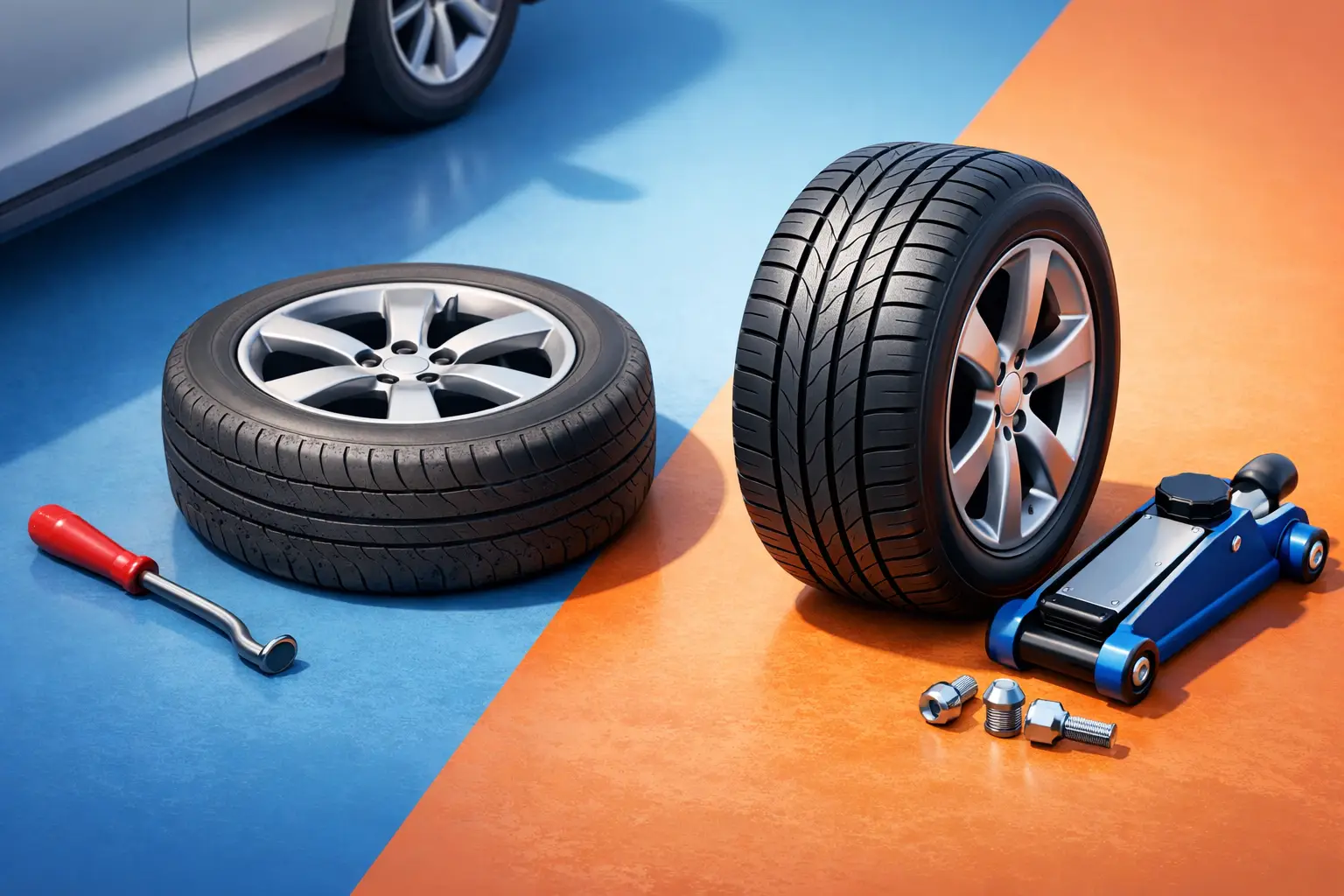
A puncture, sidewall damage, or a failed inspection usually leads to the same question: can I replace one tyre and move on? Sometimes yes. Sometimes it is the wrong call for safety, handling, and long-term wear. The right answer depends on your vehicle, the condition of the other tyres, and where the new tyre will be fitted.
If you want the short version, replacing one tyre can be acceptable when the remaining tyres are still in very good condition and closely matched in tread depth, size, construction, and speed rating. If the difference in wear is too large, or if your vehicle is all-wheel drive, replacing a pair or even the full set may be the smarter option.
Can I replace one tyre safely?
You can replace one tyre safely in some situations, but not in all of them. A single replacement works best when the other tyre on the same axle is relatively new and has very little wear. That means the tread depth should be close to the new tyre, and the brand, pattern, and performance category should ideally match.
Problems start when one tyre has much deeper tread than the others. That difference can affect how the car brakes, turns, and puts power to the road. On wet roads, the mismatch can become even more noticeable because a newer tyre may clear water more effectively than a worn one.
For everyday drivers, the biggest issue is balance. Your car is designed to work best when the tyres on each axle behave similarly. If one tyre grips better, flexes differently, or has a different rolling circumference, the vehicle can feel unsettled under braking or in fast lane changes.
When replacing one tyre makes sense
There are cases where replacing one tyre is perfectly reasonable. If you damaged a nearly new tyre on a pothole or road hazard, and the other three tyres still have plenty of life left, a single replacement may be the most cost-effective move.
It also makes sense when you can get the exact same tyre again. Matching the same brand, model, size, load index, and speed rating gives you the best chance of preserving the car’s original handling feel. If the remaining tyre on that axle has only minor wear, the difference may be small enough to avoid any real issue.
This option is usually more realistic on two-wheel-drive vehicles than on all-wheel-drive systems. Front-wheel-drive and rear-wheel-drive vehicles are often more tolerant of a small difference in tread depth, although that does not mean any mismatch is acceptable.
When one tyre should not be replaced alone
If the tyre on the opposite side of the same axle is significantly worn, replacing just one is usually a false economy. The new tyre will not behave like the older one, and that mismatch can affect braking stability and cornering consistency.
The same applies if your current tyres are already unevenly worn, aged, cracked, or close to the wear bars. In that case, a single new tyre simply highlights the weakness of the others. You may save money today but lose it later through poor wear, reduced performance, and another replacement sooner than expected.
All-wheel-drive vehicles deserve extra caution. Many AWD systems are sensitive to differences in rolling diameter between tyres. Even a modest tread-depth gap can put added strain on the drivetrain. Some manufacturers set strict limits for how much variation is allowed. If your vehicle is AWD, replacing one tyre without checking those limits can become an expensive mistake.
Why tread depth matters more than most drivers think
Tread depth is not just about how long a tyre lasts. It directly affects grip, especially in the wet. A new tyre with deep grooves can evacuate water more efficiently than a worn tyre. Put one new tyre beside one older tyre on the same axle, and they may react differently in heavy rain or emergency braking.
There is also the matter of rolling circumference. A new tyre is slightly larger overall than a worn one because it has more tread. That difference may sound minor, but it can influence ABS, traction control, and AWD systems. Modern vehicles rely on consistent wheel-speed data, and mismatched tyres can interfere with how those systems interpret road conditions.
This is why professional fitment advice matters. It is not just about whether a tyre physically fits the wheel. It is about whether it works correctly with the rest of the set.
Should you replace two tyres instead?
In many cases, yes. Replacing two tyres on the same axle is often the best balance between safety and cost. If one tyre is damaged and its partner is already moderately worn, fitting a fresh pair gives you matched tread depth and more predictable handling.
For most passenger vehicles, matching tyres across the same axle is the baseline recommendation. That means if one front tyre is being replaced, the other front tyre should be evaluated closely. The same goes for the rear axle.
There is also the question of where the newest tyres should go. Many drivers assume new tyres belong on the front because that is where steering happens on most vehicles. In practice, the newer tyres are generally fitted to the rear to improve rear-end stability, especially on wet roads. A rear loss of grip is harder for most drivers to control than a front loss of grip.
That advice can vary depending on the vehicle and tyre condition, but it is a strong general rule. A professional installer will look at your tread depths, drivetrain, and wear pattern before making the final call.
Can I replace one tyre with a different brand?
You can, but it is rarely ideal. Even when the size on the sidewall matches, tyres from different brands can have very different tread designs, rubber compounds, sidewall stiffness, and road manners. One may be tuned for comfort, another for performance, and another for long life.
That can create an uneven feel across the axle or across the whole vehicle. You might notice it as extra road noise, inconsistent braking feel, or a car that feels less planted in corners. For SUVs and 4x4s, the difference can become more obvious because these vehicles place more demand on their tyres in loaded driving, high temperatures, and mixed road conditions.
If the exact same tyre is unavailable, the safest approach is to choose a replacement with the same size, service description, and category, then consider replacing the pair instead of just one.
What about patched or repaired tyres?
Not every damaged tyre needs replacement. A simple puncture in the tread area can often be repaired if the internal structure is still sound. But a sidewall cut, shoulder damage, or a tyre driven flat is a different story. Those cases usually call for replacement.
If you are deciding between repairing one tyre and replacing one tyre, the condition of the casing matters more than the visible hole. A proper inspection from inside the tyre is the only reliable way to know whether it is safe to keep using.
The cost question: save now or spend smarter?
It is understandable to want the lowest immediate cost. One tyre is cheaper than two, and two are cheaper than four. But tyre buying should be measured against what happens on the road, not just at checkout.
If a single replacement creates uneven wear or compromises grip, you may end up replacing the matching tyre sooner anyway. If an AWD system is involved, the wrong choice can cost far more than a second tyre. The better value is the option that keeps the vehicle stable, protects the drivetrain, and delivers even wear across the set.
That is why a practical inspection matters. Tread depth, age, wear pattern, and vehicle type tell the real story. At GCC Tires, that customer-first approach is the difference between simply fitting a tyre and fitting the right tyre for safe, confident driving.
A better way to decide
If you are asking can I replace one tyre, start with three checks. Look at the tread depth on the other tyres, confirm whether your vehicle is two-wheel drive or AWD, and find out whether the exact same tyre is available. Those three details usually point you toward the right answer quickly.
If the other tyres are nearly new and closely matched, one tyre may be enough. If they are worn, mismatched, or the vehicle is sensitive to diameter differences, replace two or more. That is not upselling. It is protecting grip, control, and the parts of your vehicle that depend on tyres working together.
A tyre is not just a round part you replace when it goes bad. It is one-quarter of your vehicle’s contact with the road. Treat it that way, and the next decision gets a lot clearer.


 Get This Deal