




















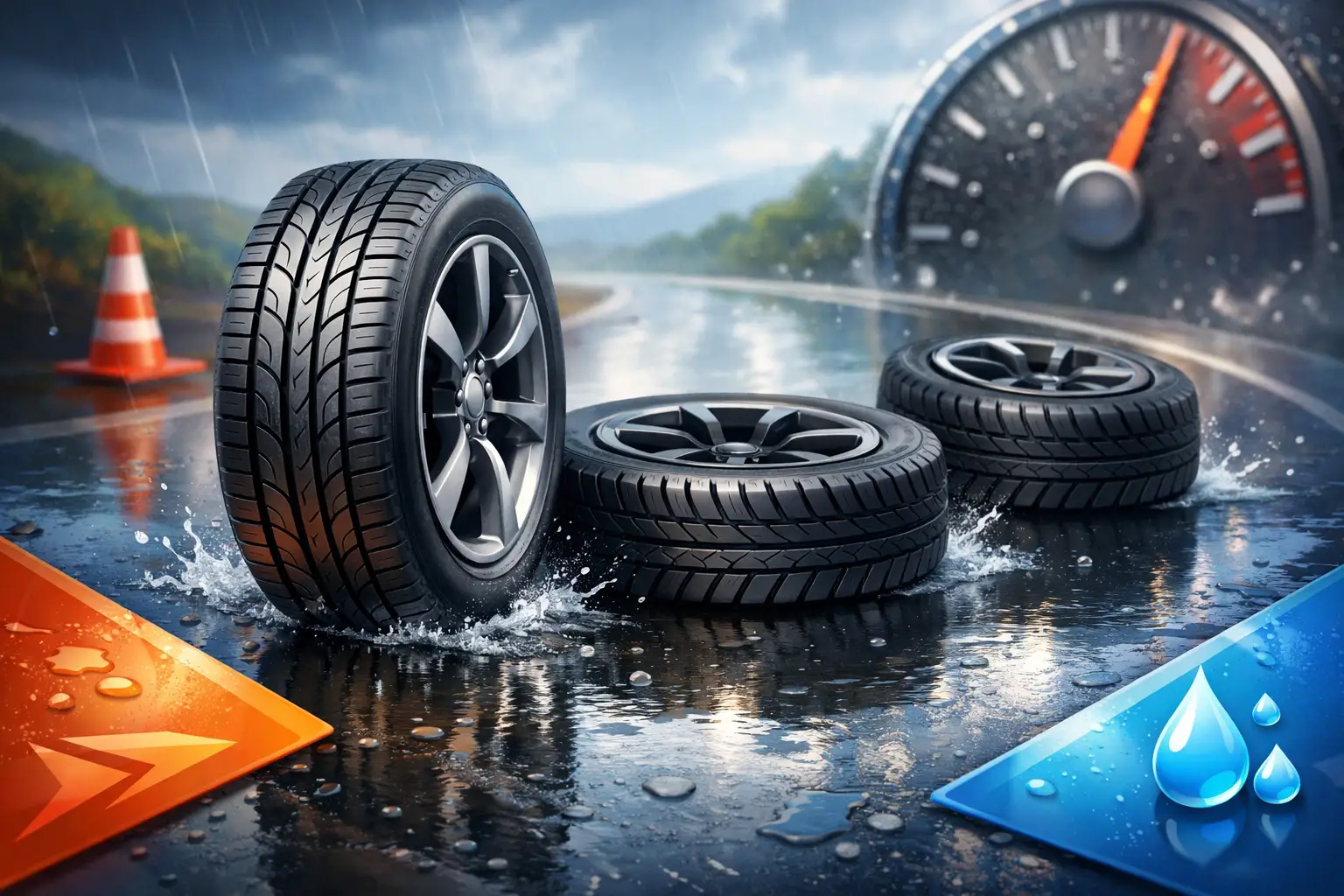
Rain changes everything in a split second. The road looks normal, then your braking distance stretches, cornering feels vague, and standing water starts testing your tire’s ability to hold the line. If you are shopping for the best tyres for wet grip, you are really shopping for shorter stopping distances, better control, and more confidence every time the weather turns.
Wet grip is not a bonus feature. For many drivers, it is one of the most important performance factors to get right. That is especially true for family cars, SUVs, daily commuters, and performance vehicles that need predictable handling when the road surface is slick. The right tire can help your vehicle stay composed under braking, resist hydroplaning, and keep steering response more stable in heavy rain.
What makes the best tyres for wet grip?
Wet grip comes down to how well a tire can clear water and keep its rubber in contact with the road. That sounds simple, but it depends on several design choices working together.
The first is tread pattern. Wide grooves and well-designed channels help move water away from the contact patch. If water cannot escape quickly enough, the tire starts to ride on top of it instead of cutting through it. That is where hydroplaning begins, and when it happens, braking and steering can drop off fast.
The second is rubber compound. A tire built for strong wet performance usually uses a compound designed to stay flexible and generate traction on cooler, damp surfaces. This is one reason not all tires feel the same in the rain, even if they look similar at a glance. A cheaper or harder compound may last longer in some cases, but it can give up grip sooner on wet pavement.
The third is construction and tread block design. Good wet-grip tires manage the balance between water evacuation, straight-line stability, cornering support, and braking response. That balance matters because a tire can be excellent in one area and average in another. The best choice depends on how and where you drive.
Wet grip is not the same for every driver
A daily commuter does not need the same tire as a sports sedan owner, and an SUV used for school runs does not need the same setup as a 4×4 that sees mixed road conditions. The best tyres for wet grip depend on your vehicle, your driving style, and your priorities.
If your main concern is everyday safety, focus on a premium touring or comfort tire with strong wet braking and predictable handling. These tires are designed to stay quiet, comfortable, and dependable in real-world driving. They make sense for sedans, crossovers, and family SUVs that spend most of their time on city streets and highways.
If you drive a performance car, you may want a max-performance summer tire with excellent wet handling. These tires can offer impressive grip in the rain while also delivering sharper steering and cornering response in dry conditions. The trade-off is usually faster wear, a firmer ride, and less versatility when temperatures drop.
For SUVs and 4×4 vehicles, wet-road confidence still matters even if off-road styling is part of the appeal. Some all-terrain tires look aggressive but give up noticeable wet-road performance compared with road-focused SUV tires. If your vehicle spends most of its time on pavement, a highway-terrain or road-biased SUV tire is often the smarter pick.
How to read wet performance beyond marketing
Most tire buyers see phrases like strong rain performance or advanced water evacuation, but those claims only help if you know what to compare. Start with trusted product testing, manufacturer data, and category fit. Not every premium tire is the wet-grip leader in its class, and not every value tire is poor in the rain.
Look closely at braking and handling performance rather than just general descriptions. Wet braking matters most because that is where safety becomes real. A tire that stops several feet shorter on wet roads can make a major difference in an emergency.
It also helps to compare tires within the same category. A touring tire should be judged against other touring tires, not against a track-focused model. A high-performance summer tire may offer stronger wet cornering than an all-season tire, but that does not mean it is automatically the right solution for every driver.
Tread depth matters more than many drivers realize
Even the best wet-grip tire loses effectiveness as it wears down. As tread depth drops, the tire has less space to channel water away. That means hydroplaning resistance declines over time, sometimes before drivers notice any obvious problem in dry conditions.
This is why replacing tires at the right time matters so much if wet safety is a priority. A worn premium tire can become less reassuring in rain than a newer mid-range option with healthy tread depth. If your current tires feel nervous in standing water or need more distance to stop in the wet, wear may be part of the problem.
Uneven wear also changes wet performance. Misalignment, incorrect inflation, or neglected rotation can reduce the contact patch and make the vehicle feel less stable in the rain. Proper fitment, balancing, and alignment are not extras. They are part of getting the performance you paid for.
Size, speed rating, and load rating all affect the result
Wet grip is not just about brand and model. The tire must also be the right size and specification for your vehicle. An incorrect size can affect handling balance, braking, and water evacuation. The same applies to load rating and speed rating.
Wider tires can sometimes increase dry grip, but they are not always better in heavy rain for every application. In some cases, a tire that is too wide for the vehicle setup can be more prone to hydroplaning because it has to push more water aside. That does not mean narrow is always better. It means fitment should match the vehicle manufacturer’s requirements and your actual driving needs.
This is where expert guidance helps. If you are replacing factory tires, staying within the correct size range is the safest route. If you are changing wheel size or moving to a more performance-oriented setup, the wet-weather trade-offs should be clear before you buy.
Premium, mid-range, or value?
There is a reason premium brands often lead in wet braking and wet handling tests. They invest heavily in compound development, tread engineering, and real-world testing. If wet grip is your top priority, premium tires usually give you the strongest overall confidence.
That said, not every driver needs the most expensive option. Many mid-range tires deliver very solid wet-road performance at a more accessible price point, especially for everyday driving. The key is avoiding the trap of buying only on price. A bargain tire that feels uncertain in the rain can cost more in safety, comfort, and replacement frequency.
For drivers balancing budget and performance, the right move is often a proven mid-range model from a recognized manufacturer rather than the cheapest option on the shelf. A retailer with a wide brand portfolio can make that comparison easier because you can match your budget to your driving priorities without guessing.
Choosing the best tyres for wet grip by vehicle type
For compact cars and sedans, a touring or premium all-season tire is usually the sweet spot. You want stable braking, low road noise, and dependable rain performance for daily use.
For family SUVs and crossovers, look for road-focused SUV tires that prioritize wet handling and braking over aggressive off-road styling. They typically deliver a quieter ride and stronger rain performance on paved roads.
For sports cars and performance sedans, ultra-high-performance tires are often the best answer if you want precise response and stronger wet traction at speed. Just keep in mind that ride comfort and tread life may be less forgiving.
For commercial or heavy-use vehicles, durability matters, but wet braking should still stay high on the list. A tire that carries load well but loses grip easily in rain is not a good business decision.
What to do before you buy
Start with your current tire size and your vehicle’s recommended specifications. Then think honestly about how you drive. Long highway commutes, stop-and-go city traffic, school drop-offs, weekend road trips, and spirited driving all place different demands on a tire.
Next, decide where wet grip sits in your priority list. If safety in rain is near the top, say so from the start. That makes it easier to narrow the field to tires that are known for wet braking and hydroplaning resistance rather than getting distracted by tread looks or headline discounts alone.
Finally, buy from a retailer that can pair product choice with proper fitment support. GCC Tires focuses on exactly that practical buying process, helping drivers match tire size, vehicle type, and performance needs while keeping installation convenient and professional.
The right wet-grip tire does more than handle a rainy day. It gives you calmer braking, steadier steering, and the kind of control that lets you drive with confidence when the road stops cooperating.


 Get This Deal