











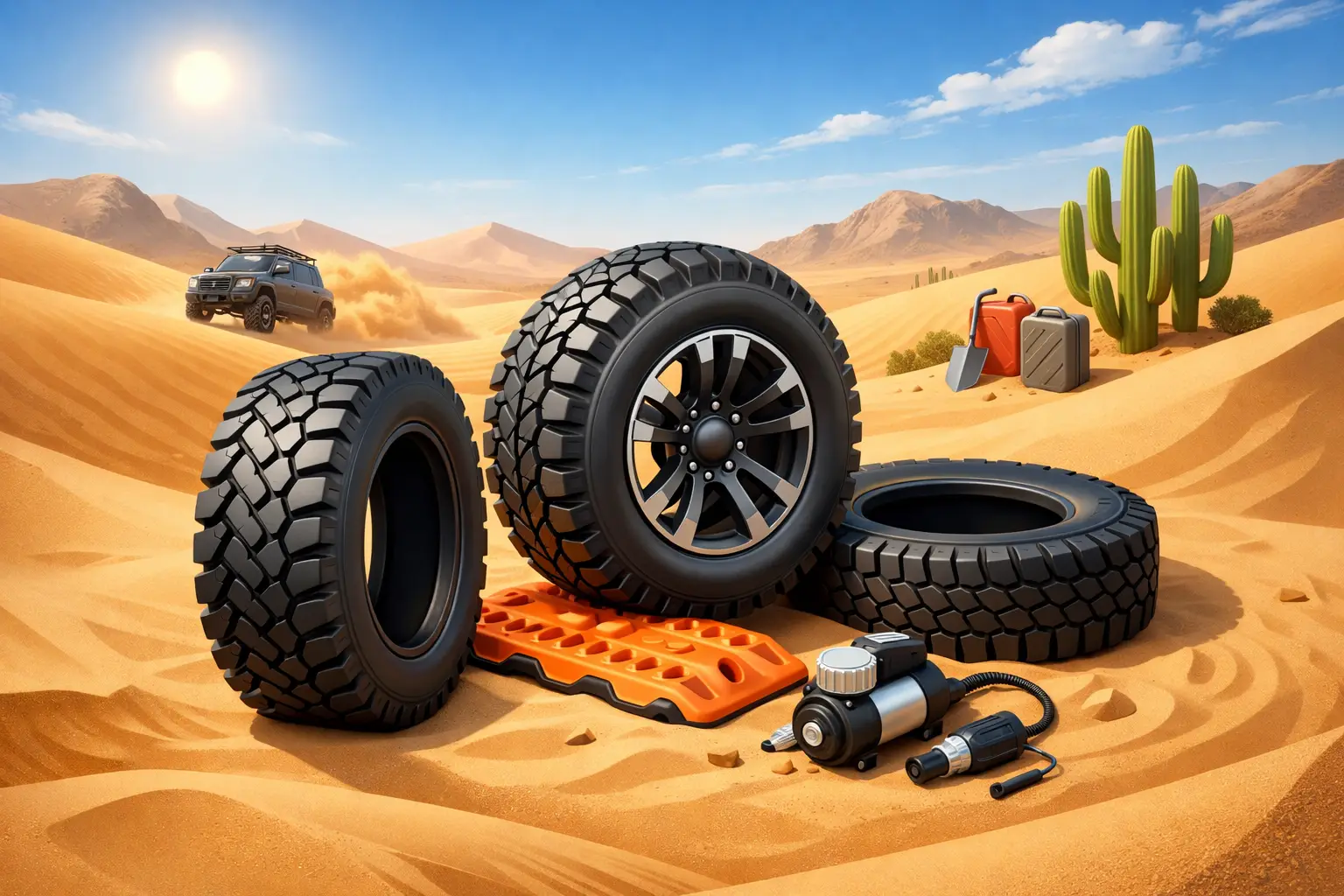
A desert drive can go wrong fast when your tires are built for highways, not soft sand. If you are searching for the best tyres for desert driving, the right answer is not just about brand – it is about choosing a tire that matches your vehicle, your load, and the kind of terrain you actually drive.
In the Gulf, desert conditions are demanding in ways city drivers do not always expect. Soft dunes need flotation, rocky tracks punish weak sidewalls, and heat puts extra stress on rubber and tire pressure. That is why picking desert tires should never be based on appearance alone. You need grip, durability, and a setup you can trust when the ground gets loose.
What makes the best tyres for desert driving?
The best desert tire is usually not the most aggressive-looking one. In soft sand, a tire needs to spread the vehicle’s weight and stay on top of the surface rather than dig down. That often means a tire with a less extreme tread pattern than many drivers assume.
Width matters because a wider contact patch can improve flotation. Sidewall strength matters because desert routes often include rocks, ruts, and sharp edges before or after the dunes. Construction matters too, especially on heavier SUVs and 4x4s that carry passengers, recovery gear, and extra fuel or water.
For most drivers, the sweet spot is an all-terrain tire with good sand performance, predictable road manners, and enough sidewall strength for off-road use. Mud-terrain tires can work in the desert, but they are not automatically the better option.
All-terrain vs mud-terrain for desert driving
This is where many buyers make the wrong call. A mud-terrain tire looks ready for anything, but desert driving is not mud driving.
Why all-terrain tires often win in sand
An all-terrain tire usually has a tighter tread pattern, which helps it float better on soft surfaces instead of digging aggressively into them. It is also typically quieter on pavement, more comfortable for daily driving, and more fuel-efficient than a heavy mud-terrain setup.
For drivers who split their time between city roads, highways, and weekend desert trips, all-terrain tires are often the most practical choice. You get strong off-road capability without giving up everyday refinement.
When mud-terrain tires make sense
Mud-terrain tires come into their own when your route includes more than dunes. If you regularly drive over sharp rocks, rough mountain trails, or deeply broken ground, the tougher carcass and stronger sidewall design of many mud-terrain models can be a real advantage.
The trade-off is clear. They can be louder, heavier, and less efficient on-road. In very soft sand, the deep voids can also dig more than you want if pressure and driving technique are not right.
Key features to look for before you buy
Desert performance starts with the tire itself, but the details matter more than many people realize.
Strong sidewalls
A strong sidewall is one of the most valuable features for desert use. Airing down helps with traction and flotation, but it also puts more demand on the sidewall. If your route includes rocky access roads or cut tracks, extra sidewall durability becomes even more important.
Moderate tread pattern
The best tread for sand is usually more balanced than aggressive. You want enough void and biting edges for control, but not such a deep, open pattern that the tire constantly digs. A well-designed all-terrain tread often gives better real-world desert performance than an oversized mud pattern.
Proper load rating
Load rating is critical, especially for full-size SUVs, pickups, and vehicles carrying family gear or recovery equipment. An under-rated tire can hurt stability, wear faster, and struggle under heat. Choosing the correct load index for your vehicle is just as important as choosing the tread style.
Heat resistance and build quality
High ambient temperatures punish cheap rubber compounds. In desert regions, tire quality is not just about brand reputation – it is about how well the tire handles sustained heat, pressure changes, and heavy use. Original, properly rated tires from trusted manufacturers are always the safer investment.
Best tyres for desert driving by vehicle type
There is no single tire that suits every driver. The right choice depends heavily on what you drive and how you use it.
SUVs and family 4x4s
For most SUVs used for commuting and occasional desert trips, a quality all-terrain tire is the strongest all-around option. It gives you dependable road comfort during the week and enough off-road ability for weekend dune runs, campsite access, and mixed-surface travel.
Look for a model that balances sand traction, road noise, and sidewall confidence. This is usually the best fit for drivers who want one tire set for everything.
Dedicated off-road 4×4 builds
If your vehicle spends serious time off-road and carries recovery gear, upgraded suspension, or added weight, you may benefit from a more rugged all-terrain or even a mud-terrain tire. Here, sidewall strength and puncture resistance rise in importance.
That said, even serious off-road drivers should be honest about terrain. If most of your driving is dune-focused, a desert-friendly all-terrain may still outperform a heavy mud tire where it counts.
Pickups and commercial-use vehicles
Pickups often need a stronger load-rated tire because of cargo demands and rear-axle weight changes. In these cases, durability and heat tolerance are non-negotiable. A tire that works well unloaded may feel very different once the bed is carrying tools, equipment, or supplies.
Commercial buyers should prioritize construction quality and proper specification first, then tread design.
Tire pressure matters as much as tire choice
Even the best tire can perform poorly in the desert if pressure is wrong. Airing down increases the tire’s footprint, helping the vehicle stay on top of sand instead of sinking. It also smooths the ride over uneven surfaces.
But there is no universal pressure that works for every vehicle. Tire size, vehicle weight, wheel width, terrain softness, and driving speed all affect the right setting. Drop too little and you lose flotation. Drop too much and you increase the risk of debeading or sidewall damage.
This is why smart desert driving starts with the right tire and continues with the right setup. If you are not sure what pressure range suits your vehicle, get advice based on your exact size and application rather than copying another driver’s numbers.
Common mistakes buyers make
One of the biggest mistakes is choosing tires based only on appearance. Aggressive tread blocks may look ready for the desert, but they can bring compromises in sand, road noise, braking, and comfort.
Another mistake is oversizing without understanding the trade-offs. Larger tires can improve ground clearance and footprint, but they may affect gearing, steering feel, braking, and fitment. Clearance issues under compression are common on poorly planned upgrades.
Some drivers also focus on price alone. Value matters, but very cheap tires can become expensive if they wear quickly, struggle in heat, or fail when aired down off-road. Better construction, correct sizing, and proper fitment usually save money over time.
How to choose with confidence
Start with how you actually drive. If your vehicle is a daily driver that sees regular desert weekends, choose a premium or quality mid-range all-terrain tire with strong sidewall protection. If your driving is more extreme and the vehicle is built around off-road use, consider more specialized options – but only if the terrain truly demands them.
Then check the basics carefully: tire size, load index, speed rating, construction type, and compatibility with your wheel setup. Desert performance is not one feature. It is the result of the right tire, the right pressure, and the right fit for your vehicle.
This is also where expert support matters. A practical tire retailer should help you narrow options by size, vehicle, and driving use so you are not guessing between looks and marketing claims. For many drivers in the region, that kind of guidance is what turns a confusing tire search into a safer purchase.
At GCC Tires, the goal is simple – help drivers choose original, properly matched tires that deliver real control, real durability, and real value, with professional fitment to finish the job right.
The desert rewards preparation. Choose tires that match the way you drive, and every mile on sand feels more controlled, more capable, and far less stressful.