


















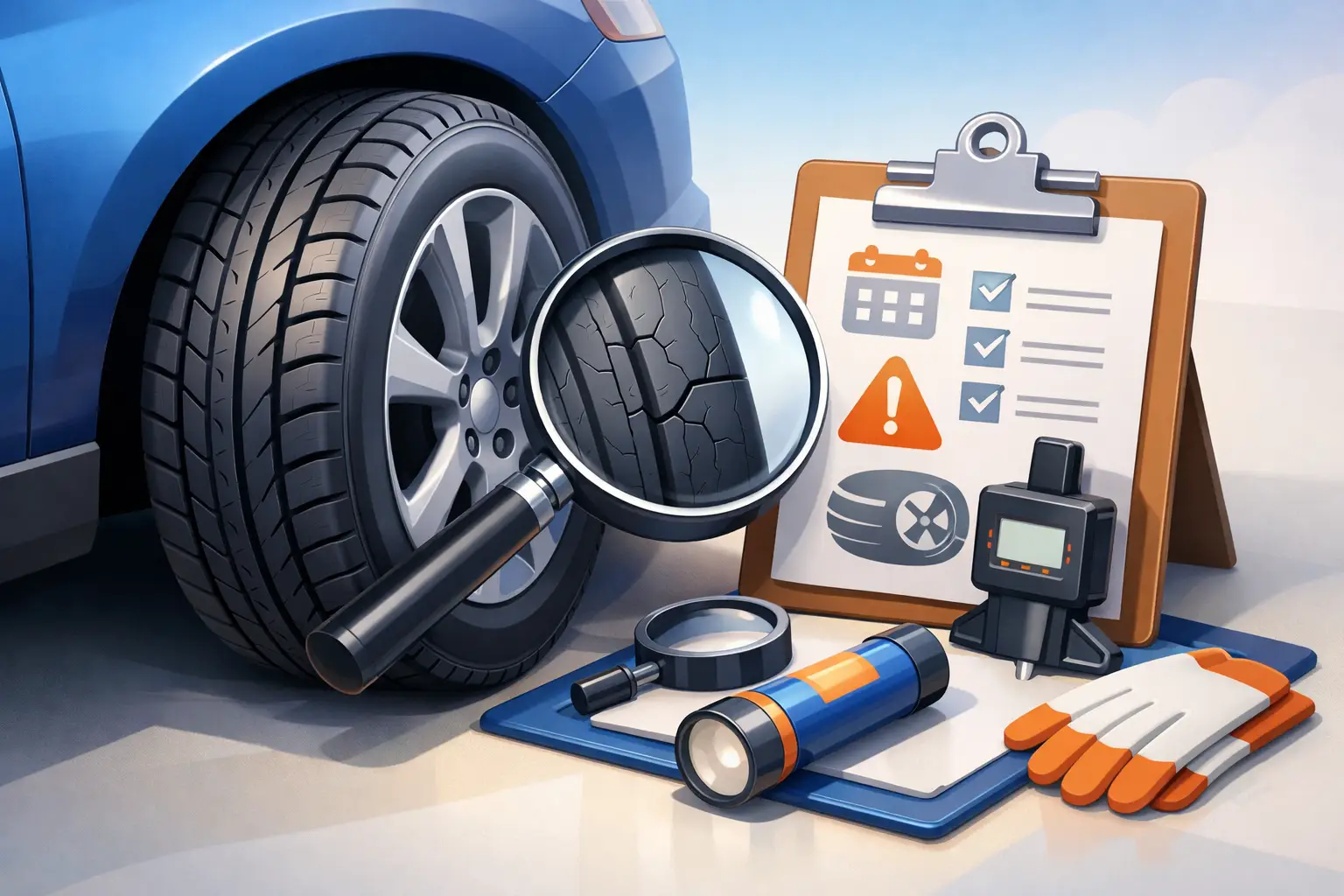
A tire can look perfectly fine in your driveway and still be past its best. That catches a lot of drivers off guard. If you have ever bought a used car, parked a second vehicle for long periods, or simply do not remember when your current set was fitted, knowing how to check tyre age is one of the quickest ways to make a smarter safety decision.
Tyre age matters because rubber changes over time, even when tread depth still looks usable. Heat, sun exposure, storage conditions, driving habits, and long periods of inactivity all affect how a tire ages. In places with high temperatures and intense road heat, that aging process can become more noticeable sooner than many drivers expect. The result is simple – a tire can lose performance before it looks obviously worn out.
How to check tyre age on the sidewall
The fastest way to check tyre age is to read the date code stamped on the sidewall. On most modern tires, this appears as the last four digits of the DOT code. Those four numbers tell you the week and year the tire was manufactured.
For example, if the last four digits are 2522, that means the tire was made in the 25th week of 2022. If the code reads 0819, it was produced in the 8th week of 2019. Once you know this format, checking a tire’s age takes less than a minute.
You may need to inspect both sides of the tire. Sometimes the full DOT code is visible only on one sidewall, especially on fitted tires. Turn the steering wheel to access the front tires more easily, and use a flashlight if the markings are dusty or faint.
Where to find the DOT code
Look along the sidewall for a sequence that begins with the letters DOT. After that, you will see a string of letters and numbers. The date portion is the last four digits in an oval or a clearly separated block.
If you cannot find it at first glance, do not assume it is missing. Dirt, sidewall design, and limited visibility can make it harder to spot. On some vehicles, the inner sidewall faces inward, so the wheel may need to be turned or inspected more closely during a service visit.
What if the tire has a three-digit code?
A three-digit date code usually means the tire is very old, generally manufactured before the year 2000. That is not a tire you should keep in regular road use. Even if it holds air and still has tread, age alone makes it a replacement case.
Why tyre age matters even when tread looks good
Many drivers judge a tire by tread depth alone. That is understandable, but it is not enough. Tread tells you how much rubber is left for grip and water evacuation. Age tells you how the tire compound may have hardened or degraded over time.
As tires age, the rubber can lose flexibility. That can affect braking, wet grip, ride comfort, and heat resistance. On highway drives, heavy family vehicles, SUVs, and loaded commercial applications, that matters even more because the tire works harder under speed and weight.
This is where the trade-off becomes clear. A tire with strong remaining tread but advanced age might still seem like good value. In reality, you may be sacrificing safety and performance to squeeze out a little more mileage. For daily driving, family transport, and long-distance use, that is rarely the right gamble.
Signs an aging tire may need replacement
Knowing how to check tyre age gives you the manufacturing date, but you should also inspect the tire’s overall condition. Age does not affect every tire at the exact same pace. A well-stored tire on a lightly used car may age differently from one exposed to constant sun, heavy loads, or frequent curb contact.
Look for small cracks in the sidewall or between tread blocks, a faded or dry appearance, hardening of the rubber, vibration that cannot be explained by balancing alone, or repeated pressure loss. These are warning signs that the tire may be aging out, even if tread depth seems acceptable.
If the car has been sitting for extended periods, check for flat spotting too. Sometimes that improves after driving, but sometimes it signals that the tire has spent too long under one static load position.
Age-related damage is not always dramatic
One of the biggest problems with old tires is that deterioration can be subtle. You may not see a major bulge or a deep split. Instead, grip gradually drops off, braking distances increase, and the tire becomes less stable under heat and stress. That is why reading the date code matters so much. It gives you an objective reference point, not just a visual guess.
How old is too old for a tire?
There is no single rule that fits every tire, every vehicle, and every driving condition. That said, many drivers and service professionals start paying close attention once a tire reaches around five years from its manufacturing date. By the time a tire reaches six years or more, it deserves a more cautious evaluation, especially in hot climates or demanding use cases.
Some tires may still be serviceable depending on storage, condition, and manufacturer guidance. Others should be replaced sooner because of visible aging, damage, or harsh operating conditions. If a tire is around ten years old from the date of manufacture, replacement is generally the safer move regardless of tread.
This is especially true for vehicles used for family travel, long commutes, high-speed highway driving, off-road trips, or commercial loads. In those situations, dependable grip and structural integrity are worth more than trying to extend an old set.
How to check tyre age when buying new tires
If you are shopping for replacement tires, it is reasonable to ask about production dates. New tires are not always manufactured in the same month, and that is normal. What matters is that they have been stored correctly and are supplied in proper condition.
A recently manufactured tire can be appealing, but a slightly older tire from a trusted source with professional storage may still be perfectly acceptable. The key is buying original branded products from a retailer that understands fitment, storage standards, and application matching. That reduces the risk of ending up with old stock that has been sitting in poor conditions.
For buyers comparing premium, mid-range, and value options, tyre age should sit alongside the bigger picture: correct size, load index, speed rating, driving style, and seasonal or regional conditions. The right tire is not just about price. It is about confidence on the road, day after day.
Common mistakes when checking tire age
One common mistake is reading only the tread and skipping the date code entirely. Another is checking one tire and assuming all four were made at the same time. Mixed-age sets are common, especially if one or two tires were replaced after damage.
Drivers also confuse installation date with manufacturing date. A tire fitted last year may have been manufactured earlier. That is why the sidewall code matters more than memory or invoice timing when you want the full picture.
Another mistake is ignoring the spare. If your vehicle still carries its original spare, it could be far older than the road tires. Even if it has never touched the road, age still affects the rubber.
When professional advice makes sense
If you have found the date code but are still unsure whether your tires are safe, get them inspected by a qualified tire professional. This is especially useful if you notice cracks, unusual vibration, uneven wear, or signs of long-term storage damage.
A proper inspection can confirm whether the issue is simply age, or a combination of age, alignment, inflation, suspension wear, and driving conditions. That matters because replacing tires without correcting the underlying cause may shorten the life of the next set too.
For drivers who want a straightforward, safer replacement process, GCC Tires helps simplify the decision with genuine branded options, practical fitment support, and service that keeps the focus where it belongs – on safety, value, and confident driving.
The next time you wash your car or check tire pressure, take one extra minute and read the date code. It is a small habit that can prevent a big problem, and that is always a smart move on the road.




 Get This Deal