




















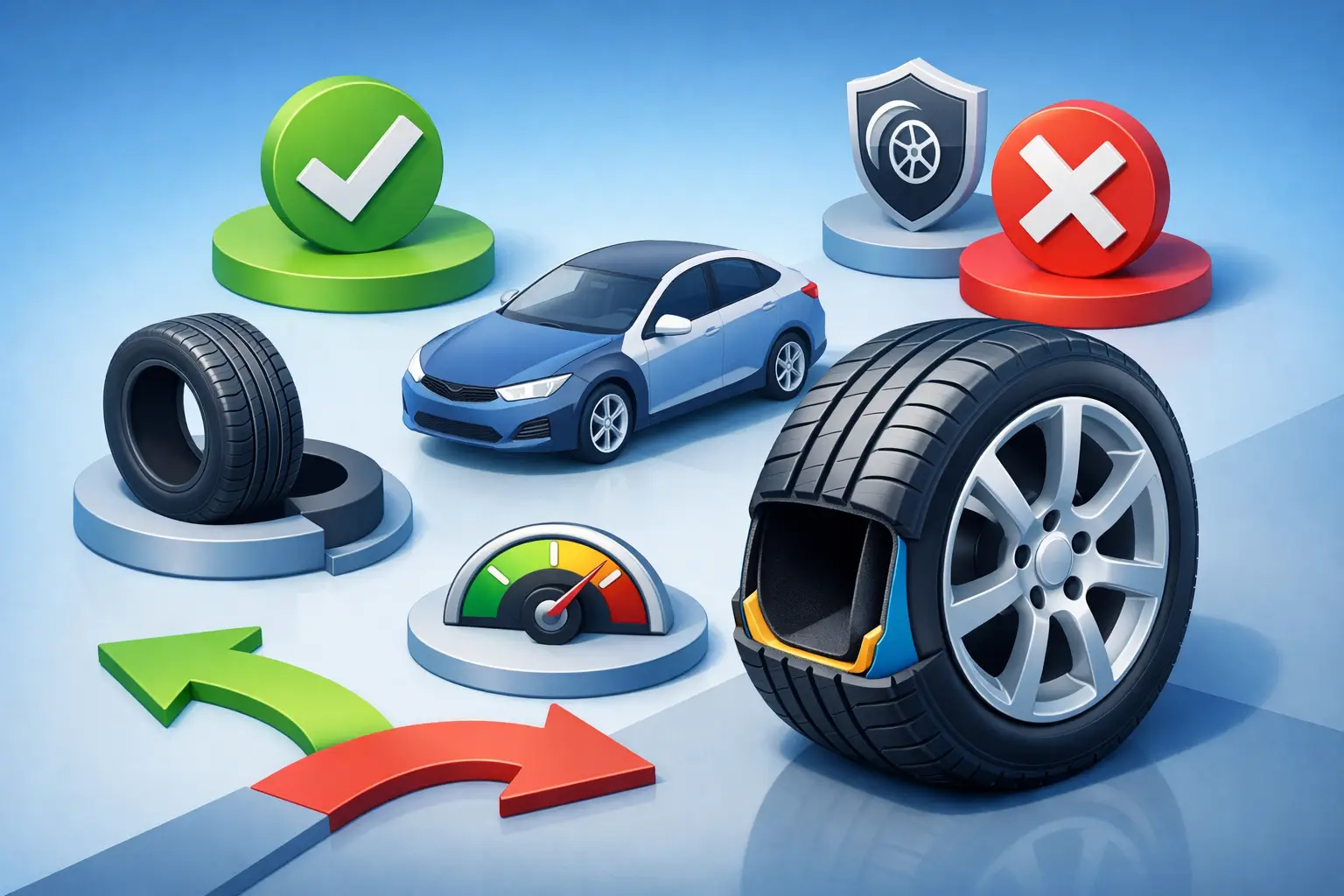
A flat tire on a busy highway, in summer heat, or late at night is exactly when convenience stops being a luxury and starts being a real safety feature. That is why many drivers ask how to choose run flat tyres when it is time for replacement. The right set can help you stay in control after a puncture, avoid roadside tire changes, and keep your vehicle moving long enough to reach a safer location or fitting center.
Run flat tyres are not the right answer for every driver, though. They bring clear advantages, but they also come with trade-offs in ride comfort, price, and replacement choices. If you want a confident purchase instead of a guess, the key is to match the tire to your vehicle, your driving habits, and the road conditions you deal with most.
What run flat tyres actually do
A run flat tire is designed to keep supporting the vehicle for a limited distance after losing air pressure. In most cases, that means you can continue driving for around 50 miles at reduced speed, often up to 50 mph, depending on the manufacturer and product design. This gives you time to leave a dangerous roadside shoulder, get off a fast road, or head to a workshop instead of changing a tire where traffic is moving close by.
Most run flat designs use reinforced sidewalls that can carry the load even when the tire has lost pressure. Some systems use a support ring, but reinforced sidewalls are more common on passenger vehicles and SUVs. Because of that construction, run flats usually feel firmer than conventional tires, and that difference matters when comfort is a top priority.
How to choose run flat tyres for your vehicle
The first rule is simple: start with compatibility, not price. If your vehicle was built for run flat tyres, switching to another type is not always straightforward. Many cars that come factory-equipped with run flats are tuned around them, including suspension setup, handling balance, and tire pressure monitoring systems.
Check your current tire sidewall, your driver door placard, and your owner manual. You are looking for the correct tire size, load index, speed rating, and any manufacturer-specific approval markings. If your car uses staggered fitment, front and rear sizes may be different, so never assume all four tires match.
If your vehicle currently has conventional tires, moving to run flats can be possible, but it depends on the car and the wheel setup. The ride may become firmer, and in some cases steering feel changes as well. That is why fitment guidance matters. A tire that technically fits the wheel is not always the best tire for the way the vehicle was designed to behave.
Confirm the exact tire size and ratings
This is where many buying mistakes happen. A tire size such as 225/45R18 tells only part of the story. You also need the correct load index and speed rating. A run flat tire with the wrong load capacity can affect safety, braking, and durability, especially on heavier sedans, SUVs, and vehicles carrying passengers or cargo regularly.
For example, an SUV used for family travel needs more than a matching width and diameter. It needs enough load support, stable sidewalls, and a tread pattern suited to highway use, wet grip, and heat resistance. A performance sedan, on the other hand, may prioritize sharper handling and higher speed capability, even if tread life is shorter.
Look for tire pressure monitoring system support
Most run flat applications rely on a tire pressure monitoring system because a run flat can continue rolling even after pressure loss, and the driver may not feel the change immediately. If your vehicle does not have a working TPMS, you lose a big part of the safety advantage.
Before buying, make sure your TPMS is active and accurate. If warning lights have been ignored for months, solve that first. A run flat tyre is designed to give you control after a puncture, but only if the driver knows pressure has dropped.
Consider your daily driving, not just the emergency benefit
The best way to choose run flat tyres is to think beyond puncture protection. Ask how and where you drive most of the time. A driver doing mostly city trips on smooth roads may accept a firmer ride with no issue. Someone covering long highway distances with family in the car may care more about road noise and comfort. A performance driver may value steering response over softness.
Road conditions matter too. In hot climates, long-distance driving and heavy loads put extra stress on tires. That makes heat management, durability, and brand quality especially important. A cheaper option may save money upfront but wear faster or deliver less stability at speed, which reduces value over time.
If you often drive in areas where stopping for a puncture would be risky or inconvenient, run flats become more attractive. If you rarely travel far and care most about comfort and lower replacement cost, conventional tires may still be the better fit. The right answer depends on your priorities.
How to compare brands and models
Not all run flat tyres perform the same way. Some focus on comfort and reduced noise, while others are tuned for premium handling, stronger wet grip, or longer tread life. That is why brand reputation matters, but model-level differences matter even more.
A premium brand will often deliver better refinement, stronger wet braking, and more predictable performance as the tire wears. Mid-range options can still offer solid everyday value, especially for drivers who want the run flat benefit without paying top-tier pricing. The smart move is to compare the tire’s purpose with your vehicle’s purpose.
If you drive a German luxury sedan, a touring-focused run flat may be the best match. If you own a sporty coupe, a max performance summer run flat might suit you better. If you use an SUV for school runs, commuting, and weekend travel, look for a model built for comfort, mileage, and all-season road confidence.
Watch for OEM markings
Some vehicles perform best with tires carrying original equipment approval from the automaker. These markings vary by manufacturer and can indicate that the tire was developed for that specific brand’s ride, handling, and braking targets.
You do not always have to replace with the same OEM-marked tire, but if you liked how the vehicle drove from the factory, it is a strong place to start. If you were unhappy with comfort or noise, a different approved or compatible model may be a better upgrade.
The trade-offs you should expect
Run flat tyres are practical, but they are not magic. They usually cost more than standard tires. Ride quality is often firmer because of reinforced sidewalls. In some vehicles, road noise can be more noticeable. And once driven with zero pressure for too long, many run flats cannot be repaired and will need replacement.
That said, the value shows up in the moments that matter most. Not having to stop immediately on a dark shoulder or busy expressway is a serious advantage. For many drivers, that peace of mind justifies the higher initial cost.
The main question is whether that benefit outweighs the compromises for your vehicle and budget. If safety, convenience, and controlled mobility after a puncture are top priorities, run flats make strong sense. If your budget is tight and ride comfort ranks first, the decision may lean the other way.
When replacing one tire is not enough
If one run flat tire is damaged, do not assume replacing only that tire is the best move. You need to check tread depth across the axle and sometimes across all four tires, especially on all-wheel-drive vehicles. Significant differences in tread can affect traction systems, handling balance, and drivetrain stress.
It is also worth checking whether the damaged tire was driven too far with no pressure. Even if the outside looks acceptable, internal structural damage may be present. Professional inspection is the safe call.
Getting the right balance of safety and value
For most buyers, how to choose run flat tyres comes down to four filters: exact fit, driving style, brand quality, and total ownership cost. Start with the manufacturer-approved size and ratings. Then choose a tire that fits the way you actually drive, not the way you imagine you might drive once a year. After that, compare trusted brands across premium, mid-range, and value tiers with a clear eye on comfort, noise, wet grip, and expected mileage.
This is where a practical tire retailer makes the process easier. A platform such as GCC Tires helps drivers narrow choices by size, vehicle, brand, and performance category, which cuts down on guesswork and helps you move from browsing to fitment with more confidence.
A run flat tire should do more than fit your wheel. It should support your safety, suit your vehicle, and make sense for your budget every day, not just during a puncture. Choose with that standard in mind, and you will end up with a setup that feels right long before you ever need its emergency benefit.




 Get This Deal