


















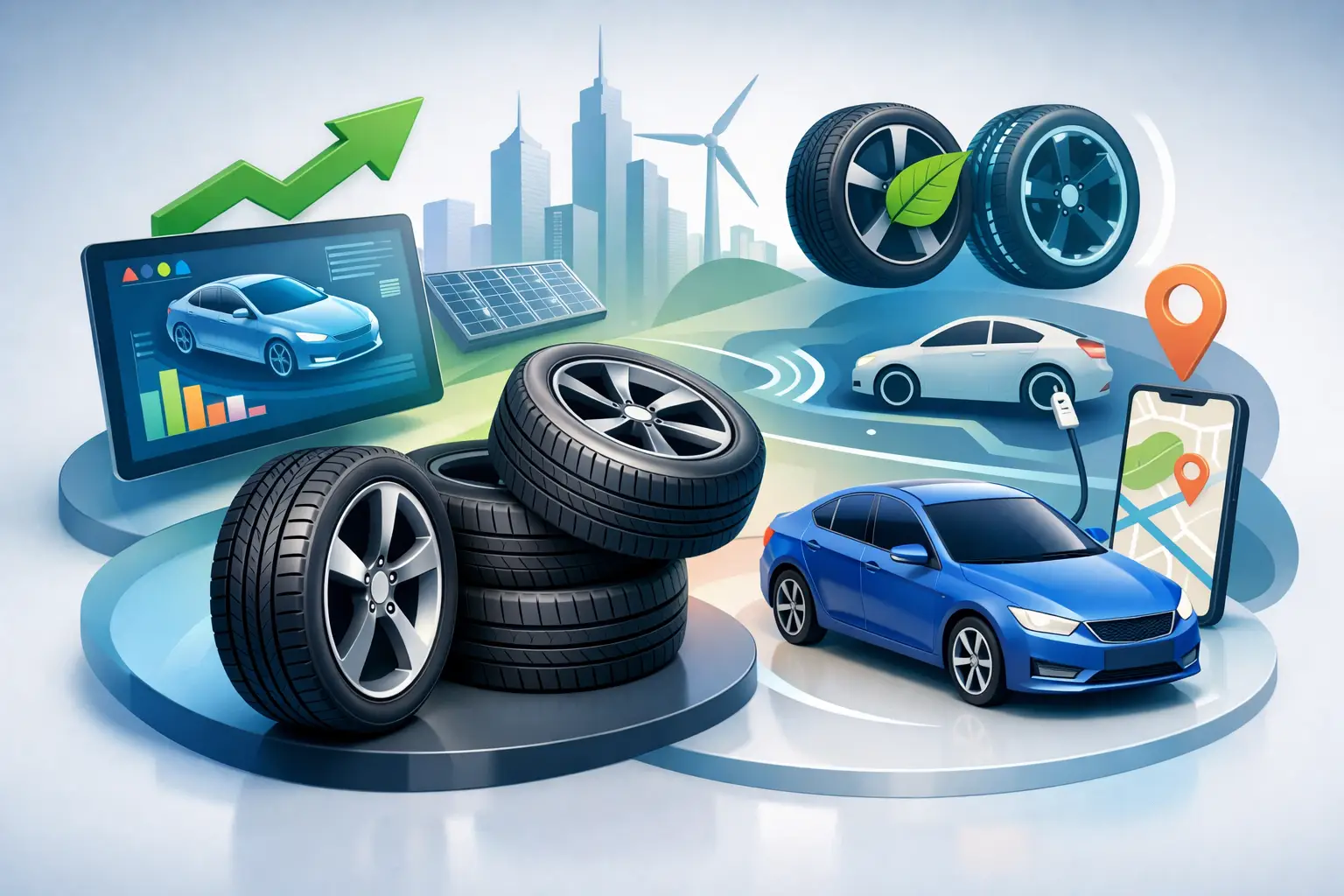
A tyre purchase is no longer just a quick choice between the lowest price and the most familiar brand. Tyre buying trends 2026 show that drivers are looking harder at the full ownership experience: correct fitment, real-world heat performance, road noise, fuel economy, tread life, and the confidence of professional installation. For Gulf motorists, that shift makes sense. Your tyres deal with intense temperatures, high-speed highways, stop-start city traffic, and, for many drivers, sand and rougher terrain.
The smartest purchase is not always the most expensive tyre. It is the tyre that suits your vehicle, driving habits, budget, and the roads you use most. Here is what is changing and how to make a choice that delivers safety and value from the first mile.
Tyre Buying Trends 2026 Put Fitment First
For years, many buyers started with brand or price. In 2026, more drivers are beginning with the essentials: vehicle compatibility, tyre size, load index, speed rating, and intended use. This is a better way to shop because even an excellent tyre can disappoint when its specification does not match the vehicle.
The size printed on your sidewall, such as 225/55R17, is only part of the picture. The final choice should also respect the manufacturer-approved load and speed ratings. SUVs, EVs, family sedans, performance cars, and commercial vehicles place very different demands on a tyre. A heavier SUV may need a reinforced construction. A performance vehicle may need sharper steering response and high-speed stability. A work vehicle needs dependable durability under regular loads.
This trend is also pushing more customers toward vehicle-based and size-based search tools rather than guessing from a photo or buying the same model a friend uses. It saves time and helps avoid a costly mismatch. If you are changing wheel size or considering a different profile, get expert guidance before you order. The look may improve, but ride comfort, clearance, handling, and speedometer accuracy can all change.
Value Is Measured Over the Whole Tyre Life
Promotional pricing still matters, and it should. But buyers are becoming more practical about the difference between a low upfront price and a tyre that provides lasting value. The right comparison includes expected tread life, heat resistance, fuel efficiency, warranty coverage, and the cost of fitting, balancing, and alignment.
A value-brand tyre can be a sensible choice for a lightly used city car or a vehicle approaching replacement. A premium tyre can make more sense for high-mileage drivers, families who spend long hours on highways, luxury vehicles, or anyone who prioritizes quiet comfort and wet-road confidence. Mid-range options remain popular because they often balance recognized quality with strong savings.
The key is to avoid treating every tyre as interchangeable. Two tyres in the same size can differ significantly in compound, tread design, casing strength, braking performance, and noise level. Asking why one option costs more is useful. The answer should relate to the benefits you will actually use, not just the logo on the sidewall.
Deals Matter, but Fresh Stock Matters Too
Drivers are also paying closer attention to the tyre date code. Tyres can age even when tread depth looks healthy, so fresh inventory is part of a confident purchase. Check the four-digit DOT date code on the sidewall, which identifies the week and year of manufacture.
There is no single calendar rule that replaces inspection and proper storage, but a tyre that has spent years sitting unused is not the same proposition as a fresh replacement tyre. Buy from a retailer that can clearly identify the product, explain the specification, and arrange professional fitment.
EVs Are Changing the Replacement Market
Electric vehicles are becoming a bigger factor in tyre buying trends 2026. EVs are often heavier than comparable gasoline vehicles, and their instant torque can accelerate wear, especially on the driven axle. Their quiet cabins also make tyre noise more noticeable.
That does not mean every EV must use an EV-branded tyre. The correct choice depends on the vehicle maker’s specifications and how you drive. However, many EV-focused tyres are engineered for low rolling resistance, weight capacity, reduced road noise, and the torque demands of electric powertrains. Those characteristics can benefit drivers who want range, comfort, and stable everyday handling.
The trade-off is worth understanding. A low-rolling-resistance tyre may support efficiency, while a sport-focused tyre may prioritize grip and steering feel. Neither is automatically better. Match the tyre to the way you use the car, then maintain the right pressure to protect both range and tread life.
Drivers Want One Purchase, Fully Finished
Online buying has matured beyond simply placing tyres in a cart. Customers increasingly expect a complete service path: clear product choices, transparent pricing, appointment coordination, fitting, balancing, alignment checks, and trusted technicians. Convenience is not a bonus when tyres are involved. It is part of getting the job done correctly.
Professional installation protects the investment. Proper balancing helps prevent vibration, while alignment checks can reveal why an old set wore unevenly. Replacing tyres without addressing a toe or camber issue can quickly reduce the life of the new set. If your steering pulls, the wheel sits off-center, or the old tyres show wear on one edge, ask for an alignment inspection.
This is particularly relevant after suspension work, a hard impact with a pothole or curb, or frequent off-road driving. A new set of tyres should improve the drive, not mask an underlying vehicle issue.
All-Season Thinking Does Not Replace Road-Specific Needs
Many buyers want a single tyre that handles everything. That is understandable, but it is not always realistic. A comfortable highway tyre, an aggressive off-road tyre, and a track-ready performance tyre are built around different priorities.
For daily commuting and family transport, drivers often favor predictable braking, low noise, comfort, and long wear. SUV and 4×4 owners may need stronger sidewalls and greater confidence on unpaved surfaces, but should consider how much time the vehicle actually spends on asphalt. An aggressive all-terrain pattern can look right on a 4×4, yet it may bring more noise, weight, and reduced highway efficiency.
Performance and track-focused drivers are also becoming more specific. A maximum-grip summer tyre can transform turn-in and dry traction, but it may wear faster and be less forgiving in standing water than a road-focused alternative. The best setup depends on whether the vehicle is primarily a weekend car, a daily driver, or regularly used on track.
Safety Features Are Becoming Buying Filters
Braking distance, wet grip, heat management, and aquaplaning resistance are gaining more attention than broad claims about durability alone. That is a positive shift. Tread depth matters, but it cannot tell the entire story about a tyre’s grip, particularly on wet roads or in extreme heat.
Look for a tread pattern suited to your conditions. Wide grooves can help channel water, while the compound and tread blocks affect grip, stability, and wear. For Gulf driving, resistance to heat buildup and reliable high-speed behavior deserve serious weight in the decision.
Tyre pressure belongs in the same safety conversation. Underinflation raises heat and can increase shoulder wear and fuel use. Overinflation can reduce the contact patch and make the ride harsher. Check pressure when the tyres are cold and follow the vehicle placard, not the maximum pressure printed on the sidewall.
Smarter Buyers Plan Replacement Earlier
Waiting for an emergency replacement limits your options. You may have to accept what is available that day, rather than compare brands, specifications, and current offers. More drivers are inspecting tyres before a long trip, before the hottest months, and ahead of annual vehicle checks.
Use the wear indicators in the tread grooves as a warning, but do not wait for them if you notice cracking, bulges, vibration, repeated pressure loss, or uneven wear. These are reasons for prompt inspection. Replace tyres in pairs on the same axle whenever possible, and follow your vehicle manufacturer’s guidance on rotation and matching tread patterns.
For all-wheel-drive vehicles, be especially careful about major differences in tread depth or tyre circumference. Some systems are sensitive to mismatched tyres, so consult the vehicle guidance before replacing only one tyre.
The right tyre purchase should leave you with more than new rubber. It should give you confidence in every commute, family trip, highway run, or off-road weekend. At GCC Tires, that means choosing genuine options that match your vehicle, your driving, and your budget, then having them fitted by professionals who help you leave ready for the road.

 Get This Deal