




















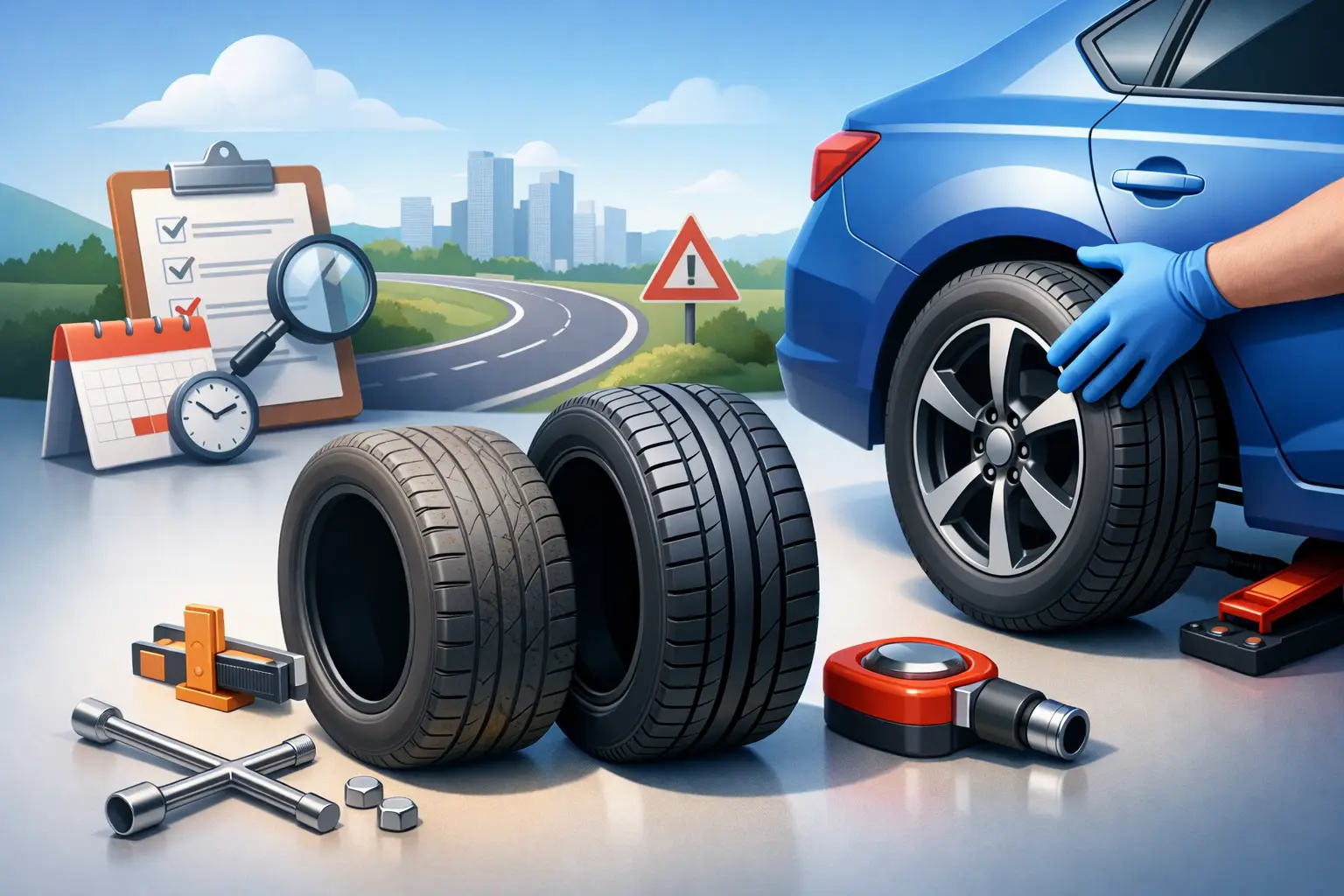
A tire can look fine in the parking lot and still be overdue for replacement. That is why so many drivers ask how often replace tires – not because they want a rough estimate, but because they want a clear answer before safety, handling, or braking starts to slip.
How often replace tires in real-world driving
There is no single replacement date that fits every driver. Most tires last somewhere between 25,000 and 50,000 miles, but mileage alone does not tell the full story. A family SUV used for school runs in hot weather will wear differently than a performance sedan driven aggressively, and a 4×4 that sees rough roads will not age like a commuter car on smooth pavement.
For most drivers, a practical rule is to inspect tread and condition regularly after the 20,000-mile mark and take replacement seriously as the tire approaches the lower end of its expected life. If you drive in extreme heat, carry heavy loads, accelerate hard, or spend time on poorly maintained roads, replacement may come sooner.
Age matters too. Even if the tread still looks usable, many tire makers and service professionals recommend close inspection after six years. By ten years from the manufacturing date, replacement is generally the safer call regardless of remaining tread. Rubber hardens over time, and once that happens, grip and braking performance can fall off even before obvious damage appears.
Mileage is only part of the answer
Drivers often want a clean number, but tires wear by use, storage, climate, and maintenance. If your tire was built for long touring comfort, it may last longer than a soft-compound ultra-high-performance tire. That is not a defect. It is the trade-off for stronger dry grip and sharper handling.
The same goes for vehicle type. Heavier SUVs and commercial-use vehicles put more stress on the tire carcass and shoulders. Electric vehicles can also wear tires faster because of added weight and instant torque. If you drive a vehicle that works hard, expect replacement intervals to tighten.
Road temperature also changes the picture. In hotter climates, rubber ages faster, and underinflation becomes more damaging. That means a tire can lose performance earlier than the mileage warranty might suggest. Drivers in the Gulf region see this often, especially during long summers and highway use.
The signs your tires need replacing now
If you are asking how often replace tires, the better question may be whether your current set is already telling you it is time. The clearest sign is low tread depth. Once tread reaches 2/32 of an inch, the tire is legally worn out in many places and should be replaced immediately. In practice, many drivers replace sooner, especially for wet-weather confidence. Around 4/32, stopping performance in rain starts to drop more noticeably.
Uneven wear is another warning. If the inside edge is worn out but the rest of the tread looks acceptable, you may have an alignment issue. If the center is worn more than the shoulders, overinflation may be the cause. If both shoulders are wearing faster, underinflation is a likely culprit. In any of those cases, replacing the tire without fixing the root problem can shorten the life of the next set too.
Cracks in the sidewall, bulges, repeated pressure loss, vibration at speed, and visible cords all move the tire out of the “watch it” category and into “replace it now.” These are not cosmetic concerns. They point to structural weakness, impact damage, or advanced aging.
How to check if tread is still safe
You do not need workshop tools to get a basic read on tire condition. Built-in tread wear bars are the easiest place to start. These are raised sections inside the tread grooves. When the surrounding tread wears down to the same height as the bars, the tire has reached its minimum safe life.
A tread depth gauge gives a more accurate answer and is worth keeping in the glove box. It helps you spot differences across the tire surface, which can reveal alignment or suspension issues early. If one tire is wearing faster than the others, that matters. Tire replacement is not just about age or mileage. It is about whether the contact patch is still doing its job under braking, cornering, and emergency maneuvers.
If you are unsure, have the tires inspected during routine service or fitment. A quick professional check can save you from replacing too late or replacing too soon.
Why some tires wear out faster than expected
A surprisingly short tire life usually comes back to maintenance habits. Incorrect pressure is one of the biggest reasons. Driving on low pressure builds heat, increases rolling resistance, and wears the shoulders. It also raises the risk of internal damage. Overinflation reduces the contact patch and can wear the center prematurely.
Skipping rotation is another common issue. Front and rear tires often wear at different rates, especially on front-wheel-drive vehicles. Rotating them at the right interval helps the set wear more evenly and extends usable life.
Alignment matters more than many drivers think. A small toe or camber issue may not be obvious from behind the wheel, but it can scrub away tread fast. The result is a tire that still has age left but not enough safe tread to keep using.
Driving style also makes a real difference. Hard launches, late braking, fast cornering, and repeated high-speed use all reduce tread life. For performance drivers, that is often an accepted trade-off. The key is knowing that stronger grip usually means shorter life, and planning replacement accordingly.
Should you replace all four tires at once?
Not always, but often it is the best move. If all four tires are close in age and wear, replacing the full set restores balanced handling, braking, and ride quality. It also gives you a clean starting point for rotation and maintenance.
If only one or two tires are damaged and the others still have strong tread, partial replacement may be possible. But matching matters. Tire size, speed rating, load index, and tread pattern should be compatible with the vehicle and with each other. On all-wheel-drive vehicles, significant tread differences between old and new tires can create drivetrain stress, so replacement decisions need more care.
This is where good fitment guidance matters. The cheapest short-term option is not always the smartest long-term one, especially if it affects stability, wear balance, or system performance.
How often replace tires if you drive an SUV, 4×4, or performance car?
SUV and 4×4 drivers should pay extra attention to shoulder wear, heat exposure, and off-road damage. Even if the tread depth looks acceptable, cuts, chunking, or sidewall stress can make replacement necessary sooner. Vehicles that carry passengers, gear, or towing loads regularly also place more demand on the tire than a light commuter car.
Performance cars are different in another way. Their tires are often built with softer compounds to deliver sharper steering response and stronger grip. That performance benefit usually means shorter lifespan. If you enjoy spirited driving, expect more frequent replacement and monitor tread more closely, especially on the driven axle.
For commercial-use vehicles, downtime costs money. Waiting too long on replacement can lead to poor fuel efficiency, weak wet traction, and unplanned failures. A more disciplined inspection and replacement schedule usually pays off.
Get ahead of replacement, not behind it
The best time to shop for tires is before they become urgent. When you replace early enough, you have time to compare the right size, choose the right performance level, and book fitment without pressure. That usually leads to better value and a better match for how you actually drive.
A customer-first tire retailer like GCC Tires makes that process easier by helping drivers shop by size, brand, vehicle, and driving need, then complete fitment through authorized partners. That matters because replacing tires is not just a product decision. It is a safety decision, a budget decision, and a convenience decision all at once.
If your tread is low, your tires are aging, or your vehicle no longer feels planted the way it should, trust what the car is telling you. Fresh tires do more than complete a maintenance task. They restore the grip, control, and confidence every drive depends on.


 Get This Deal