











Your SUV can feel planted, quiet, and confident – or heavy, noisy, and vague. In most cases, the difference comes down to the tires. If you are wondering how to choose SUV tyres, the right answer is not just about brand or price. It is about matching the tire to your vehicle, your driving habits, and the roads you actually use.
That matters even more for SUVs because they ask more from a tire than many sedans do. They carry more weight, often run larger wheel sizes, and may be used for school runs during the week, highway trips on weekends, and occasional rougher roads in between. A tire that works well for one SUV owner can be the wrong fit for another.
How to choose SUV tyres starts with fitment
The first step is simple but non-negotiable. You need the correct tire size and service rating for your vehicle. You can find this on the driver-side door placard, in the owner’s manual, or on your current tire sidewall. A size such as 235/60R18 gives you width, sidewall profile, construction type, and wheel diameter. Alongside that, you will also see the load index and speed rating.
For SUV owners, load index deserves extra attention. SUVs are heavier than many passenger cars, and choosing a tire with the wrong load rating can affect handling, braking, wear, and safety. If your vehicle was fitted with XL or reinforced tires from the factory, replacing them with a standard-load option can be a downgrade, even if the size looks correct.
Speed rating matters too, but not in a racing sense for most drivers. It is part of the tire’s overall construction and heat tolerance. The best replacement tire is usually one that meets or exceeds the manufacturer’s specification, not one that simply fits on the wheel.
Think about how your SUV is really used
Many buyers start by asking for the cheapest option in the right size. Others jump straight to a premium brand. Both approaches can miss the point if the tire type does not match daily use.
If your SUV spends most of its time on paved roads, city streets, and highways, a highway terrain or touring-style SUV tire usually makes the most sense. These tires prioritize stable handling, lower road noise, predictable wet grip, and better ride comfort. For family vehicles and commuting, that balance is often exactly what you want.
If you regularly drive on construction access roads, gravel, sand, or uneven surfaces, an all-terrain tire may be the better match. It offers stronger sidewall protection, a more aggressive tread pattern, and better grip on loose surfaces. The trade-off is usually more road noise, slightly firmer ride quality, and sometimes faster wear if used mainly on pavement.
Mud-terrain tires are even more specialized. They can look impressive and perform well in serious off-road conditions, but they are rarely the best everyday choice for a road-focused SUV. They tend to be louder, heavier, and less refined on normal roads. Unless your driving genuinely demands that level of off-road traction, they are often more compromise than benefit.
Choose for weather, not just appearance
A tire can look capable and still be wrong for the climate. In hot regions, heat resistance and tread compound durability matter a lot. Long highway runs, heavy loads, and high road temperatures can all put more stress on the tire.
That is why well-made SUV tires from recognized brands often justify the extra cost. Better compounds and construction can improve braking, reduce uneven wear, and maintain performance as temperatures climb. A lower upfront price can be attractive, but if the tire becomes noisy early, wears too fast, or struggles in wet braking, it may not be better value.
Wet grip is another area buyers sometimes underestimate. Even in dry climates, when roads do get wet, surface oils and dust can make traction more unpredictable. If your SUV carries family, luggage, or regular passengers, strong wet performance should be high on your checklist.
How to choose SUV tyres by driving priorities
The right tire becomes clearer when you decide what matters most to you. Most SUV tires are tuned around a mix of comfort, mileage, grip, off-road ability, and price, but no single tire leads every category.
If comfort and quietness matter most, look for touring or highway SUV tires with tread designs built for low road noise. These are ideal for daily driving and long-distance travel. If you want sharper steering feel and stronger dry-road confidence, especially on larger crossovers or performance SUVs, an SUV-focused performance tire may suit you better. These usually offer stronger grip and better cornering control, though tread life may be shorter.
If value is the priority, that does not mean choosing the cheapest tire available. It means choosing a tire with dependable performance in the areas you actually use. A good mid-range option can be smarter than both extremes – better quality than a bargain product, with pricing that stays realistic for routine replacement.
Brand matters, but only after the basics
Brand reputation can help, especially when you are comparing tires with similar specs. Premium brands often lead in refinement, wet braking, tread consistency, and overall longevity. Mid-range brands can deliver excellent value for drivers who want reliable everyday performance without paying top-tier pricing. Value brands can work for tight budgets, but they need closer scrutiny on ratings, warranty, and real-world suitability.
The key is to compare within the right category. A premium all-terrain tire and a budget highway tire are not direct alternatives just because they share a size. First choose the correct type, then compare brand options within that type.
This is where a retailer with broad stock and clear fitment support can save time. GCC Tires, for example, is built around helping drivers filter by size, vehicle, brand, and performance need rather than forcing a guess.
Check tread pattern, but do not shop by looks alone
Aggressive tread can make an SUV look tougher, but visual appeal should not lead the purchase. Tread pattern affects water evacuation, road noise, loose-surface grip, and wear behavior. Symmetrical patterns often support quiet, even road use. More open and blocky patterns can improve loose-surface traction but may generate more cabin noise.
Sidewall design also influences the feel of the tire. A lower-profile tire on a large wheel can improve steering response and appearance, but it may reduce ride comfort and increase the risk of damage from potholes or rough edges. A taller sidewall usually offers more cushioning and resilience, which can be useful on imperfect roads.
Do not ignore tire age and installation quality
Even the right tire can disappoint if it has been stored too long or fitted poorly. Ask about production date if you are buying replacement tires, especially if a deal looks unusually deep. A newer tire generally gives you more useful service life.
Professional fitment matters just as much. Proper mounting, balancing, inflation, and alignment all affect how the tire performs and how long it lasts. If your old tires showed uneven shoulder wear, center wear, or feathering, simply replacing them without correcting alignment or pressure habits can repeat the same problem.
That is one reason service packages add real value. Fitment, balancing, and alignment are not extras in the practical sense – they are part of getting the performance you paid for.
When replacing two tires is not ideal
Some SUV owners replace only two tires to save money. Sometimes that is workable, but it depends on tread depth, drivetrain, and tire type. On many SUVs, especially all-wheel-drive models, large tread differences between front and rear can affect vehicle behavior and, in some cases, strain drivetrain components.
If you are only replacing a pair, match the type, size, and rating carefully, and install according to the vehicle maker’s recommendations. In many situations, replacing all four is the cleaner long-term decision, especially if the remaining pair is already significantly worn.
The smartest way to buy
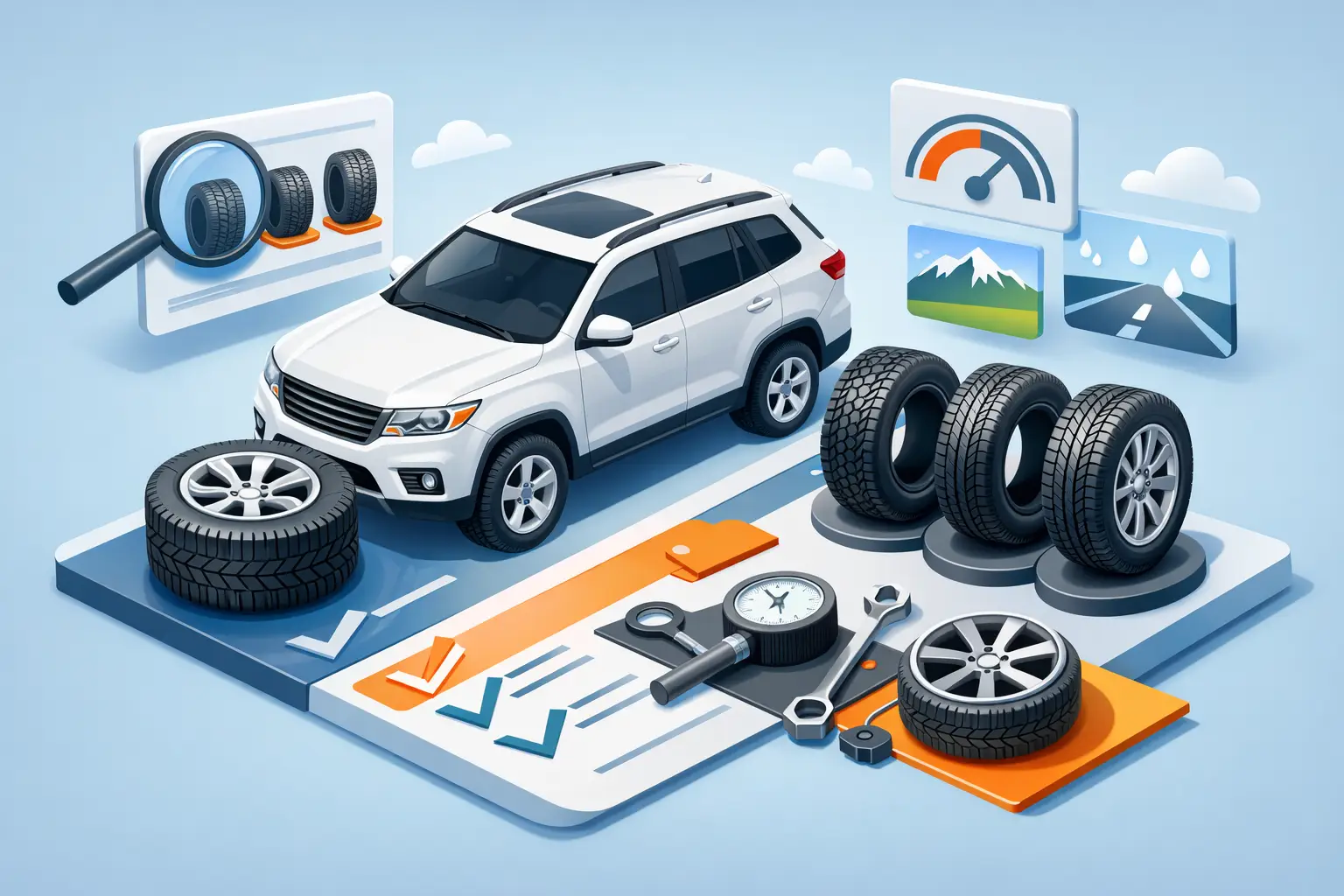
If you want to know how to choose SUV tyres without overcomplicating it, focus on five things in order: correct size, correct load and speed rating, real driving conditions, performance priorities, and fitment quality. That process is better than shopping by brand name alone, and much better than shopping by price alone.
A good SUV tire should make your vehicle feel secure the moment you pull away. Steering should feel settled, braking should feel dependable, and the ride should suit the way you use the car every day. When the choice is right, you notice it in control, comfort, and confidence – not just on day one, but over the miles ahead.
The best tire is not the one with the loudest marketing or the lowest sticker price. It is the one that fits your SUV, your roads, and your routine so well that you stop thinking about your tires and simply trust them.