


















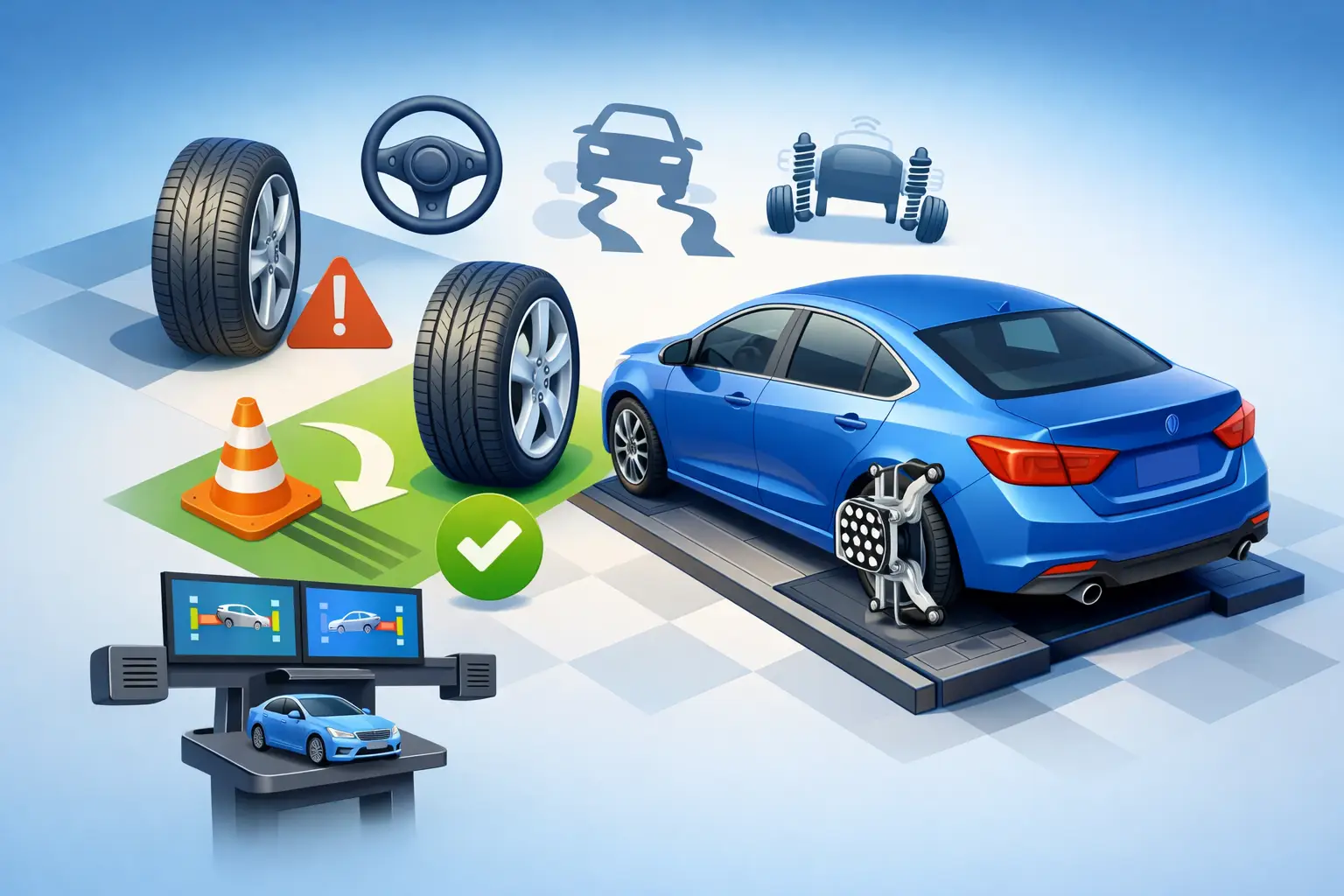
You notice the steering wheel is slightly off-center on a straight road. Or maybe your car drifts left even though your hands are steady. That is usually when the question shows up fast – do I need wheel alignment, or is it something I can ignore for a while? In most cases, alignment issues start small, but they rarely stay small. Left alone, they can wear out tires early, reduce control, and make every drive feel less stable than it should.
Wheel alignment is not about the wheels being physically lined up by eye. It is about setting the suspension angles so your tires meet the road correctly. When those angles are off, your vehicle can pull, your steering can feel vague, and your tires can scrub away tread faster than expected. For everyday drivers, SUV owners, performance drivers, and fleet users alike, alignment is one of the simplest ways to protect tire value and keep handling predictable.
Do I Need Wheel Alignment? The Most Common Signs
The clearest sign is vehicle pull. If the car drifts to one side on a level road without strong wind or road crown causing it, alignment should be checked. A steering wheel that sits crooked while driving straight is another strong clue. So is uneven tire wear, especially when one edge of the tread wears faster than the rest.
You may also feel that the steering does not return to center smoothly after a turn, or that the car feels unsettled at highway speeds. Some drivers describe it as needing constant correction. Others only notice that a fairly new set of tires already looks worn in strange patterns. That is often the point when alignment stops being a minor annoyance and starts costing money.
Not every symptom automatically means alignment alone is the issue. Tire pressure, worn suspension components, bent wheels, or even tire construction differences can create similar behavior. But if your car has one or more of these symptoms, alignment is one of the first things worth checking.
What Wheel Alignment Actually Affects
Alignment directly affects three things most drivers care about – tire life, handling, and safety.
When the angles are right, the tire contact patch stays more even across the road surface. That helps the tire wear consistently and deliver the grip it was designed to provide. When the angles are off, part of the tread does more work than the rest. That leads to feathering, shoulder wear, or rapid wear on the inside or outside edge.
Handling changes too. A properly aligned vehicle tracks straighter, responds more cleanly, and feels calmer at speed. For SUVs and 4x4s, that stability matters even more because of vehicle height and load variation. For performance vehicles, alignment can make the difference between sharp, confident turn-in and a car that feels nervous or imprecise.
Safety is part of the same equation. Misalignment does not usually create sudden failure on its own, but it can reduce braking stability and cornering confidence, especially in wet conditions. If your tires are wearing unevenly because of alignment, you are not getting the full benefit of the tread you paid for.
What Causes Alignment to Go Out?
Sometimes there is a clear trigger. Hitting a pothole hard, clipping a curb, or driving over rough road surfaces can knock alignment out of spec. In regions where roads include heat, heavy traffic, broken pavement, and the occasional sharp impact from construction zones or lane edges, that is not unusual.
Sometimes the change is gradual. Suspension parts wear over time. Springs settle. Bushings develop play. The vehicle may still drive, but the geometry is no longer where it should be. That is why a car can slowly start pulling or wearing tires unevenly without a single dramatic event.
New tires are another important moment to think about alignment. If you install fresh tires onto a vehicle with poor alignment, the new set can begin wearing incorrectly almost immediately. That is frustrating on a budget tire and even more painful on a premium or performance fitment.
When You Should Get Alignment Checked
If you are asking do I need wheel alignment after noticing steering pull or uneven wear, the answer is usually yes – at least for an inspection. Waiting too long tends to cost more than checking early.
A good rule is to have alignment checked when you install new tires, after a major pothole or curb strike, after suspension or steering work, or anytime the vehicle starts behaving differently. You do not always need a full adjustment at every visit, but you do want to know whether the numbers are in spec before tire wear builds up.
There is also a practical case for routine checks even if nothing feels obviously wrong. Some misalignment develops gradually enough that drivers adapt to it. They stop noticing the steering change until tire wear makes the issue impossible to ignore. A quick check can catch that earlier.
How Tire Wear Tells the Story
Tires often reveal alignment problems before the driver fully notices them. If the inside edge is wearing much faster than the rest of the tread, that can point to excessive camber or toe issues. If the tread feels feathered when you run your hand across it, toe settings may be off. If both front tires wear oddly but in different ways, the problem may involve a combination of alignment and suspension wear.
Center wear, however, is usually more related to overinflation than alignment. Wear on both outer edges can suggest underinflation or aggressive cornering. That matters because not all uneven wear should be blamed on alignment. A proper inspection looks at the full picture – pressure, tread pattern, suspension condition, and alignment readings.
For drivers trying to get full value from a set of tires, that distinction matters. Replacing tires without fixing the root cause only repeats the same problem.
Alignment vs. Balancing: Not the Same Service
This is one of the most common points of confusion. Wheel balancing corrects weight distribution in the tire and wheel assembly. It helps prevent vibration, especially at certain speeds. Alignment sets the angles at which the wheels point and meet the road.
If your steering wheel shakes at 60 mph but the car tracks straight, balancing is a likely suspect. If the vehicle pulls to one side or the steering wheel is off-center, alignment is more likely. In some cases, both services are needed, particularly after new tire installation.
Getting the right diagnosis matters because the wrong service will not fix the issue. If your vehicle needs alignment, balancing alone will not stop uneven tread wear.
Is It Safe to Keep Driving Without Alignment?
Usually, the car will still move and steer, which is why many people postpone it. But safe enough to drive and smart to ignore are not the same thing.
Mild misalignment may not feel dramatic today, yet it still shortens tire life and chips away at handling quality. More severe misalignment can make the vehicle less predictable during braking and lane changes. It can also increase driver fatigue because you are constantly correcting the steering.
For family vehicles, long commutes, highway driving, and loaded SUVs, that extra strain adds up. For commercial use, it also means more tire expense over time. If the issue is severe enough to cause sharp pull, rapid edge wear, or a crooked steering wheel after an impact, it is worth addressing sooner rather than later.
What to Expect From a Professional Alignment Check
A proper alignment check measures the angles that affect how your tires sit and travel on the road. The technician looks at key settings such as toe, camber, and caster, then compares them to factory specifications or the intended setup for the vehicle.
If the vehicle cannot be aligned correctly because parts are worn or damaged, that should be identified first. That is important because alignment is not a magic fix for bad tie rods, weak bushings, or bent components. The settings need a solid mechanical foundation to stay where they are adjusted.
For drivers replacing tires, this is where service quality matters. New tires deserve correct setup from day one. GCC Tires builds that value into the buying experience with fitment support designed to help customers protect both performance and tread life, not just complete the purchase.
So, Do You Need It Right Now?
If your car drives straight, the steering wheel sits centered, the tires are wearing evenly, and there has been no recent impact or suspension work, you may not need an immediate adjustment. But if any of those factors has changed, an alignment check is a smart move.
The best time to handle alignment is before it becomes visible in the tread and expensive at replacement time. Good tires are an investment, whether you drive a daily commuter, a family SUV, a 4×4, or a performance car. Keeping them aligned is one of the simplest ways to protect that investment and keep your vehicle feeling confident on the road.
If your steering has started telling you something is off, listen early. Tires wear fast when alignment is wrong, but catching it in time is still one of the easiest wins in vehicle maintenance.




 Get This Deal