




















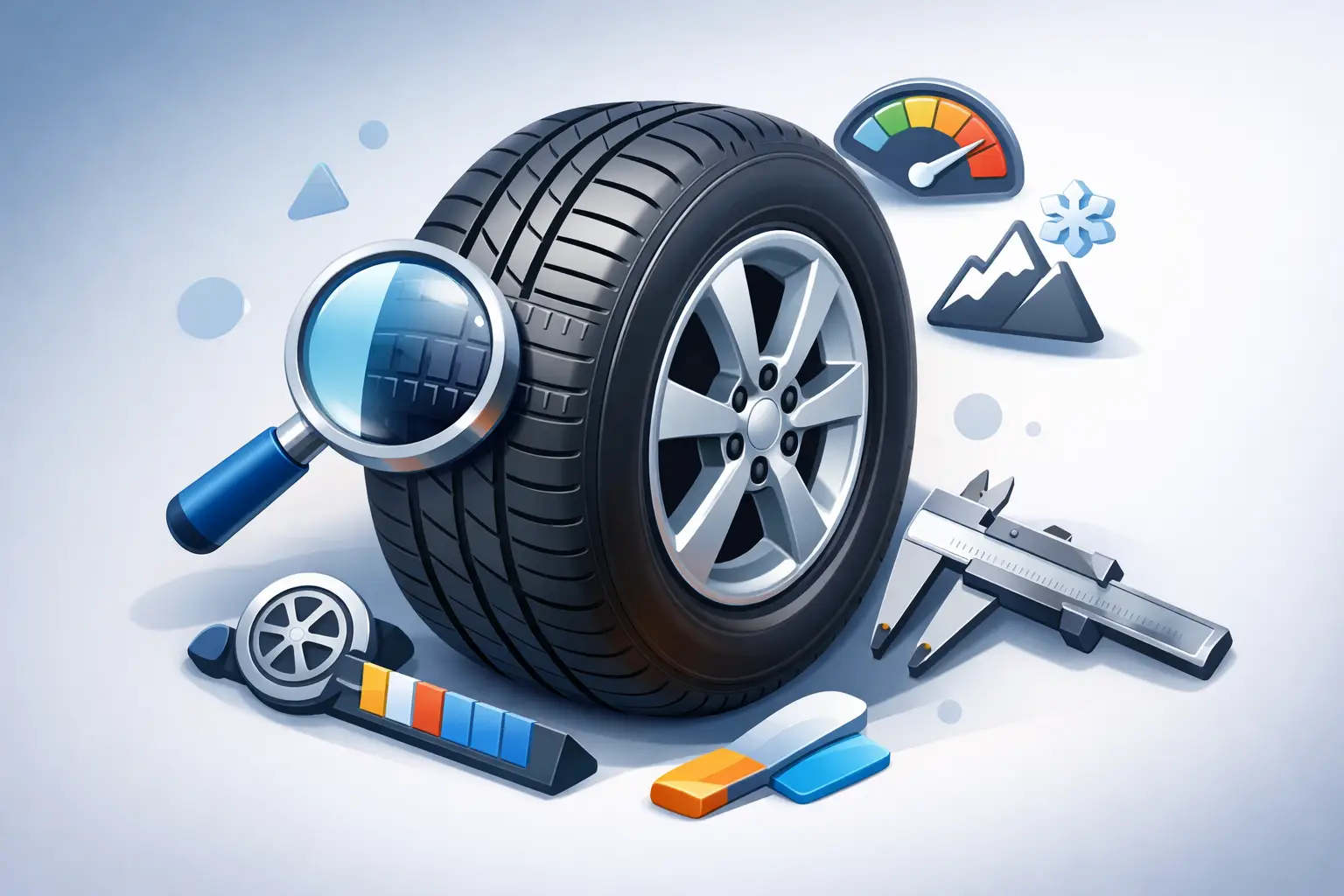
One wrong digit on a tire sidewall can leave you with poor handling, extra road noise, or a set that simply does not fit your vehicle. If you have ever looked at a tire and seen a string like 225/45R18 95Y, this guide on how to read tyre markings will help you make sense of it fast – and buy with confidence.
For everyday drivers, the goal is simple: match the correct tire to the car, the load it carries, and the way it is used. For SUV owners, performance drivers, and commercial users, those markings matter even more. They affect safety, stability, comfort, fuel economy, and wear. Once you know what each part means, choosing the right replacement becomes much easier.
How to read tyre markings on the sidewall
The main information is printed on the tire sidewall. A common example looks like this: 225/45R18 95Y. Each part tells you something important about fitment and performance.
Tire width
The first number, 225, is the tire width in millimeters. This is the measurement across the widest part of the tire, not including the sidewall lettering or protective ribs.
A wider tire can improve grip and give the vehicle a more planted feel, especially in dry conditions. But wider is not automatically better. It can also affect comfort, increase road noise, and in some cases reduce fuel efficiency. The correct width depends on your vehicle, wheel size, and manufacturer specification.
Aspect ratio
The second number, 45, is the aspect ratio. It shows the height of the sidewall as a percentage of the tire width. In this example, the sidewall height is 45% of 225 mm.
Lower-profile tires, such as 40 or 35 series, often deliver sharper handling and a sportier look. The trade-off is a firmer ride and less protection against pothole damage. Higher-profile tires usually offer better comfort and a bit more cushioning, which can suit family driving, rougher roads, or heavier vehicles.
Construction type
The letter R means radial construction. This is the standard for modern passenger vehicles, SUVs, and light trucks. You may occasionally see other construction types on specialist or older applications, but radial tires are by far the most common.
Wheel diameter
The number 18 is the wheel diameter in inches. This tells you the wheel size the tire is designed to fit. An 18-inch tire must go on an 18-inch wheel. There is no flexibility here.
This is one of the easiest markings to understand and one of the most important to match exactly. Even if every other number looks close, the wrong wheel diameter means the tire will not fit.
Load index
The number 95 is the load index. This indicates how much weight the tire can carry when properly inflated. It is not a direct weight figure written in pounds or kilograms, but a coded number that corresponds to a load capacity chart.
This matters more than many drivers realize. If you install tires with a lower load index than your vehicle requires, you can compromise safety, handling, and tire life. SUVs, 4x4s, family vehicles carrying passengers and luggage, and commercial-use vehicles should pay especially close attention to this rating.
Speed rating
The final letter, Y, is the speed rating. This shows the maximum speed the tire is designed to handle under the correct conditions and load.
That does not mean you should drive at that speed. It means the tire has been engineered for a certain level of heat resistance and performance. Higher speed ratings often appear on performance vehicles, while touring and all-season tires may use lower ratings. The right choice depends on the vehicle manufacturer recommendation and how you drive.
Other tyre markings you should know
Once you understand the main size code, there are a few more sidewall details worth checking before you buy.
DOT code and tire age
One of the most useful markings is the DOT date code. The last four digits show when the tire was manufactured. For example, 2424 means the tire was made in the 24th week of 2024.
Tire age matters because rubber changes over time, even if tread looks fine. Heat, storage conditions, and daily use all affect longevity. In hotter climates, this becomes even more relevant. If you are replacing old tires on a low-mileage vehicle, always check the date code, not just the tread depth.
M+S and 3PMSF markings
M+S stands for Mud and Snow. It usually appears on all-season or all-terrain tires. It suggests the tread is intended to offer better traction in light winter conditions than a standard summer tire.
The 3PMSF symbol, often called the three-peak mountain snowflake marking, is a more demanding winter performance standard. For Gulf-region drivers this may not be a daily concern, but if you travel or import specific fitments, it is useful to recognize the difference.
XL or reinforced marking
If you see XL, it means Extra Load. Some tires are built to carry more weight at higher inflation pressures than a standard tire of the same size.
This can be common on heavier sedans, SUVs, crossovers, and performance vehicles. You should not assume a standard version and an XL version are interchangeable just because the size looks the same. Always follow the vehicle requirement.
Rotation direction and inside-outside labels
Some tires are directional, which means they must rotate in a specific direction. These will have an arrow on the sidewall showing the correct rotation.
Others are asymmetric, meaning one side must face outward. These will be marked Inside and Outside. Both designs can improve handling, water evacuation, or road grip, but only if fitted correctly.
How to read tyre markings when replacing your tires
If you are shopping for replacements, start with the full sidewall code from your current tire, then compare it with your vehicle placard or owner recommendation. The driver-side door jamb often lists the approved tire size and inflation details.
This is where many buyers get caught out. A tire may physically fit the wheel, but still be wrong for the vehicle if the load index, speed rating, or construction does not match the required spec. That is especially true for premium sedans, sports cars, large SUVs, and vehicles with staggered setups.
There are also cases where changing size is possible, but only within the correct fitment range. Some drivers want a different profile for appearance or comfort, while off-road owners may look for stronger sidewalls or all-terrain capability. That can work, but it should be done carefully and with proper fitment guidance. Small changes can affect speedometer accuracy, braking feel, and suspension behavior.
Common mistakes drivers make
The most common mistake is focusing only on width and wheel diameter while ignoring load and speed ratings. A 225/45R18 is not always the same as another 225/45R18 if one carries a different load index or speed symbol.
Another mistake is buying based on appearance alone. Low-profile tires may look sharper, but they can be less forgiving on damaged roads. On the other hand, choosing the cheapest available option without checking the full marking can cost more in the long run through faster wear, weaker grip, or a harsher ride.
There is also the issue of mixing specifications across the same vehicle. Unless the vehicle was designed for a staggered setup, mismatched tire sizes or ratings can upset handling and wear patterns. If you are replacing only one or two tires, the exact sidewall details matter even more.
Why these markings matter for safety and value
Knowing how to read tyre markings is not just about decoding numbers. It helps you avoid the wrong fitment, compare options faster, and choose a tire that suits your actual driving needs.
For a daily commuter, that may mean prioritizing comfort, mileage, and wet-road confidence. For a 4×4 owner, it may mean checking for stronger load capacity and the right construction for mixed road use. For a performance driver, it often comes down to speed rating, sidewall response, and grip characteristics. The sidewall gives you the facts. Reading it properly helps you spend smarter.
At GCC Tires, that practical clarity matters. When you understand your sidewall markings, you can filter choices more accurately, compare brands with confidence, and move from browsing to professional fitment without second-guessing the basics.
The next time you look at a tire sidewall, do not treat it like a random code. It is the quickest way to tell whether a tire is right for your car, your driving, and your budget – and that is where confident buying starts.



 Get This Deal