


















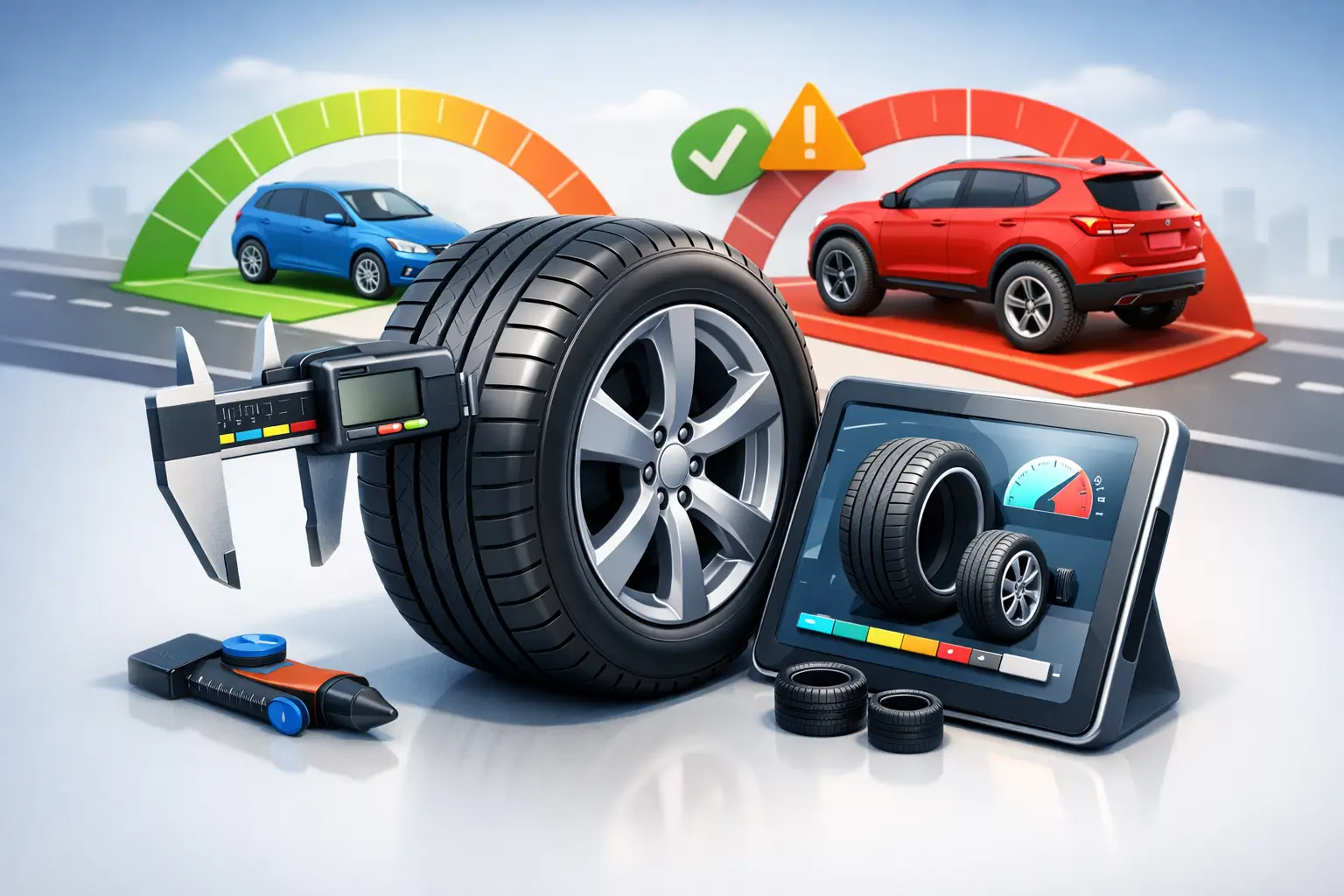
Your tire sidewall already contains the numbers that determine how your vehicle rides, grips, brakes, and clears the wheel arch. A tyre size calculator turns those numbers into useful answers before you buy: Will this size fit? How much taller is it? Will it affect the speedometer? Is it a sensible upgrade for your sedan, SUV, 4×4, or performance car?
Choosing by appearance alone can lead to rubbing, inaccurate speed readings, reduced steering feel, or a tire that does not suit your vehicle’s intended use. The right size keeps every drive controlled, comfortable, and safe.
What a tyre size calculator tells you
A tyre size calculator compares your current tire specification with an alternative size. It converts sidewall markings into key measurements, including overall diameter, sidewall height, circumference, revolutions per mile, and the percentage difference between two sizes.
Take a common size such as 225/45R17. The first number, 225, is the tire width in millimeters. The second number, 45, is the aspect ratio, meaning the sidewall height is 45% of the width. R indicates radial construction, while 17 is the wheel diameter in inches.
On its own, that code can feel technical. A calculator makes the practical impact clear. It shows whether moving from a 225/45R17 to a 235/40R18 keeps the overall diameter close enough to stock, and whether the lower-profile tire changes ride comfort or wheel protection.
This matters because tire size is not simply a cosmetic decision. It is part of the vehicle’s steering, braking, suspension, and electronic safety system setup.
Start with the size approved for your vehicle
The safest starting point is the tire size listed on the driver’s door placard or in the owner’s manual. This specification is selected around the vehicle’s load capacity, wheel width, suspension travel, brake clearance, and original handling balance.
The sidewall on your current tires is also useful, but check that it matches the factory recommendation. Previous owners may have changed the wheels or fitted a different size. If your vehicle has staggered fitment, common on performance cars, the front and rear tire sizes may be different by design.
A calculator should be used to compare options, not to override the vehicle manufacturer’s requirements. Load index and speed rating must also meet or exceed the approved specification. A tire can have the right diameter and still be the wrong choice if it cannot safely carry the vehicle’s load or handle its intended speed.
The diameter difference that matters most
When comparing alternative sizes, overall diameter is the number to watch closely. A small change is often manageable, but large changes can create real issues with clearance and accuracy.
As a general rule, keeping the diameter difference within about 3% of the original size is a sensible target for many passenger vehicles. Closer is better. This is especially true for vehicles with advanced driver-assistance systems, all-wheel drive, or tightly packaged wheel arches.
A larger overall diameter increases ground clearance slightly and fills the wheel arch more. It can suit some SUV and 4×4 applications, provided there is enough room during full steering lock and suspension compression. However, it may cause the speedometer to read lower than your actual speed.
A smaller diameter does the opposite. It may sharpen initial steering response, but it reduces ground clearance and can make the speedometer read faster than you are traveling. It may also increase engine rpm at highway speeds.
For all-wheel-drive vehicles, tire circumference deserves extra attention. Significant differences between tires can place unnecessary stress on the drivetrain. If replacing fewer than four tires, confirm the manufacturer’s tolerance for tread-depth and circumference variation before proceeding.
Width and profile change the driving feel
A wider tire can provide a larger contact patch, which may improve dry-road grip and give a more planted appearance. But wider is not automatically better. It can increase steering effort, follow grooves in the road, add rolling resistance, and increase the risk of rubbing on the suspension or fender liner.
The aspect ratio affects the sidewall. A lower number means a shorter sidewall. For example, a 40-series tire has less sidewall height than a 55-series tire of the same width. Low-profile tires can deliver sharper turn-in and a sportier look, but they generally ride firmer and offer less protection against pothole damage.
For everyday family vehicles, the best choice is usually the size that preserves comfort, durability, and predictable wet-weather performance. For track-focused or performance driving, a carefully matched wider and lower-profile setup may be appropriate, but it should be selected around wheel width, alignment, brake clearance, and driving conditions.
Wheel size changes require a smart comparison
Moving to a larger wheel is often called plus-sizing. The goal is to increase wheel diameter while reducing tire sidewall height enough to keep the total tire diameter close to original.
For example, changing from a 17-inch wheel to an 18-inch wheel does not mean adding an inch to the complete tire diameter. Instead, the sidewall should become shorter to compensate. A tyre size calculator quickly shows whether the proposed combination stays close to factory rolling diameter.
Larger wheels can improve visual impact and steering response, but there are trade-offs. Tires may cost more, the ride can become firmer, and the wheel becomes more exposed to curb and pothole damage. In Gulf conditions, where heat, road surfaces, and long-distance driving can all test a tire, choosing a practical profile can save money and avoid avoidable damage.
Check more than the calculator result
A size comparison is an essential first step, not the final approval. Before ordering, confirm the tire’s load index, speed rating, construction, and intended use. A touring tire for daily commuting, an all-terrain tire for off-road use, and an ultra-high-performance tire for a sports sedan are built for different priorities.
Also consider the wheel itself. The tire width must be approved for the wheel width, and wheel offset affects clearance just as much as tire size. A tire that looks correct in a calculator can still rub if the wheel sits too far inward or outward.
After installation, professional balancing and alignment are part of the job. Correct fitment helps prevent vibration, uneven wear, pulling under braking, and reduced tire life. GCC Tires combines a wide choice of genuine branded tires with professional fitment support, helping you move from size comparison to road-ready confidence.
When to keep the original tire size
Staying with the factory size is often the strongest choice when you want straightforward replacement, dependable handling, and no surprises with speedometer readings or clearance. It is also the smart option if you drive a leased vehicle, use the car for family transport, or simply want the tire characteristics your vehicle was designed around.
Choose the original size when your current wheels are in good condition, comfort matters, and you do not have a specific need for additional ground clearance, off-road capability, or performance response. You can still make a meaningful upgrade by choosing a better tire brand or tread design within the same size.
A better way to buy your next tires
Use the calculator to compare your existing size with the size you are considering. Keep the diameter close, then check load rating, speed rating, wheel compatibility, and available clearance. If you are changing wheel size, fitting all-terrain tires, or modifying a performance vehicle, get a professional fitment opinion before committing.
The right tire size is not the biggest, widest, or lowest-profile option. It is the size that matches your vehicle, your roads, and the way you drive. Make that choice with clear numbers first, then enjoy the confidence that comes from a tire built to fit.



 Get This Deal