




















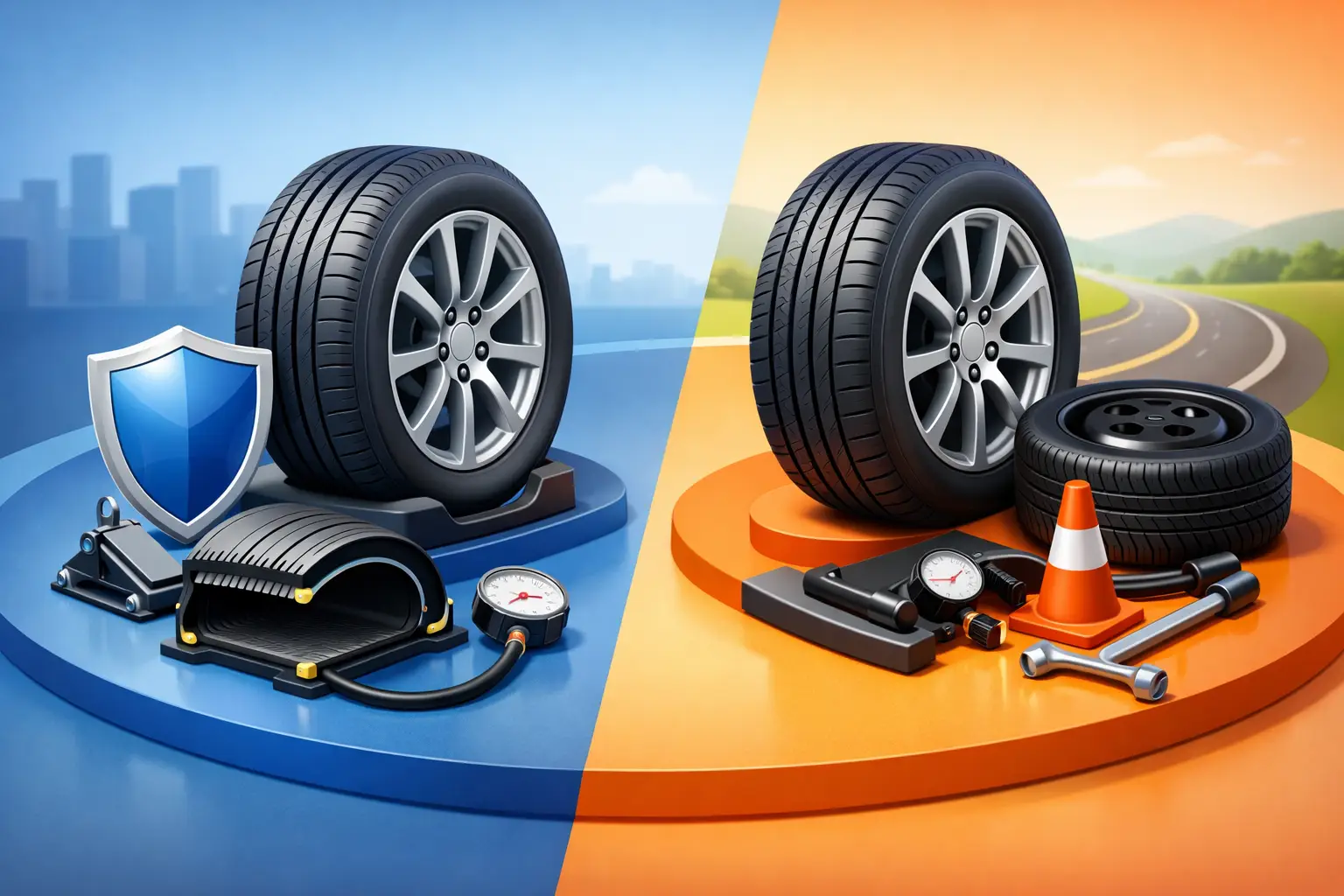
A flat tire on a highway exit or in midday heat is never just an inconvenience. It changes your plans, affects your safety, and can leave you making a fast decision with very little information. That is why the run flat vs standard tyres question matters more than most drivers think. The right choice depends on how you drive, what your vehicle was designed for, and how much you value comfort, convenience, and replacement cost.
Run flat vs standard tyres: the real difference
At the simplest level, standard tires rely on air pressure to support the vehicle properly. If they lose pressure, the sidewall collapses, the handling changes quickly, and you usually need to stop as soon as it is safe. Run-flat tires are built differently. Their reinforced sidewalls are designed to carry the vehicle for a limited distance after a puncture, usually at reduced speed.
That difference changes the ownership experience. With run-flats, a puncture does not always mean an immediate roadside stop. With standard tires, you typically need a spare tire, repair kit, or roadside assistance plan to avoid getting stranded.
For many drivers, that sounds like an easy win for run-flats. But tire choice is rarely that simple. The benefits come with trade-offs in ride quality, cost, and sometimes tread life.
How run-flat tires work in real driving
Run-flat tires are made to keep their shape after losing air. Most use self-supporting sidewalls that are much stiffer than those on standard tires. When pressure drops, the tire can still support the vehicle long enough for you to reach a tire shop or a safer stopping point.
That added security is the biggest selling point. If you drive long highway routes, carry family passengers, or regularly travel in places where stopping on the roadside feels risky, run-flats can offer real peace of mind. They are especially useful when a puncture happens at night, in heavy traffic, or far from immediate help.
There is a limit, though. A run-flat is not a tire you keep driving on for days after a puncture. Once it has been driven deflated, it may need replacement rather than repair, depending on the damage and manufacturer guidance. That means convenience at the moment of failure can turn into a higher bill afterward.
Where standard tires still make more sense
Standard tires remain the better fit for a large number of drivers. They usually cost less to buy, often deliver a smoother ride, and can provide more flexible repair options after minor punctures. If your vehicle has a spare tire or you are comfortable using roadside support, standard tires can be the more practical and economical choice.
They also tend to give drivers a wider selection across touring, SUV, all-terrain, and performance categories. If you want to prioritize quietness, comfort, fuel efficiency, or value, you will usually find more standard tire options at different price points.
This matters for everyday replacement shopping. Not every driver wants to pay extra for a feature they may never use, especially if most driving happens close to home, in town, or on familiar routes.
Safety: which option gives more confidence?
Safety is where run-flats earn their reputation. After a puncture, they help maintain control better than a fully deflated standard tire. That can reduce the panic of sudden air loss and lower the chance of being stuck in an unsafe location.
But standard tires are not automatically the less safe option in normal driving. In many cases, they offer more predictable ride comfort and steering feel because the sidewalls are less rigid. A quality standard tire with the right load rating, speed rating, and tread pattern can be an excellent safety choice when it is properly maintained.
The real safety issue is fitment and condition. A premium run-flat installed on a car not designed for it is not always a better decision than a high-quality standard tire that matches the vehicle correctly. Likewise, a worn run-flat with uneven wear is no advantage over a fresh, properly fitted standard tire.
Comfort and road noise
This is often where drivers notice the biggest difference.
Run-flat tires generally ride firmer because of those reinforced sidewalls. On smooth roads, the change may feel small. On rough pavement, potholes, expansion joints, or uneven city streets, the ride can feel noticeably harsher. Some drivers do not mind that extra firmness, especially on performance-focused cars. Others find it tiring in daily use.
Standard tires usually absorb bumps better and can reduce cabin noise, especially in touring or comfort-oriented patterns. If your priority is a smoother, quieter drive for commuting or family trips, standard tires often have the edge.
That does not mean every run-flat is noisy or every standard tire is soft. Tire brand, tread design, vehicle suspension, and wheel size all play a role. Still, if ride comfort is high on your list, standard tires deserve serious consideration.
Cost, lifespan, and repairability
Price matters, and this is one of the clearest differences in the run flat vs standard tyres comparison.
Run-flat tires usually cost more upfront. Replacement can also be more expensive because availability may be narrower depending on your size and vehicle. In some cases, if a run-flat has been driven with no air pressure, it cannot be safely repaired, even if the puncture itself looks minor.
Standard tires are usually less expensive and more widely available. Minor punctures are often repairable if the damage is within the tread area and the tire has not been driven too long while underinflated. That can lower the total cost of ownership.
Lifespan depends on the tire model, your driving style, alignment, and maintenance habits. Some drivers report shorter tread life from run-flats, partly because of the compound and structure used to support deflated driving. Others get perfectly acceptable mileage. The point is not that one type always lasts longer. It is that run-flats often ask you to pay more for emergency mobility, not necessarily for longer wear.
Can you switch from run-flats to standard tires?
Sometimes yes, but not casually.
If your car came from the factory with run-flat tires, it may have suspension tuning, tire pressure monitoring, and no spare tire because the manufacturer expected you to keep using run-flats. Switching to standard tires can improve ride comfort and reduce cost, but you need a backup plan for punctures. That usually means carrying a repair kit, adding a spare if the vehicle allows it, or relying on roadside assistance.
You also want to check manufacturer recommendations, load index, speed rating, and fitment details before making the change. The same caution applies in reverse. Installing run-flats on a vehicle that was not designed for them can affect ride quality and handling in ways some drivers will not like.
This is where expert guidance helps. A tire should match the vehicle, the use case, and your expectations, not just the size printed on the sidewall.
Who should choose run-flats?
Run-flat tires make sense for drivers who want added protection after a puncture and are willing to accept a firmer ride and higher replacement cost. They are a strong fit for highway commuters, drivers who regularly travel with family, owners of vehicles originally equipped with run-flats, and motorists who do not want the risk of changing a tire at the roadside.
They can also suit premium and performance vehicles where the factory setup was built around run-flat characteristics. In that context, staying with the original tire type often preserves the balance the vehicle was engineered to deliver.
Who should choose standard tires?
Standard tires are often the smarter buy for drivers focused on comfort, broader brand choice, and better value. They work well for daily commuting, city driving, family use, SUVs, and drivers who want more flexibility across premium, mid-range, and budget-friendly options.
They are also a strong choice if you care about a softer ride or want the possibility of repairing a puncture instead of replacing the tire outright. For many households, that practicality matters more than the ability to drive a limited distance after a flat.
The better choice depends on how you drive
There is no universal winner in the run flat vs standard tyres decision. If you want maximum convenience after a puncture and your vehicle is built around run-flats, they can be worth the extra cost. If you want lower replacement prices, better comfort, and wider product choice, standard tires often deliver stronger everyday value.
The smart move is to look beyond the label. Think about your routes, your passengers, your budget, and whether your vehicle already depends on a specific tire type. A tire should support the way you actually drive, not just sound good in a brochure.
If you are unsure, the best next step is simple: match the tire to your vehicle and your priorities, then buy with confidence. That is how you get safety, value, and fitment right the first time.




 Get This Deal