




















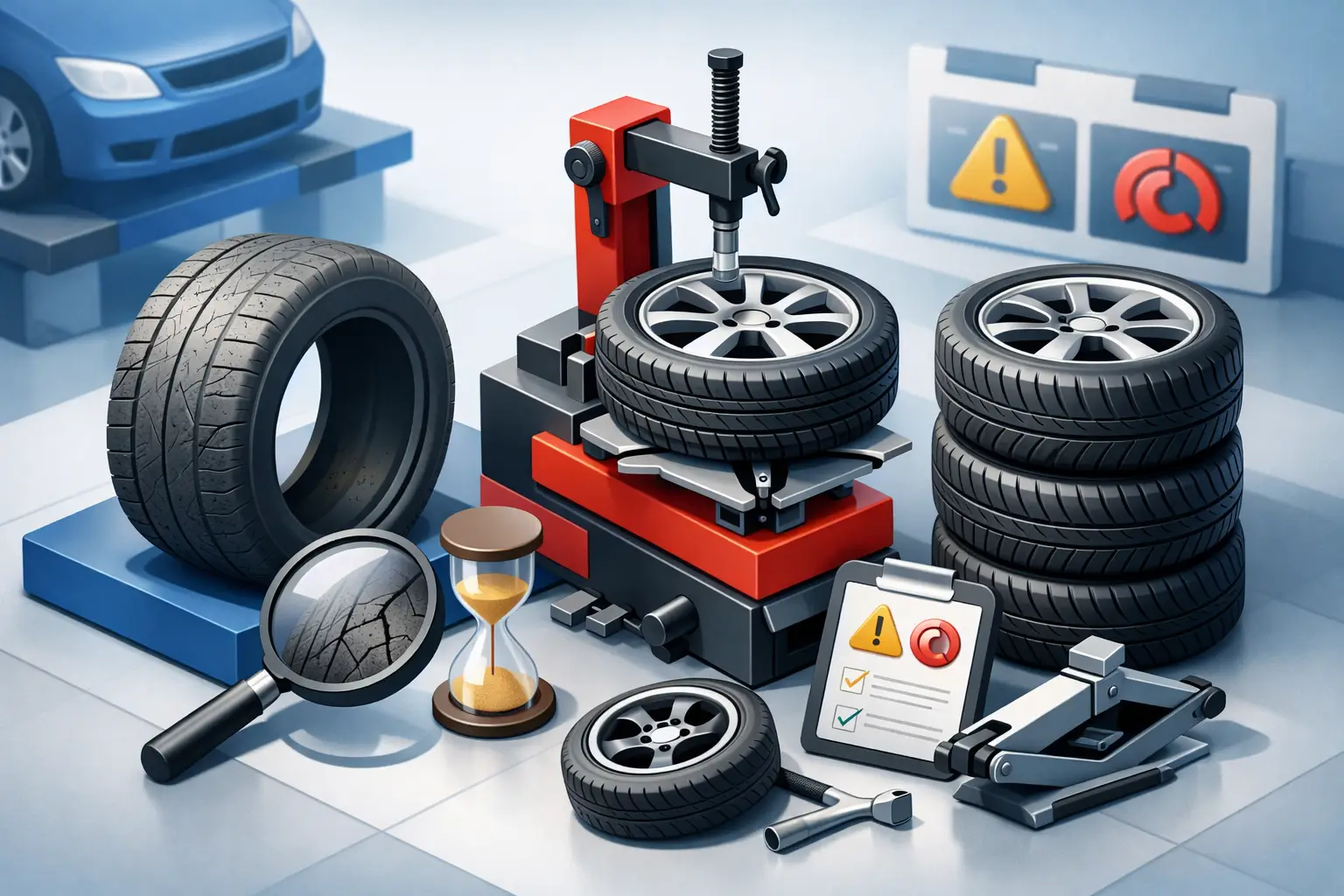
A tire can look fine in your driveway and still be one hard brake away from letting you down. If you have ever wondered when should tyres be replaced, the real answer is not just about mileage. It comes down to tread depth, age, visible damage, and how your vehicle is actually used – from daily commuting to highway runs, family driving, off-road trips, or performance driving.
Getting the timing right matters. Replace too early and you spend money before you need to. Replace too late and you risk reduced grip, longer stopping distances, poor wet-weather control, and uneven wear that can affect comfort and fuel use. Good replacement timing is about safety first, but it is also about value.
When should tyres be replaced based on tread?
Tread depth is the first thing most drivers should check. Tires are designed to channel water away and maintain contact with the road. As tread wears down, that ability drops fast, especially in wet conditions.
The legal minimum tread depth in many markets is 1.6 mm, but that should not be treated as the ideal target. By the time a tire gets that low, wet braking performance is already significantly reduced. For most passenger cars and SUVs, replacing around 3 mm is the smarter call if you want stronger wet grip and more predictable handling. If you regularly drive at highway speeds, carry family passengers, or face heavy rain, waiting until the absolute legal minimum is rarely worth the risk.
You can do a simple visual check by looking at the tread wear indicators built into the grooves. If the tread surface is nearly level with those bars, replacement time is near or already here. If wear is uneven, the situation can be more urgent because some parts of the tire may already be below a safe level even if the rest looks acceptable.
When should tyres be replaced if they still have tread?
This is where many drivers get caught out. A tire can still show usable tread and still need replacement because rubber ages. Heat, UV exposure, long parking periods, and harsh road conditions all affect the compound over time.
As a general rule, tires should be inspected more carefully once they reach around five years of age, and many drivers replace them by six years depending on condition, climate, and usage. In hotter regions, aging can happen faster. If your vehicle spends a lot of time outdoors or carries heavy loads, age becomes even more relevant.
Check the sidewall for the DOT code, which includes the week and year of manufacture. If a tire is older, you may notice fine cracks, hardening rubber, or reduced ride quality. Even without obvious damage, an older tire may not deliver the same grip and flexibility it had when new.
Signs your tires need replacing now
Some issues mean you should not wait for your next service. If you see sidewall bulges, deep cuts, exposed cords, or repeated air loss, the tire may be unsafe to continue using. A puncture can sometimes be repaired, but not every puncture should be. Damage near the sidewall, large punctures, or internal structural damage usually means replacement is the better choice.
Vibration is another warning sign. Sometimes it is just a balance issue, but it can also point to internal tire damage or irregular wear. If your car feels unsettled at speed, pulls to one side, or sounds louder than usual on the road, a tire inspection should move up your priority list.
Watch for these common wear patterns:
- Center wear often points to overinflation
- Edge wear can suggest underinflation
- Cupping may indicate suspension issues
- One-sided wear often comes from poor alignment
In those cases, replacing the tires without fixing the cause only solves half the problem. The new set can wear out early too.
Mileage is useful, but not enough
Many drivers ask how many miles a tire should last. The honest answer is that mileage is only a rough guide. Some tires may last 25,000 miles, others much more, depending on compound, driving style, road surface, inflation, alignment, and vehicle type.
Performance tires usually wear faster because they are built for stronger grip. Highway touring tires often last longer. SUV and 4×4 tires can vary widely depending on whether they are used mainly on paved roads or on rough terrain. Commercial-use vehicles also place different demands on tires because of load and usage cycles.
That is why mileage should support your decision, not make it for you. A lower-mileage tire with heat damage or uneven wear may need replacement sooner than a higher-mileage tire that has been well maintained.
How driving conditions affect when tyres should be replaced
Driving conditions matter more than many people realize. Hot pavement, high speeds, sharp cornering, rough roads, frequent braking, and heavy loads all shorten tire life. In the Gulf region especially, heat can accelerate wear and rubber aging. A tire that performs well in mild climates may age differently in sustained high temperatures.
If you drive an SUV, 4×4, or pickup, replacement timing also depends on terrain. Off-road use can chip tread blocks, bruise sidewalls, and create hidden damage. If you own a performance car, fast launches and aggressive cornering can wear the shoulders quickly even when the center tread still looks decent.
For family vehicles and daily drivers, the priority is usually balanced wear, quiet running, and dependable wet braking. For performance and off-road vehicles, the decision often comes earlier because the tire’s job is more demanding. Different vehicles ask different things from a tire, so replacement timing is never one-size-fits-all.
Should you replace all four tires at once?
Not always, but often it is the best move. If all four tires are close in age and wear, replacing the full set gives you the most balanced grip, braking, and ride quality. It also makes rotation and maintenance simpler.
If only two tires need replacement, matching matters. The new pair should be the correct size, load rating, and speed rating for the vehicle. In many cases, the newer tires are installed on the rear axle to help maintain stability, especially in wet conditions. That advice can surprise drivers who assume the newest tires belong on the front, but rear grip plays a major role in keeping the vehicle controlled during sudden maneuvers.
For all-wheel-drive vehicles, tread differences between front and rear can sometimes affect the drivetrain. If the wear gap is too large, replacing all four may be the safer and more practical option.
What to check before buying replacement tires
Once you know replacement time is near, the next step is choosing correctly. Start with the tire size shown on your current tire or driver-side placard. Then consider how you actually drive. A budget-friendly option may suit a low-mileage city car perfectly, while a premium touring tire can make more sense for long-distance family driving. If you want sharper handling, a performance-focused tire may be worth it. If your SUV sees rougher ground, look for a pattern and construction that matches that use.
Price matters, but value matters more. A cheaper tire that wears quickly or performs poorly in the wet is not always the better deal. The right tire is the one that fits your vehicle, your road conditions, and your expectations for durability, comfort, and control.
Professional fitment also makes a difference. Proper mounting, balancing, and alignment checks help the new tires wear evenly and perform as intended. That is one reason many drivers prefer a retailer that can support both product choice and installation through trusted fitment partners, such as GCC Tires.
A simple rule if you are unsure
If tread is low, age is climbing, damage is visible, or the vehicle no longer feels settled on the road, do not stretch the tire’s life just to gain a few more weeks. Tires are not the place to gamble. They affect braking, steering, comfort, fuel use, and confidence every time you drive.
A fresh set does more than replace worn rubber. It restores the grip, stability, and predictability your vehicle was meant to have. If you are checking your tires and hesitating, that is usually your sign to inspect them properly now rather than after they become a problem.

 Get This Deal